
My Menstruation Victory as a Woman with Disability
Jun 7, 2022
story
Seeking
Collaboration
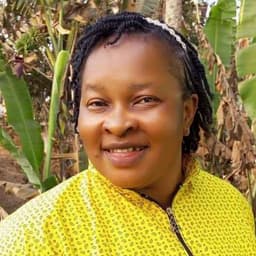

Menstruation is called a “Flower” which means it’s a beautiful blooming period for a woman. In my community, it is culturally celebrated because it is a sign of fecundity and prove of a woman’s ability to procreate. A woman is well respected only when she is able to bear children. As long as a woman is having her period, there is hope that she will be able to bear a child.
When a woman is not having her monthly flow, she is stigmatized and call a “Man” or an “Empty Basket”. Mockery to menstruation comes in different situations in my community. Culturally a woman is considered to be unclean during her monthly period and because she unclean, she is not allowed to cook for her husband or be around him and other male leaders of the community. She is not allowed to enter the palace of a chief or take part in cultural activities. This is even worse for women with disabilities because people are of the perception that they do not menstruate. When they begin to have their menstruation, their families and caregivers wonder to extremes how they are going to manage. They will begin to ask questions such as; how do I manage disability and menstruation, what if she gets pregnant, what will happen to her if someone is not around to assist her during her menstruation.... etc.
This is a vicious cycle that goes on and on against women and girls with disabilities, bringing to mind the need for continuous education, sensitization and awareness raising on the menstrual specific needs for women with disabilities in communities.
My first period came with very little challenges because I was already aware of what menstrual was. We were taught in school and I was among bigger sisters who were already having their periods. I had an understanding of the necessary items to use, body/menstrual hygiene care to do when on my period. My challenges were fear at the first sight of my first menstruation, cramps, fever, nausea, dizziness and vomiting. As time went on, I will always be psychologically disturbed when it’s about that time of the month that I will have my period. Finally, I said to myself, I only get these challenges ones every 24 to 28 days, certainly I can overcome. These made me to become resilient and, more determine to be a stronger person during my menstrual period. I was more focus on my body and menstrual hygiene management ensuring to keep neat when on my period. I realized I also had challenges with the kind of undies and clothing to use when on my period due to my disability. I tried so many types and finally felt comfortable in the “Tanga and high-cut brief”. But when I go to shop for my undies, sellers will tell me, because you are full figured you need to wear undies that will fit well on you like the “classic brief or control brief”. This made me to understand that, other women and girls with disability face same challenges depending on their degree and type of disability. With this awareness, I had to dedicate part of my work to educate communities and families of persons with disabilities about menstrual specific needs of women with disabilities.
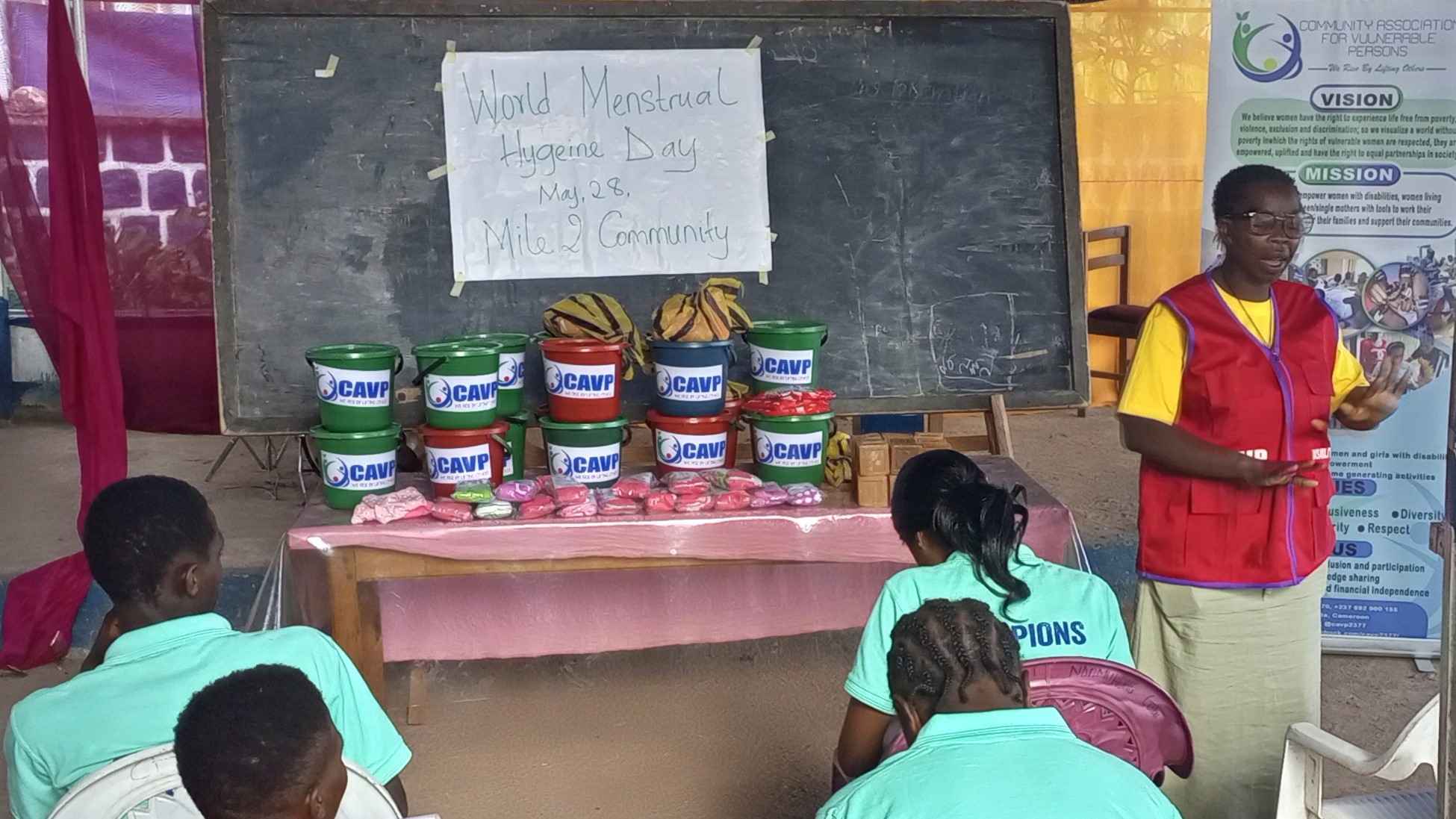
Through the Community Association for Vulnerable Persons (CAVP) I am dedicated to educate women and girls with disabilities through training workshops and community sensitization. I teach them on good menstrual/body hygiene, dressing and undies type. I support them with menstrual hygiene kits/ dignity kits quarterly through out the year. To ensure they have financial sustainability to afford menstrual hygiene items, I build their skills on income generating activities and link them up for opportunities to access start-up kits for small businesses. I also work in collaboration with Community Education for Life (CEFLife) to train them on the production of reusable sanitary pads by recycling fairly used fabrics and clothes. These year’s 2022 menstrual hygiene day was very exciting for it reached out to 20 adolescent persons (16 girls and 4 boys) in which they were provided with menstrual hygiene kits.
My challenges as a menstrual hygiene activist are: the slow pace of communities to change their perceptions about disability and menstrual experiences for women and girls with disabilities, the fact that some families take their women and girls with disabilities to hospitals to medically stop their menstrual flow as a means to reduce the stress of managing disability and menstruation. The cultural taboos attached to disability and menstruation. I also have challenges of accessing adequate support and resources for women and girls with disabilities for good menstrual hygiene management. Limited resources to organize more training workshops and community sensitization talks, media campaigns, produce education, information and communication tools on disability and menstrual hygiene needs for women and girls with disabilities.
My successes as a menstrual hygiene activist are
· Successful menstrual education for women and girls with disabilities and they are able to put to practice knowledge gained
· Successful commemoration of the international menstrual hygiene days over the years and the shift of perception it has brought to communities and families of women and girls with disabilities.
· Partnerships I have built over the years that link women and girls with disabilities to access menstrual hygiene and dignity kits.
The impact I have created is awesome
· A total of 150 women and girls with disabilities in 7 communities benefited from dignity kits in 2019 and 200 women and girls with disabilities benefited from dignity kits in 2020 donated by UNFPA (United Nation Population Fund)
· Approximately 73 women and girls with disabilities, young mothers and women and girls living with HIV AIDS benefited from dignity kits in 2021 donated by INTERSOS
· A total of 49 women and girls with disabilities and young mothers benefitted from menstrual hygiene kits donated by the Hope Center and the CAVP support 20 adolescent (16 girls & 4 boys) with menstrual hygiene kits for menstrual hygiene day 2022
As a woman with physical impairment, my body structure is not aligned normally. Due to shortening on my right leg, my right buttock is slightly lower than the left. I need to wear specific pattern of undies that will give a balance and prevent me from soiling myself during my menstruation. People are of the perception that as an adult female you should wear adult or grandma undies. So, I face a lot of stigmas when I go shopping for undies that “Tanga and high-cut brief”. As an adult full-figured woman, they expect me to wear “classic brief or control brief”.
Based on my experiences with different types/degrees of disabilities, women with disabilities have unique experiences on menstruation. Some of those with mental/psychosocial impairment have their periods later (can be as from the age of 18+) than those with physical impairments. While those with different forms of physical impairments also face unique challenges base on the type of undies and equipment to use. Generally, women with disabilities face a lot of challenges to afford and access menstrual hygiene kits and services due to finances and limited information.
I call on everyone to understand that women with disabilities have equal rights to menstrual hygiene needs. They are full flesh humans and have the same biological/gynecological functions as any other woman alive. They need joint support to overcome challenges and stigma to live a complete live.
If I have a daughter or young person, I hope they experience menstruation with confident and full knowledge to properly manage themselves and stay in dignity.
Rituals that can be created to celebrate menstruation can be
1- Menstrual hygiene day
2- Menstruation cultural festivals base on our different cultures around the world
3- Talk shows on menstruation and media campaigns
4- Menstrual hygiene coalitions for menstrual hygiene activists
5- Conferences on menstrual hygiene targeting local leaders, community heads, families and caregivers of women with disabilities
- Economic Power
- Disability Justice
- Gender-based Violence
- Human Rights
- Salud menstrual
- Global