
NEPAL: Safety Shouldn’t Mean Losing My Freedom
Apr 30, 2019
first-story

A frightening incident on public transportation made Reeti K. C. Question society’s attitudes about women’s safety.
It took a long time for me to understand it wasn’t my fault.
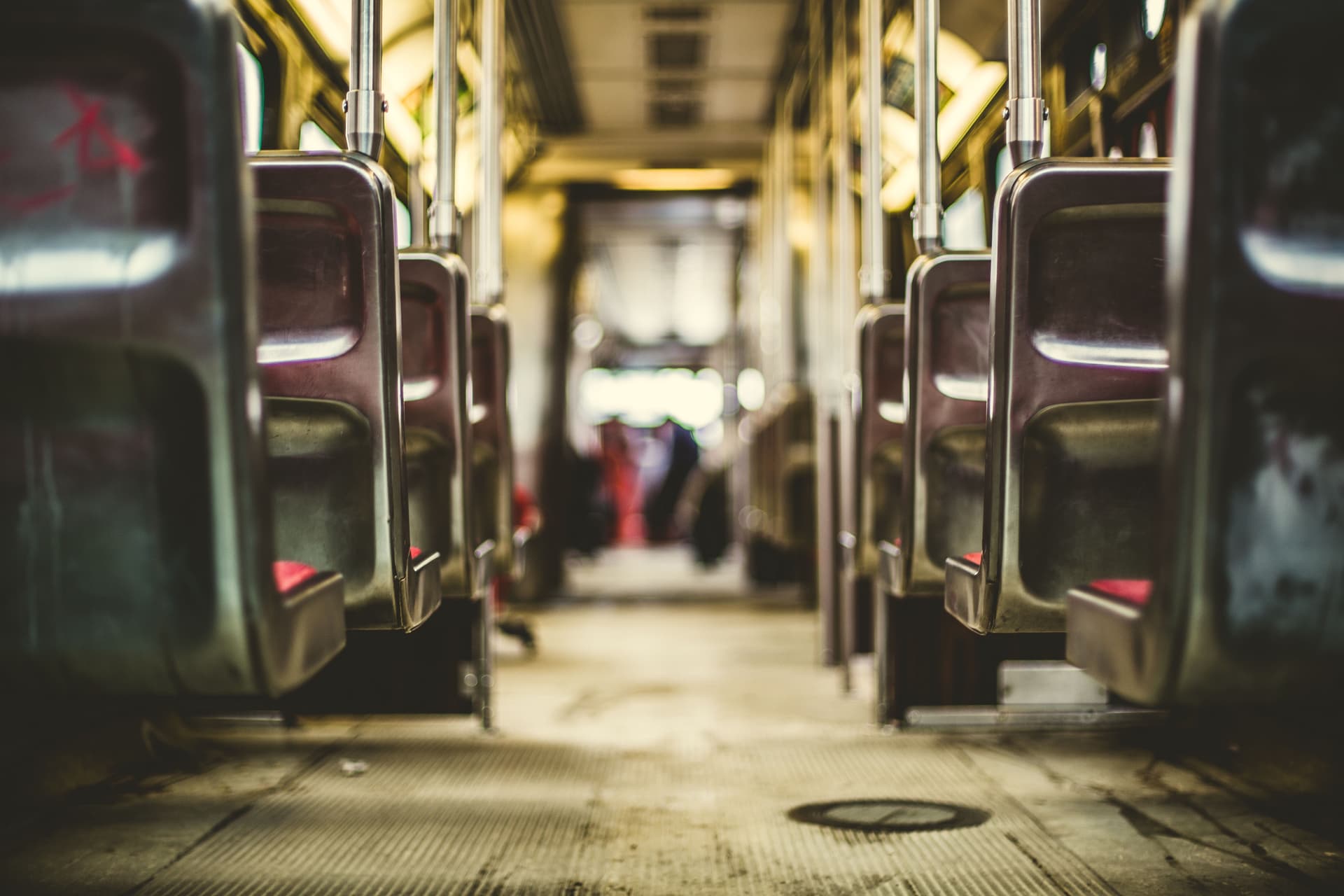
His arms fling over my shoulder and I feel his fingertips reaching toward the side of my left breast. I am in a dark, crowded public vehicle in Kathmandu with this middle-aged man pressed beside me in a seat intended for one passenger. In this moment, I am scared and confused; is he trying to place his hand on the window beside me or is he trying to touch me?
In the seconds when his hand traveled from my shoulder to my side, I questioned myself: “Why am I sitting here? Why Am I wearing this dress that prevents me from standing in the rear of the vehicle with my friends? Am I Being harassed? ”
When his hands got closer and brushed my breast, I knew his intentions. I did not shout or scream, but I told him to move his hand. I spoke loudly enough for the driver beside him to hear. The driver looked at us. Twenty seconds later, the man asked to be dropped in a place that wasn’t even a stop.
This incident scarred me for a long time. I feared wearing a dress, sitting in the front seat if I traveled; I feared traveling at night or sitting beside any man on public transportation. This incident happened around two years back and it took a long time for me to understand it wasn’t my fault.
I grew up in a society where girls aren’t supposed to go out at night and wear revealing clothes so they don’t gather attention from men. I was scared to talk about what happened with anyone other than my friends; I knew the reply would be, “See! I Told you so. ”
Nepal is a patriarchal society where women are often considered the second sex. The domination of women is decorated with words such as “safety” and “security” to shut us behind the four walls of the house. The men who make decisions for us don’t understand that we don’t need to be “kept safe” if the environment outside our four walls is safe.
Throughout my life, I have experienced many incidents of men flashing me and physically and verbally harassing me in the streets and in public vehicles. But my experiences are nothing compared to what many women in Nepal go through.
The Nepal Peace Monitoring Project documented 680 incidents of gender-based violence in 2017, though the actual number is likely higher. This includes women who reported rape or attempted rape, who faced domestic violence, were accused of being witches, or were murdered or assaulted.
In Nepal, there is pressure on women to keep silent to maintain the prestige and honor of the family. It is not easy for women to voice our pleas for justice. This suppression is why so many cases don’t get reported.
Although the number of gender-based violence cases reported to authorities is increasing in Nepal, even in these cases, perpetrators are often still not brought to justice. Despite public outcry and demonstrations across the country, the rape and murder of 13-year-old Nirmala Pant in July remains unsolved. On September 24, 2018, an 18-year-old girl died of multiple organ failure 10 days after her neighbor attacked her with acid. It is urgent that we solve the problem of gender-based violence, not hide from the problem.
While walking at night, I always have something in my hand to defend myself if someone attacks me; I have my emergency contact memorized and a fully charged battery in my mobile phone while traveling alone; I never have earphones on when I’m in an unfamiliar area—and I don’t even live in a very dangerous city of my country.
Women know how to take precautions. But society would feel safer if the core problem was rooted out instead of making women compromise our freedom.
According to Article 3 of the Universal Declaration of Human Rights, “Everyone has the right to life, liberty and security of person. ” But sometimes we forget the “second sex” is included in this. As women and girls, we are also human.
Girls shouldn’t have to think about being attacked every time they leave the house. If we are not secure in our own homes and neighborhoods, then where can security be guaranteed?
STORY AWARDS
This story was published as part of the Future of Security Is Women digital event and is sponsored by our partner Our Secure Future. World Pulse runs Story Awards year round—share your story with us, and you could be our next Featured Storyteller! Learn more.
- Girl Power
- Gender-based Violence
- Human Rights
- First Story
- Future of Security Is Women
- South and Central Asia