
Njeri wa Migwi’s Vision for the Future of Africa - Expanding Activism and Deepening Impact
Jul 30, 2025
story
Seeking
Connections

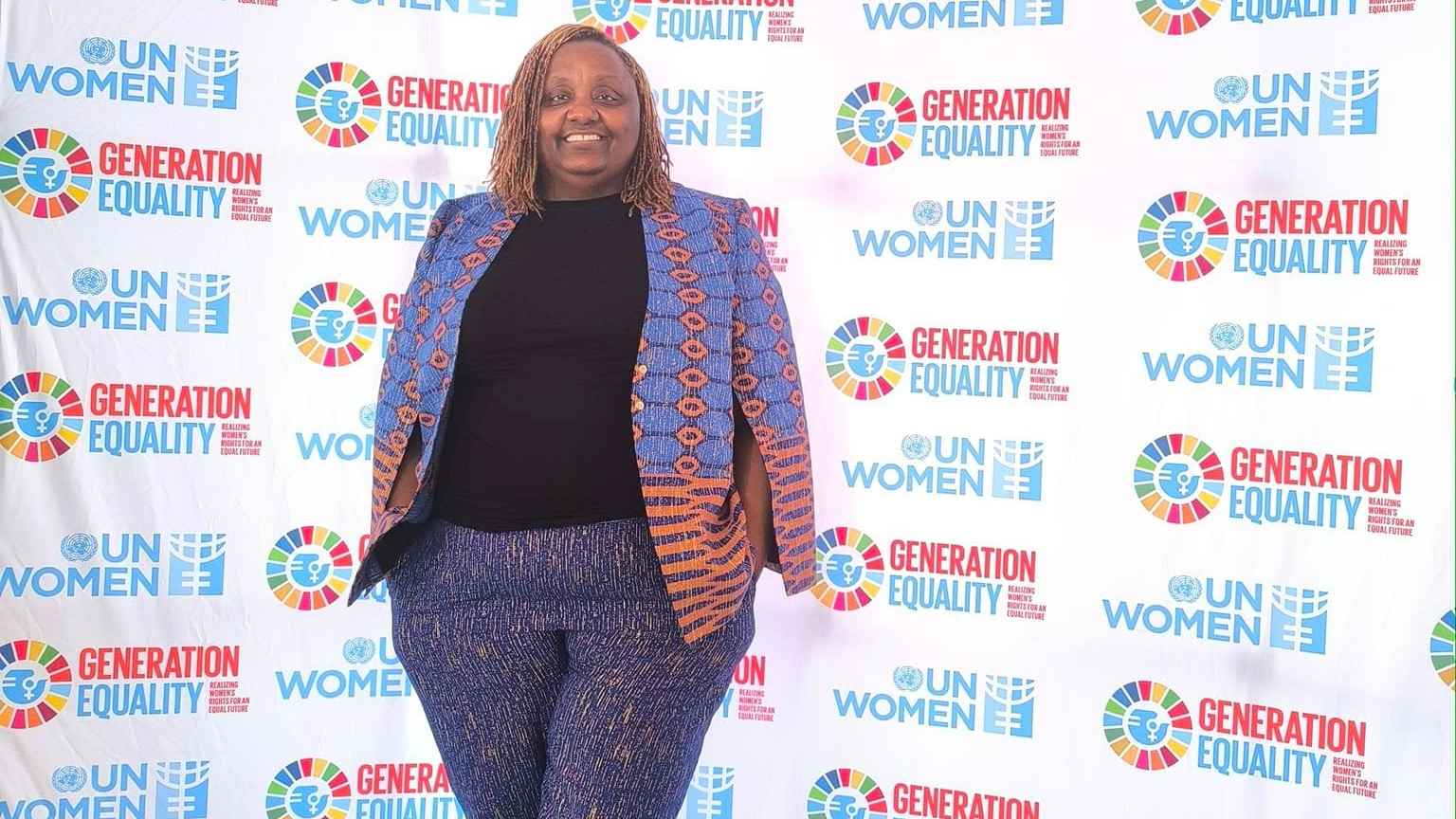
Photo Credit: Njeri Wa Migwi, Facebook
"Njeri wa Migwi’s potential future plans reflect the same courage, compassion, and clarity that have defined her journey so far."
Introduction
Njeri wa Migwi, the founder of Usikimye and a celebrated human rights defender in Kenya, has long been a voice for the silenced. With over 100,000 followers on social media and a solid legacy of grassroots activism, she has transformed personal pain into a national movement against gender-based violence (GBV). As she looks to the future, Njeri’s vision is clear: to look at deepening her impact, expand her reach, and to continue challenging the systems that perpetuate violence, inequality, and political injustice.
A Legacy of Courage and Compassion
Since founding Usikimye in 2019, Njeri has led the organisation to become a sanctuary for survivors of GBV. The organisation provides emergency shelter, legal aid, trauma counselling, and community education. But Njeri’s activism has never been confined to crisis response. Her work is rooted in systemic change—dismantling the structures that enable violence and silence survivors. Her leadership has earned her numerous accolades, including Human Rights Champion 2023 (Daima Trust), Human Rights Defender of the Year 2021 (Defenders Coalition), and Person of the Year 2020 (The Star Newspaper). These honours reflect her impact—but for Njeri, the work is far from over.
Future Focus: Political Accountability and Civic Engagement
In April 2025, Njeri issued a powerful public message urging Kenyans to remember the sacrifices made during times of political unrest. Referencing the BBC documentary Blood Parliament, she called for collective memory and civic responsibility, highlighting the need for citizens to remain vigilant and critical of political manipulation. Her message was not just a reflection on the past—it was a call to action. Njeri envisions a future where activism includes political education, voter accountability, and civic empowerment. She believes that real change requires not only protecting survivors but also transforming the political systems that fail them.
“Voters must remain vigilant and critical to prevent manipulation and ensure accountable leadership,” she stated, emphasising that justice must extend beyond the courtroom and into the ballot box.
Expanding Usikimye’s Reach
As GBV cases continue to rise in Kenya, Njeri is likely to focus on scaling Usikimye’s operations to meet growing demand. Her future plans include:
- Opening more safe houses across the country to provide refuge for survivors in underserved regions.
- Expanding legal advocacy to push for femicide to be recognised as a distinct crime under Kenyan law.
- Strengthening partnerships with local and international organisations to increase resources and visibility.
Usikimye’s flagship programs—such as the Femicide Accountability and Community Empowerment (FACE) initiative and Watoto Washibe—will most likely continue to be central to this expansion. These programs not only respond to immediate needs but also address the root causes of violence, including poverty, inequality, and cultural stigma.
Tackling Reproductive Injustice and Mental Health
Njeri’s future activism might also include a growing focus on reproductive justice and mental health awareness. She has spoken openly on numerous occasions across all her platforms about the silence and shame that often surround issues like reproductive health, trauma, and emotional well-being.
Her upcoming initiatives might aim to:
- Host community dialogues on reproductive rights and bodily autonomy.
- Launch mental health support programs for survivors of abuse and trauma.
- Advocate for policy reforms that improve access to reproductive healthcare and counselling services.
By addressing these often-overlooked aspects of survivor care, Njeri hopes to create a more holistic and inclusive model of justice.
Digital Advocacy: Reaching the Margins
Njeri’s digital platforms have become lifelines for many. Survivors reach out through direct messages, and many cases are resolved through rapid community mobilisation. Looking ahead, she plans to enhance Usikimye’s digital infrastructure to reach more people in remote and marginalised communities.
This includes:
Developing mobile-friendly resources for survivors who lack access to formal support systems.
- Creating educational content on legal rights, consent, and mental health.
- Training digital responders to handle online distress calls with sensitivity and speed.
- Technology, for Njeri, is not just a tool—it’s a bridge between isolation and support, silence and voice.
Lessons to Learn
Njeri wa Migwi’s evolving activism offers powerful lessons for the future of social justice work.
1. Activism Must Evolve with the Times
Njeri’s shift toward political education and civic engagement shows that activism must adapt to address emerging challenges.
2. Justice Is Holistic
Her focus on reproductive rights and mental health underscores the need for a comprehensive approach to survivor care.
3. Community Is the Catalyst
Whether through digital platforms or grassroots organising, Njeri’s work proves that collective action is the engine of change.
4. Memory Fuels Movement
By urging Kenyans to remember past sacrifices, Njeri reminds us that history must inform our activism. Forgetting is dangerous; remembering is revolutionary.
Reflection
Njeri wa Migwi’s potential future plans reflect the same courage, compassion, and clarity that have defined her journey so far. She is not content with simply responding to violence—she is determined to prevent it. Her vision for the future includes a Kenya where survivors are not only safe but empowered, where voters are informed and engaged, and where justice is not a privilege but a right. In a world where silence often protects the powerful, Njeri continues to raise her voice—for the silenced, the forgotten, and the future. Her activism is a reminder that change is not a moment—it is a movement. And that movement is just getting started.
- Health
- Girl Power
- Leadership
- Education
- Human Rights
- Gender-based Violence
- Global