
Our Beyond The Pill Project: Advancing Advocacy to Expand Options for HIV Prevention
Sep 26, 2025
story
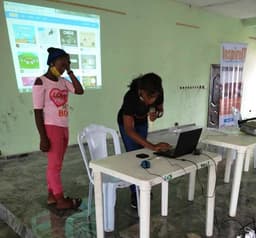

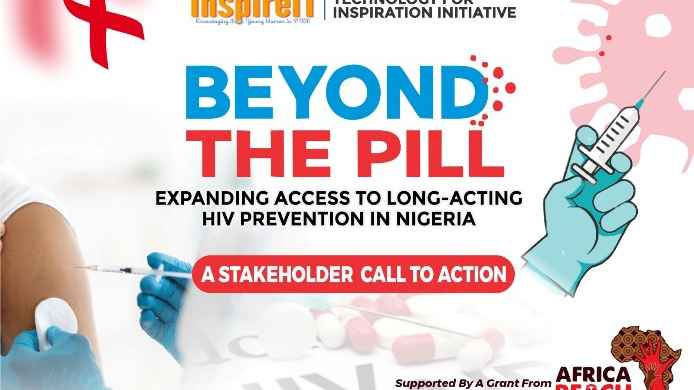
Photo Credit: InspireIT
In May this year, the Technology for Inspiration Initiative (InspireIT)project, Beyond The Pill, was awarded a grant by Africa REACH. Africa REACH is an African-led, African-focused effort committed to fulfilling the promise of an AIDS-free generation in Africa.
Beyond The Pill advocates for a strategic shift from daily oral pills to innovative long-acting methods like CAB-LA (Cabotegravir Long-Acting) and Lenacapavir, which offer sustained protection and greater ease of use. Nigeria is currently among the countries yet to adopt long-acting HIV prevention methods. The initiative aims to harness the power of digital education, stakeholder engagement, and policy advocacy to increase awareness and drive national support for integrating this game-changing innovation into HIV prevention and treatment programs.
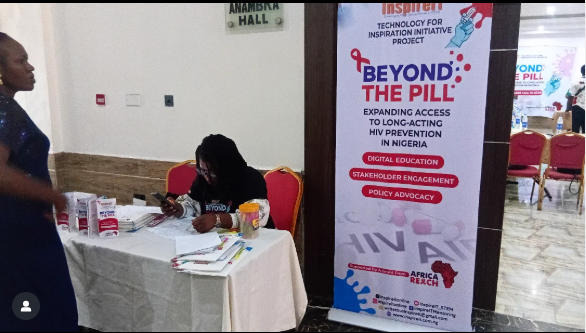
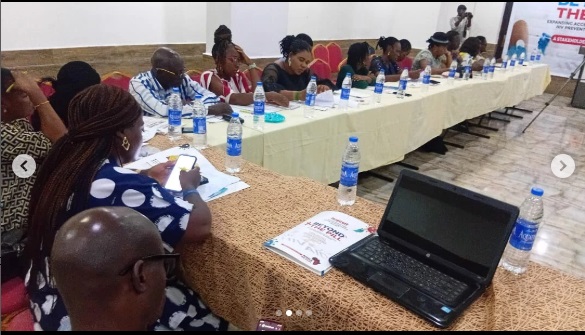
So far, we have convened meetings and workshops and are working on roundtable discussions with relevant government ministries and key stakeholders. Our podcast series, Beyond The Pill (#BeyondThePillNG), explores access gaps, youth perceptions, and policy shifts around PrEP options, with a particular focus on injectable PrEP. In Nigeria, injectable PrEP remains at the advocacy and policy dialogue stage, as Nigeria is yet to adopt long-acting HIV prevention methods into its national HIV program. Through these conversations, we aim to spotlight the voices of young people, highlight barriers to access, and push for the policy changes necessary to make these innovations a reality.
Far too often, most women in Nigeria find their sexual health decisions dictated by their husbands, boyfriends, or, in tragic cases, taken away entirely through sexual violence, leaving them with limited control over their own protection.
Our podcast series, Beyond The Pill (#BeyondThePillNG), explores the access gaps, youth perceptions, and policy shifts around PrEP options, with a particular focus on injectable PrEP. In Nigeria, injectable PrEP is still at the advocacy and policy dialogue stage, as Nigeria is yet to adopt long-acting HIV prevention methods into its national HIV program. Through these conversations, we aim to spotlight the voices of young people, highlight the barriers to access, and push for the policy changes necessary to make these innovations a reality.
Why does the conversation about long-acting HIV prevention matter for women in Nigeria, and how does it affect their choices?
For women in Nigeria, the conversation around HIV prevention is not simply about science, medicine, or technology; it is about agency, autonomy, and the freedom to make choices that fit their lives. Women, particularly young women and adolescent girls, remain disproportionately affected by HIV in Nigeria. Cultural expectations, economic dependence, and gender-based power imbalances often make it difficult for women to negotiate condom use or maintain consistency with daily oral pills. As a result, many are left vulnerable to infection despite their knowledge of existing prevention methods.
The availability of long-acting HIV prevention options like CAB-LA and Lenacapavir has the potential to transform the landscape of women’s health. Unlike daily pills, which require constant adherence and can expose women to stigma when discovered by partners or family members, injectable and long-acting methods offer privacy, convenience, and sustained protection. This shift empowers women to protect themselves on their own terms, without the daily reminder or the fear of judgment.
Moreover, the issue is deeply tied to reproductive and sexual health rights. Women in Nigeria are increasingly demanding access to health solutions that respect their dignity and give them genuine alternatives. Long-acting HIV prevention methods represent not just a medical breakthrough, but a tool for choice, allowing people to decide whether they want a prevention method that aligns with their lifestyle, or a longer-acting option requiring even less frequent engagement with health systems.
There is also a socioeconomic dimension. For women juggling multiple responsibilities; work, caregiving, motherhood' the burden of remembering a daily pill or making repeated clinic visits can be overwhelming. Long-acting method ( a once-every-two-month injection), can free up time and mental energy, ensuring that HIV prevention does not compete with daily survival. In communities where stigma still surrounds HIV and sexual health, these methods also create a discreet pathway for women to take control of their health without fear of exposure or discrimination.
Broader Vision of Women's Empowerment
Finally, framing this matter as one of choice emphasizes the broader vision of women’s empowerment in Nigeria. When women are given real options in healthcare, they are better able to exercise autonomy over their bodies and futures. This aligns with global commitments to gender equality, reproductive rights, and the Sustainable Development Goals (SDGs), particularly SDG 3 (health and well-being) and SDG 5 (gender equality).
Without policy action, many people, especially women and girls will continue to face limited options.
Our podcast series is ongoing and is available on our podcast website, spotify and our YouTube channel.
- Global