
Our Struggles Must be Understood in Our own voices.
Feb 21, 2025
story
Seeking
Action
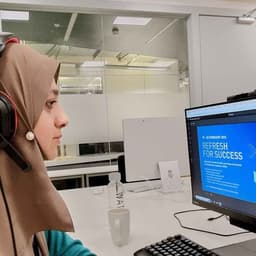

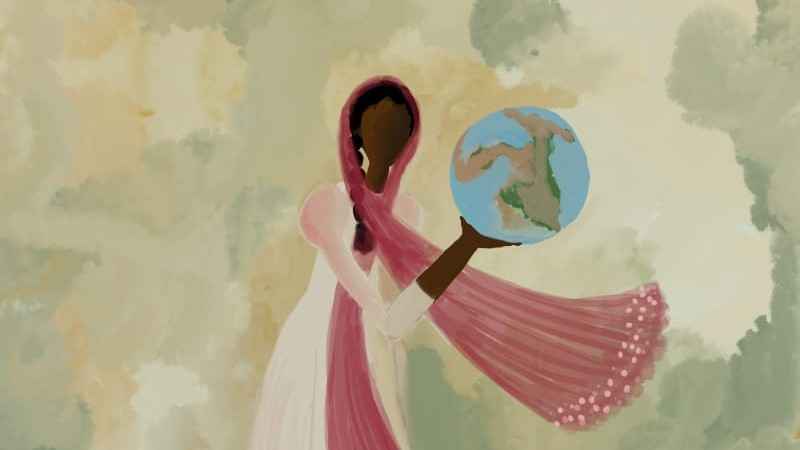
Photo Credit: Shameela's art
Girlpower by Shameela
These days, my mind overflows with thoughts. But finding the time to sit down and write is always a challenge. What I want to address here is vast and deserving of in-depth dialogue. For now, I will share only a few key reflections. If I were to title this, it could be Saroja Paulraj and Muslim Personal Law.
My PhD research focuses on Muslim women and postcolonial feminism. Among the scholars I am currently reading, Gayatri Chakravorty Spivak’s ideas are particularly significant.
A troubling pattern emerges in political and media discussions surrounding Muslim personal law. Muslim women are frequently spoken about but rarely given space to speak for themselves. Their struggles, child marriage, divorce rights, and inheritance laws are highlighted, yet the narratives surrounding them often follow an old colonial script.
Muslim women = Oppressed victims
Their community = Backward and patriarchal
The state = Their saviour
But who actually controls the narrative of Muslim women’s struggles? And what happens when Muslim women attempt to define their own path toward justice and reform?
Spivak’s renowned essay, Can the Subaltern Speak?, offers a crucial framework for understanding how Muslim women’s voices are systematically erased under the guise of ‘liberation.’ She examined how British colonial rulers outlawed Sati, the practice where Hindu widows were expected to self-immolate on their husband’s funeral pyre. The British did not do this out of genuine concern for gender justice. Rather, it was a means to assert moral and political control over Indian society.
The British justified their intervention by claiming they were saving Indian women from oppressive traditions. But as Spivak points out, no one actually asked the widows what they wanted. Their lives became a spectacle. They were used to prove the moral superiority of British rule while their own voices remained unheard.
Today, a strikingly similar pattern is seen in Sri Lanka regarding Muslim personal law. Public discussions and government policies frame Muslim women as ‘passive victims’ who need to be rescued from their own legal and cultural traditions. But, as Spivak reminds us, the real question is not whether the subaltern can speak, but whether those in power are willing to listen when they do.
In today’s world, Muslim women’s struggles are often used as political tools. News coverage magnifies cases of child marriage, polygamy, and gendered restrictions under Muslim personal law, presenting Muslim women as uniquely oppressed. While these are real issues that deserve attention, they are almost always framed in ways that serve nationalist, Islamophobic, or state-driven agendas.
This spectacle of the oppressed Muslim woman serves multiple purposes.
- It reinforces Islamophobic narratives- painting Muslim communities as inherently oppressive toward women.
- It supports nationalist ideologies- portraying the majority culture as progressive while branding Muslims as trapped in the past.
- It diverts attention from broader gender inequalities-shifting focus away from systemic violence affecting all women, regardless of religion.
For example, gender-based violence, workplace discrimination, and domestic abuse affect women across all communities. Yet, mainstream discussions rarely frame non-Muslim women as victims in need of state intervention. Why is Muslim women’s suffering magnified while others’ struggles remain invisible?
This selective concern exposes the political motivations behind these narratives. It is not truly about justice for Muslim women, but it is about controlling their communities under the guise of progress.
When the British outlawed Sati in 1829, they declared it a victory for women’s rights. But as Spivak highlights, this legal reform did not dismantle the deeper structures of patriarchy that oppressed Indian women. The ban on Sati merely replaced one system of control with another, where Indian women were still expected to conform to colonial notions of gender and morality.
Similarly, in Sri Lanka and other postcolonial societies, the push to abolish or reform Muslim personal law operates under the same myth of legal reform as liberation. The assumption is that if Muslim women are integrated into a common civil code, gender oppression will disappear.
However, patriarchy is not exclusive to Muslim personal law. It is deeply embedded in the broader legal, social, and economic structures of the country. Simply abolishing Muslim personal law will not magically liberate Muslim society. In fact, it may expose them to even greater vulnerabilities.The issue is not just about what laws exist, but how they are implemented and who controls them.
Many Muslim women today find themselves trapped in a double bind.
- On one side, some traditionalist forces within the Muslim community resist change, claiming that any reform threatens religious identity.
- On the other side, the state and nationalist movements push for reforms without consulting the who are women directly affected.
This exclusion of Muslim women from their own liberation is precisely what Spivak described as epistemic violence. The systematic silencing of marginalised voices in policymaking, public discourse, and knowledge production.
Reform must come from within. It must never be imposed from above. When legal reforms are top-down or externally driven, they often strengthen the very power structures they claim to dismantle.
This does not mean Muslim personal law should never be changed. But change must come from within. The very people who experience these laws firsthand should shape them. The decision-making power must rest with Muslim women. External forces should not dictate reform with their own political agendas.
Our struggles must be understood in our own words, in our own voices.
If you genuinely care about gender equality, broaden your perspective beyond the oppressed Muslim woman narrative.
The real question is not Can the subaltern speak?
The real question is, Are you ready to listen?
- Girl Power
- Human Rights
- Behind the Headlines
- Our Impact
- Shout Your Vision
- Europe