
Peace on Wheels: A Voice That Refuses Silence
Apr 24, 2026
story

“When Silence Breaks, Peace Must Speak”
Peace is not just a word. It is life itself. It is dignity, belonging, and the freedom to exist fully. For me, as a woman living with a disability in Cameroon’s North West Region, peace is not an abstract idea written in agreements or discussed in meetings. It is a necessity. It is waking up without fear, moving without danger, and speaking with the assurance that my voice matters.
Peace is being able to roll my wheelchair safely through the streets, to reach hospitals and schools without barriers, and to sit at the table where decisions about my life are made. I did not always understand peace this way. I learned its meaning through its absence.
Before the Crisis
Life in Bamenda before 2016 was not perfect, but it was steady. There was rhythm and continuity. I dedicated my time to women, girls, and children with disabilities. Each day brought small victories: a child learning letters, a woman with disabilities stepping into leadership, a smile breaking through uncertainty. We built spaces where overlooked voices could finally be heard. There was joy and purpose in that work.
Then protests began. At first, they were voices demanding justice and fairness. But soon, tension grew, fear spread, and life began to unravel. Familiar streets became unsafe. Trust eroded. Community turned into uncertainty.
Living with Fear
Movement had always required effort, but now it became dangerous. Roads were blocked, transportation scarce, and leaving home required courage. I remember the first time I heard gunfire echo through the hills. Fear filled me, but another realization struck harder: I could not run. My wheelchair, once a symbol of independence, became a cage. I could not escape quickly or disappear into safety. My disability became a limitation in a new, terrifying way.
Redefining Peace
At first, peace meant only safety. Sleeping through the night without violence. Waking without news of another death or displacement. I missed the sounds of ordinary life, children laughing, markets buzzing, church bells ringing. In their place came silence. Not peaceful silence, but heavy silence filled with grief.
As the crisis deepened, I realized peace was more than the absence of violence. It was accessibility. Roads, schools, hospitals, all became inaccessible. For people with disabilities, survival itself was threatened. Without accessibility, peace is incomplete.
Peace also meant inclusion. In times of crisis, the most vulnerable are often forgotten. Women with disabilities were excluded from decisions, overlooked in aid distribution, and left behind during escapes. I could not accept that. I spoke out, insisting that peace must include everyone. A peace that excludes is not peace at all.
Voices for Healing
Conflict wounds are not only physical. Loss became constant, friends gone, families torn apart, communities fractured. Healing became essential. It is collective, happening when we share stories and support one another. Peace makes healing possible.
Writing became my refuge. Through storytelling, I found power. My words resisted silence, gave shape to my experiences, and connected me to others. Peace, I realized, is the freedom to speak and be heard. For those ignored for too long, that freedom is everything.
Empowerment and Faith
Peace is not passive. It must be built and protected. I became more involved in advocacy, raising awareness and pushing for inclusion. Empowerment became a pathway forward. When marginalized voices are amplified, systems shift. Peace grows in spaces where people shape their futures.
Faith also anchored me. In moments of uncertainty, faith gave me strength to keep going. It reminded me that beyond pain, something better is possible. Faith did not erase challenges, but it gave resilience.
Holding On to Tomorrow
Despite everything, I still dream. I dream of classrooms where children with disabilities learn without fear. Of women walking freely without danger. Of communities rebuilt, roads repaired, hospitals reopened, schools filled with laughter. Small signs of resilience already appear. People are reconnecting, restoring what was lost.
Peace is not distant. It is created step by step, through kindness, justice, and inclusion. Every voice raised matters. Every effort to include the excluded matters. These are the building blocks of peace.
My Piece for Peace
Peace, to me, is woven from many threads: safety, accessibility, inclusion, healing, voice, empowerment, faith, and hope. My contribution is simple but meaningful: I tell my story. I advocate. I refuse to be silent. Through words and actions, I push for a world where peace is not fragile or selective, but complete.
Peace is not just the absence of war. It is the presence of justice, dignity, and love. It is the recognition that every life has value and every voice deserves to be heard. The scars of conflict remain, but they do not define the future. What defines the future is what we choose to build. And I choose peace, not as an idea, but as a reality we can create together. A reality where silence is broken, and peace finally speaks.
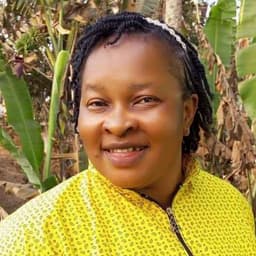
Veronica Ngum Ndi
World Pulse Sister
Founder Community Association for Vulnerable Persons
Bamenda, North West Region, Cameroon
ngumvero29@gmail.com
- Peace Is
- Global