
Peace over endurance
Sep 21, 2025
story
Seeking
Action
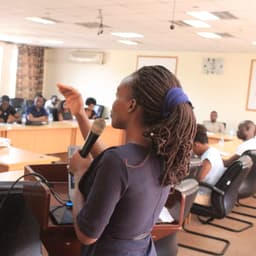
I am Sandra Arinda from Uganda.
Peace to me means happiness, the joy of the heart. It means living in an atmosphere free from conflict, and when conflict arises, having the ability to resolve it and move forward in harmony.
Peace for me means creating an environment for my children and the people I love to live surrounded by love, happiness, and joy, giving them the capability and dignity to express themselves in the best possible ways.
I desire to create moments where my children can talk about anything with me without fear of judgment or punishment.
As a person, I grew up in a broken family characterized by constant violence. From a young age, I witnessed domestic violence. I saw my parents fight, and we grew up in a home surrounded by fear and hate.
I was pushed to a point where I had to choose to love, respect, and side with one parent over the other. Violence, coupled with poverty, brought a sense of parentification. I never felt enough as I grew older until I did something to cover up the sadness and pain my family endured.
Domestic violence affected my self-esteem and my relationships—not just intimate relationships but also friendships and how I relate to different kinds of people. I reached a point where I didn’t know who I was.
I didn’t trust the decisions I was making, especially in relationships, because I hadn’t experienced love or peace growing up.
This wasn’t just happening in my family but also among many women in Uganda, both in rural and urban areas, who were abandoned by their husbands and left to care for their children. These women have abandoned their lives, forgotten who they are, and have lost the smallest joy or peace in their families because they were left to fend for themselves with nothing.
When it came to marriage, it was a struggle for me. I didn’t know what to expect or what was expected of me by my husband and children. I only wanted to avoid what I had seen growing up, but in trying to avoid it, I didn’t know where I belonged or what to fight for. I didn’t know how to raise a family.
At a certain point, I realized I was almost making the same mistakes. I had a lot of anger and insecurity bottled up, and all of this came out after I got married. It was unfortunate that I had to start a new journey of healing from years of pain caused by domestic violence in my family. It’s something I wouldn’t wish on anyone.
As I grew older, my parents reached a point where they wanted to pour out their hearts. Unfortunately, as the child everyone saw as strong, they started dumping their emotional baggage on me. They shared things that affected me deeply while I was dealing with my own pain and carrying the emotional burdens of my siblings and parents. I didn’t know where to put all this.
By the grace of the Lord, I am healing, but it’s a long and hard process. As you heal from one thing, you realize there’s something else you need to address.
My marriage was a turning point. I realized that after years of domestic violence, I didn’t truly understand what peace meant. I thought keeping quiet and bottling up emotions was saving me, but when I got married, everything I had held in for years came out.
I realized peace is not just silence or quiet in the night. It’s the feeling of safety, dignity, and knowing I can express myself at any time and be understood, not misjudged, punished, or abused.
It’s absurd that women are often taught to be quiet, never to resist, and those who endure pain, violence, and conflict are praised for their endurance. This is the reality for most women. They stay in toxic homes for their children or in toxic workplaces to support their families. Their beauty and smiles on the outside cover the sadness and horror they experience inside.
If I could share my story with global leaders, I would passionately urge them to understand that it’s okay for a marriage to not work out. It’s okay to separate. It’s okay for families to find other ways to support their children without letting them go through the pain of domestic violence. It’s okay to seek mental health support, go for therapy, or attend marriage counseling. When all else fails, it’s okay to choose co-parenting. I want global leaders to understand that children don’t only find love when both parents stay together. This is what many African women hope for, but when it fails, it’s okay to separate and co-parent. I’d like global leaders to advocate for healthy co-parenting systems that promote safety, justice, love, and family values, instead of allowing parents and children to suffer in toxic families with broken mental health systems.
- Human Rights
- Gender-based Violence
- Peace Building
- Global