
Pedaling Through the Past: Listening to the Future in Malawi
Jul 30, 2024
first-story
Seeking
Encouragement


“The discussion should not end here. It should go beyond us.” - Chambo Girls Secondary School student, Malawi, November 2023
Key Takeaways
- Carbon credit trading initiatives risk perpetuating neo-colonial exploitation if not implemented equitably
- The Loss and Damage Fund is a step towards the right direction, but more comprehensive support is needed
- Historic responsibility for climate change must consider the lasting impact of colonialism
- Developing countries are disproportionately affected by climate change despite contributing the least to the problem
In November 2023, amidst the climate talks during COP28 (the annual United Nations Climate Change Conference), an agreement was reached regarding the long-awaited Loss and Damage Fund (FRLD). Countries pledged millions to developing nations in natural disaster recovery aid. Climate Conferences address issues of carbon credits, methane reduction, equitable representation, and unfortunately, in recent COPs also fossil fuel companies’ interests. The FRLD agreement is a welcome positive driver, whilst it does not scratch the surface of what countries should really be contributing to it based on their historic responsibities. Our current calculations of responsibility have significant gaps and do not go far enough.
Historic Legacy
It is November 2023, the time of Climate COPs, and I’m in the heart of Malawi, having already cycled nearly 4,000 kilometers across Uganda, Rwanda, Burundi, and Tanzania. The echoes of colonial exploitation resonate around the people, infrastructure and mindset of people I’ve met along the way. Yet, these echoes are far outmatched by the incredible power and potential of the land and its people.
We were welcomed by a bee farmer whose daughter is now a lawyer in the city. We met Theo, a school principal in agriculture who is paralyzed, sharing his vision for climate-smart farming and women empowerment. And we met Harriet, who is integrating regenerative agriculture into a circular system that sustains the orphanage she runs for 200 children. These strong women and men are shaping their future, not letting their past define it.
Still, it is an undeniable fact that these communities will bear the brunt of climate change’s consequences, despite having benefited least from the carbon and resource exploitation that fueled wealth since industrialization. Understanding climate change and climate justice means going beyond political and economic narratives. It requires acknowledging and reevaluating the enduring legacies of past actions that continue to shape the environments of people in the Global South today.
Discussing climate change in this context is not straightforward. The stark unfairness of the situation makes it a delicate subject to approach. The communities I met know the unequal distribution of climate impacts, even children are emphasizing that environmental burdens are not equally shared. Their preparedness for natural disasters and for the consequences of soil erosion, natural disasters and protracted drought is fundamentally underprepared compared to the Global North.
The Voices of Chambo Girls Secondary School
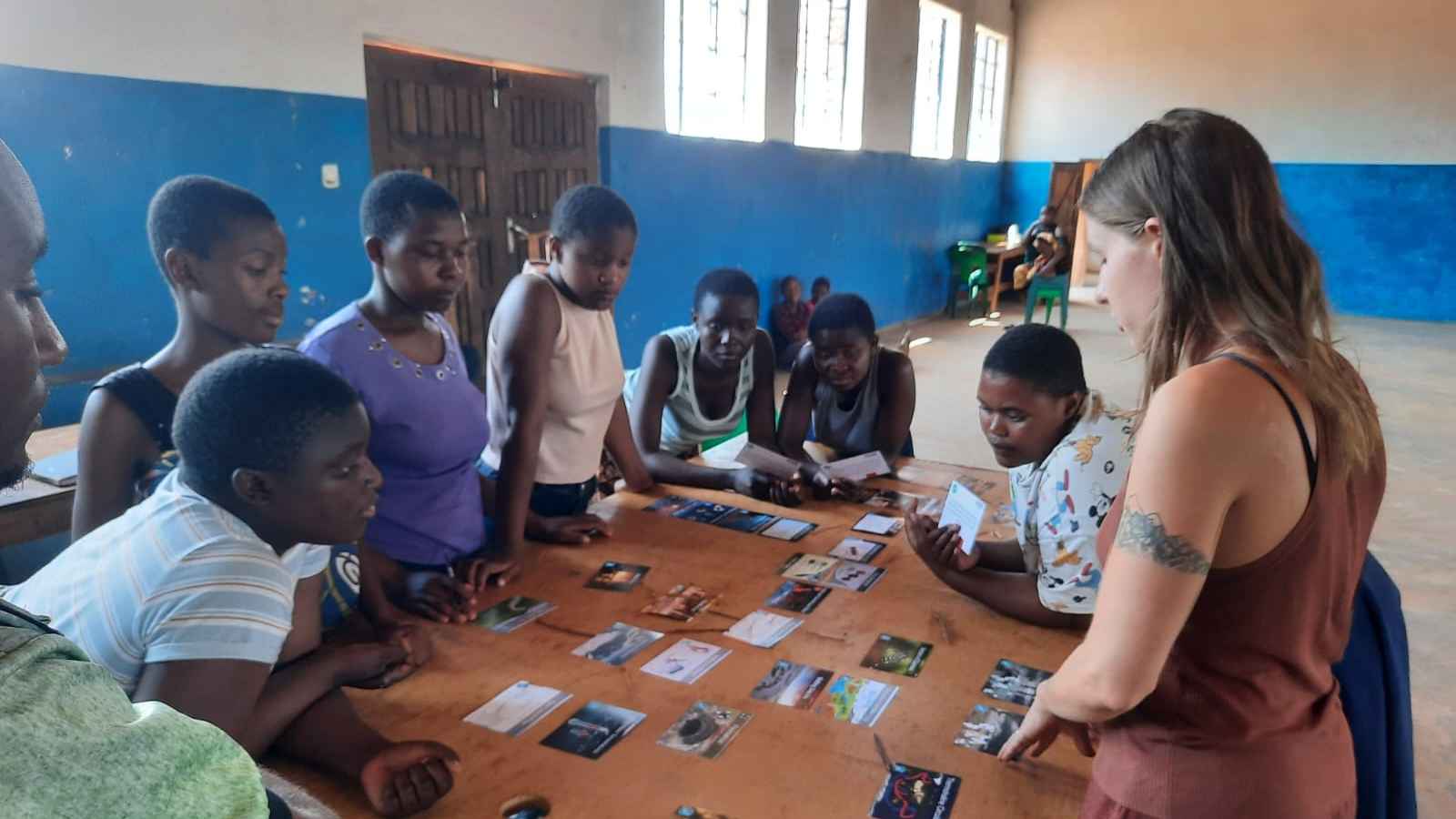
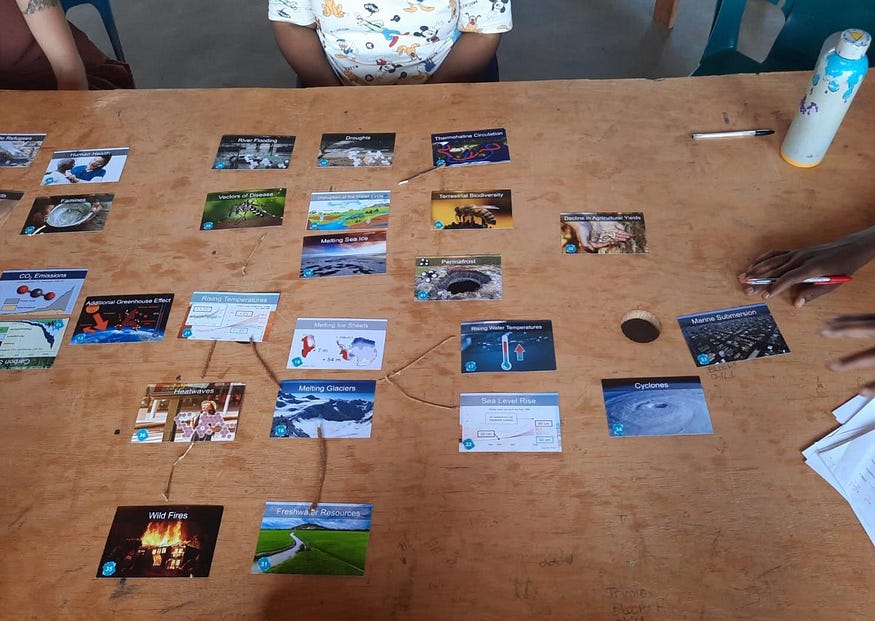
Climate Fresk is a powerful tool for providing a interactive climate awareness based on peer-learning and collective intelligence. The facts in Climate Fresk Workshops are sourced from the most respected scientific publications: the International Panel on Climate Change Reports. These are the same reports that inform global political and economic decision-making at the highest level. During a ‘Climate Fresk’ session with a final year geography class at the Chambo Girls Secondary School in Malawi, conversations on climate justice dominated the debrief. The discussion ranged from carbon credits and their potential as financial income for the global south to Africa’s political voice demanding compensation. These students are acutely aware that they will suffer the most from the past actions of a few.
After discussing mitigation and adaptation as solutions, one girl called out, “Our discussion should not end here. It should go beyond us.” While it was clear to them that they need to adapt, the real question was how? How can they adapt without resources and widespread knowledge? How can they get “leaders, politicians to really give their full support and not hinder all the plans”, especially when the country is still struggling with political instability and foreign influences?
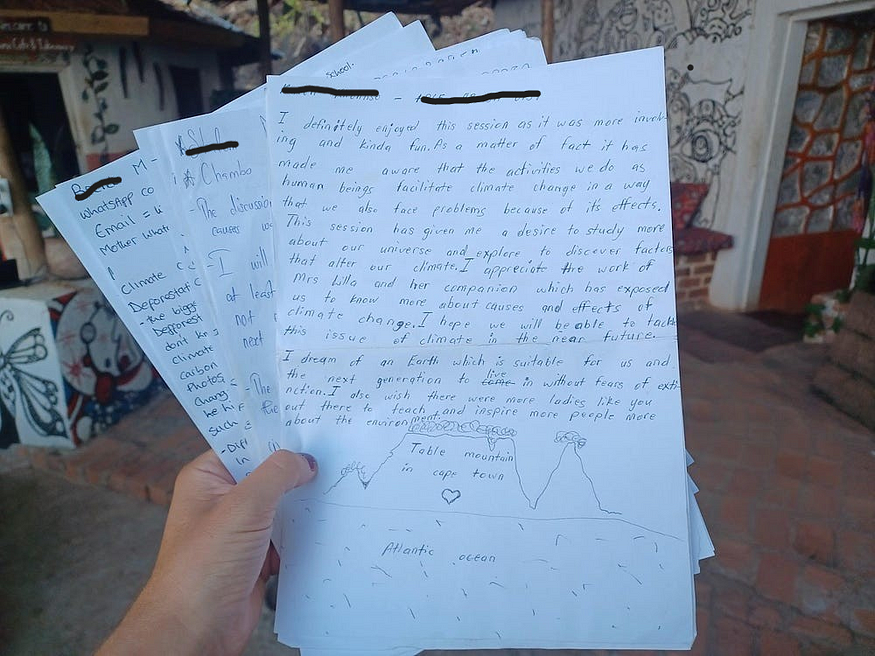
Chambo Girls School Malawi — Thoughts on Climate Change and Adaptation
Recalibrating Historic Responsibility
A Carbon Brief Article reframed our calculation of responsibility, revealing that under this new methodology, the historic emissions of former colonizers change, such as the French share of historical emissions rising by half, the UK nearly doubles, the Netherlands triples and Portugal surpasses even its triple. The article calculates fossil fuels, land use, land use change, and forestry change over time in former colonies and adds them to the historic account of colonizers. This adjustment challenges traditional assessments and emphasizes the lasting impact of historical activities on present-day climate challenges, highlighting how former colonial powers built an extensive part of their wealth on top of the exploitation of resources within their colonies.
The Way Forward
Initiatives like the FRLD can help vulnerable (to climate impacts) nations bounce back from disasters. The FRLD, established at COP27 in 2022, aims to support vulnerable countries impacted by climate change, with contributions from various countries and international organizations. The contributions that have been pledged so far are not even remotely acceptable in light of the actualy historic responsibility being held.
More than 92% of the carbon budget for 1.5C will has been used up. If any country in the global north wishes to respect that limit, then serious considerations for justice must be taken. The question remains: Who gets to use the remaining 8%? And what happens when we outgrow the budget?
The conversations I share with people in climate fresk sessions in East Africa versus in Europe couldn’t be more disjointed. We now see a new scramble for Africa’s carbon trading potential, with large parts of the continent already loaned out for carbon credit trading. Instead of buying or borrowing the land which holds future carbon credit potential, shouldn’t African nations trade their own carbon credits?
Addressing the urgent need for climate action requires recognizing the interconnectedness of history and the environment. A broader perspective on climate justice is crucial, encompassing the lasting legacies of colonialism evident in the challenges faced by communities today. Only through this comprehensive understanding can we pave the way toward a more equitable and sustainable future. As the young women from the climate fresk workshop dreams, we too should aspire for “an Earth which is suitable for us and the next generation to live in.”
- Leadership
- Girl Power
- Peace & Security
- Environment
- Education
- First Story
- Climate Change
- Global