
PHILIPPINES: During Disasters, Women Count On Each Other
Sep 25, 2020
story


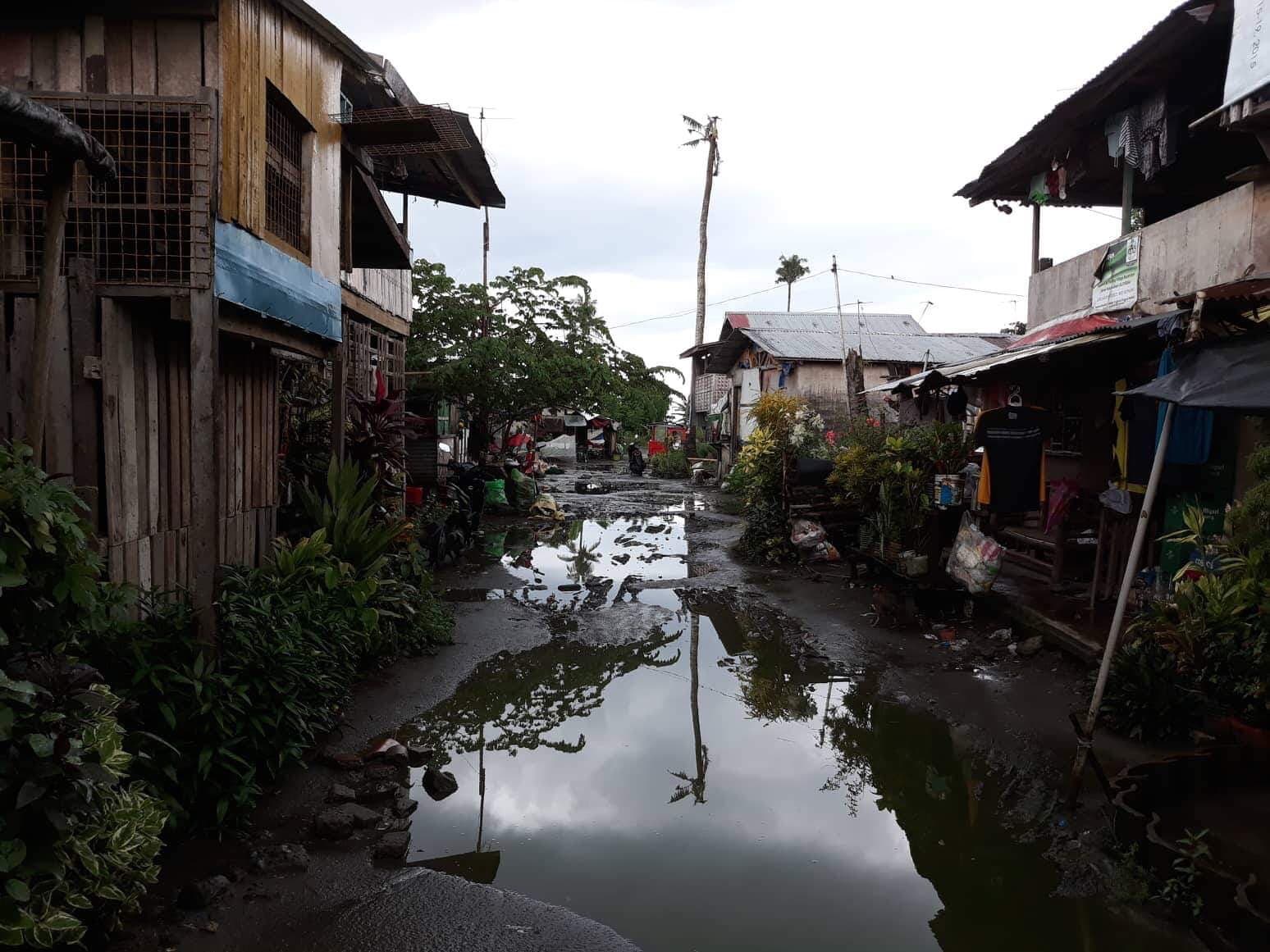
Photo courtesy of Karen Quiñones-Axalan
Karen Quiñones-Axalan has survived typhoons and earthquakes. She has seen the power of women working together in the face of natural disasters.
I felt secure with my sisters around me.
Typhoon Kai-tak landed on our country in December 2017. At the height of the intense gusts of wind and rain, there was a power outage, and I discovered my cell phone battery was drained.
It was not just the storm that frightened me, but the loss of communication with my loved ones. The thought that I was unable to reach out for help, even just to ask them for prayers, increased my anxiety.
I experienced this same feeling of insecurity when a 6. 5 earthquake hit our region last year. As soon as the quake ended, the electricity was gone. My phone's battery was empty as the night grew darker.
Pregnant with my youngest son, I felt vulnerable in pitch black darkness while waiting for my husband to return home. We waited seven days for the electricity to get restored, followed by a grueling rotational power blackout.
My experiences with insecurity during natural disasters have helped me recognize what security feels like.
Recently, I attended a family reunion. I was excited to share updates and anecdotes with my siblings, parents, cousins, aunts, and uncles. However, I lost my voice.
It was a blessing that my biological sisters were present to speak on my behalf. They elaborated on the stories I was supposed to share, and clarified confusion arising from the unexpected barrier. They became my voice. Though I was in a disadvantaged situation, I still felt secure with my sisters around me.
My hope is for all women to experience this sense of security. I believe a woman's security is the knowledge that the women and children in her community are free from danger.
We have a lot of work to do before we can achieve this. My country has suffered greatly from natural disasters in recent years. I now live in Tacloban City and the challenges I’ve personally experienced are small compared to my neighbors here who survived Super Typhoon Haiyan.
On November 8, the people of Tacloban City lit candles along the streets to commemorate the family and friends they lost. More than 6, 000 people died and many more remain missing after Super Typhoon Haiyan wreaked havoc in the Philippines. This year marks the fifth anniversary, but the trauma of the past remains.
After the typhoon, I had an opportunity to listen to the survival stories of three mothers. As they were recounting their experiences, tears interrupted their tales. They shared that living in the eastern part of the country, they were accustomed to storms; however, their experiences did not prepare them for Super Typhoon Haiyan's wrath.
During the landfall, when the seawater rapidly rose above the ground, these mothers commanded their children to swim against the tide to reach the staircase and climbed up to the second floor. They struggled to climb due to the strong current, but they managed to reach safety.
After the storm passed, the mothers smelled a strong stench from the streets. To their horror, they saw numerous dead bodies scattered all over, people of different ages, from grandmothers to pregnant women to newborns. The trees and infrastructure were wiped out. When they visited their village, there were no houses standing there. The storm swept all their possessions away. For the next three months, there was no electricity. They lived inside the schoolrooms. Many other survivors lived in makeshift tents.
That was five years ago, but the remnants of that tragic past are still seen in the outskirts of the city today. Many survivors are still living in temporary shelters while they wait for their houses to be constructed and awarded by the government.
The three mothers I spoke to all said that Super Typhoon Haiyan was the fiercest typhoon they've encountered in their lifetime and they wished it would never happen again.
Sadly, the typhoons did not stop coming to our nation. These natural disasters add more damage almost every month. New disasters continue to impede the progress of rehabilitation initiatives.
Three months ago, Super Typhoon Mangkhut landed on the northernmost part of our country; it was the 16th typhoon to enter the Philippine Area of Responsibility (PAR) this year. According to Relief Web, it displaced 469, 230 people and killed over 70 people. It caused a landslide which killed over 100 more people. This was the strongest typhoon since Haiyan.
There are various forms of violence in the Philippines that threaten women’s security: armed conflict, human trafficking, rape, online sexual exploitation, the drug trade, etc. All of these threats are aggravated by natural disasters like typhoons, earthquakes, floods, landslides, and volcanic eruptions.
These natural calamities disturb women's peace and security. Destruction of infrastructure and agricultural land leads to lost livelihoods. Damage of houses creates vulnerability to sexual exploitation. Desperation for economic opportunity forces some women to practice prostitution and puts girls at increased risk for sex trafficking or online exploitation.
This is why women should be part of decision-making processes—especially disaster preparedness and post-disaster response. Female voices should be loud enough inside the halls of power so voiceless and vulnerable women in the grassroots will be counted and heard.
Only women understand women’s experiences. For example, relief goods are typically food, water, and clothes. Emergency planners think these are the survivor's immediate basic needs. It takes a woman leader to recognize that menstrual hygiene is also a basic need and to include a pack of sanitary napkins.
During the emergency response for Super Typhoon Haiyan, breastfeeding mothers used social media to encourage other lactating mothers in the country to express their excess milk and donate it. Women stored milk in sanitized storage bags and delivered these to the drop off centers. The organizers froze the milk and sent it to evacuation camps.
While men tend to think more on the operations side during emergency response, these mothers were concerned with those traumatized and stressed mothers who struggled to produce milk for their babies. Women often incorporate care and concern to those who are vulnerable in their disaster relief efforts.
While natural calamities threaten women's security, they can also unleash women's intelligence, strength, and collaboration.
I have seen a gentle mother turn into beast mode when her children are in a disadvantaged situation. Her protective nature fuels her rage to defend her own.
This is why we need more women world leaders.
Our feminine nature incorporates care and empathy into our leadership style. However, once we learn women in another part of a village, city, region, country or continent has been disadvantaged, discriminated against, or displaced by violence, we unleash our rage and we move heaven and earth to secure protection and seek justice for those women.
In the rural areas of the Philippines, there was once a community practice called bayanihan. It was an act of voluntary kindness by villagers coming together to carry a bahay kubo or a nipa hut, a house made of dried coconut leaves and bamboo. This usually took place when the resident wished to transfer his/her house to a different location or community. Instead of leaving the hut behind and building a new one, the neighbors gather together to lift the entire hut and move it to the new place. Bayanihan is no longer practiced today, but the concept of collaboration and solidarity remain. It is a metaphor of carrying one another's burden.
The bayanihan spirit in our country is awakened during disasters. Everyone helps and treats one another as a human being. Whether the one whose life is at risk is a blood relation or not, a stranger or a rival, this is no longer relevant. The humanitarian spirit takes over to save a life.
Security for me is knowing that I am not alone in times of danger. It is knowing that someone has my back even if I face multiple typhoons in this lifetime. It is sleeping soundly at night because there are women leaders involved in creating platforms that keep me and my family safe from all forms of violence.
Security for me is to have a community of women here and abroad who support me, help me, and mentor me to help other communities of women as well. It is having a safe space and a strong support system.
Security for me is practicing bayanihan. It is building social cohesion among women. It is trusting that during those moments when I want to speak out but I have been silenced, a sister or group of sisters will be speaking on my behalf and become my voice. It is participating in women's initiatives to free women from bondage and violence.
Just as I feel secure when I have a shoulder to lean on, I can be completely secure when there is no longer a single woman in this world who suffers from threats of violence and disasters.
STORY AWARDS
This story was published as part of the Future of Security Is Women digital event and is sponsored by our partner Our Secure Future. World Pulse runs Story Awards year round—share your story with us, and you could be our next Featured Storyteller! Learn more.
- Leadership
- Peace & Security
- Future of Security Is Women
- South and Central Asia