
Please stop stressing this generation. Let them enjoy what they enjoy!
Jun 18, 2025
story
Seeking
Feedback


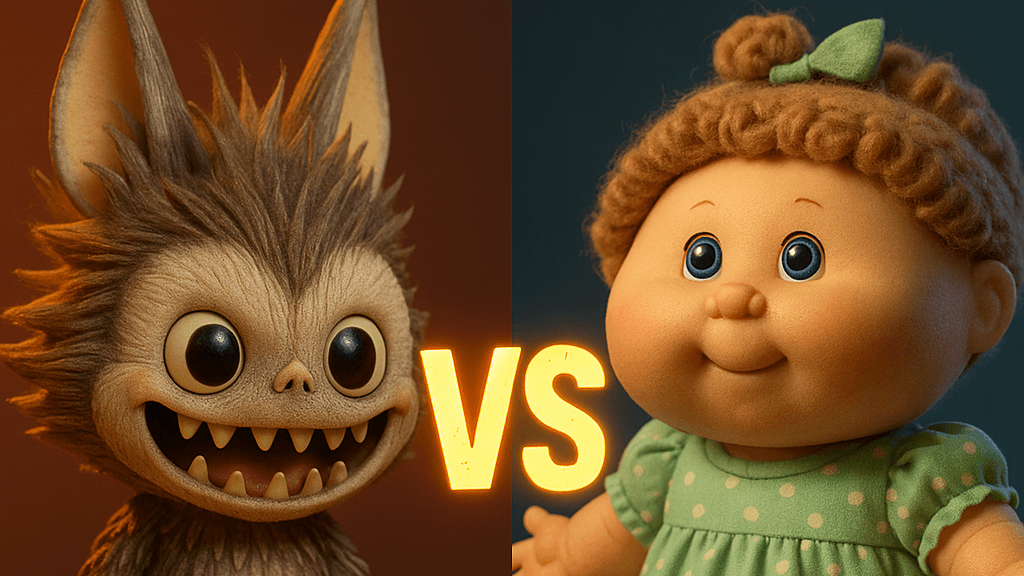
Photo Credit: Image generated by OpenAI’s DALL·E.
A nostalgic versus modern collectible face-off: Labubu vs. Cabbage Patch Kid.
In the 1980s, you wouldn’t find adults arguing about the deeper philosophy behind the round-faced, soft-bodied Cabbage Patch Dolls. They were simply… dolls. Collectible, yes. Culturally iconic? Absolutely. But not once did we ask what these dolls meant to the children who clung to them at night or proudly introduced them as family to strangers. They were just toys — no overthinking, no shame, no judgment.
Fast forward to 2025, and we are seeing a phenomenon that echoes something much deeper: the rise of Labubu, a tiny mischievous creature from Pop Mart that’s taken the world by storm. Unlike the quiet comfort of the 80s, today’s collectors — young and old — wear their love for Labubu with pride. Social media is filled with unboxings, personal collections, custom paint jobs, and passionate debates over which version is best. It’s not just a toy. It’s identity. It’s art. It’s escape.
And yet — there’s still a voice, quiet but harmful, that whispers: “You’re too old for this.”
“Why are you spending money on that?”
“You should be doing something more serious.”
Why Are We Still Policing Joy?
As technology evolves, so should our understanding of what matters to people. We’ve made incredible strides in AI, immersive learning, and digital connection — yet we continue to place limits on how people express their humanity.
Why do we shame someone for collecting figurines but praise another for spending hours doom-scrolling through negativity? Why do we judge the girl who builds a fantasy Labubu town on her shelf but not the adult who escapes into Netflix every night to avoid stress?
A young teacher I once met told me about her student, Layla, who brought her Labubu to school every day. She said it helped her stay calm, especially during tests. Instead of asking Layla why she was “too old for toys,” the teacher asked her: “Can Labubu help other students too?”
That same week, they created a “Comfort Corner” in class with soft toys, journals, and calming tools — and guess what? Behavior improved. Students opened up more. Technology didn’t make that happen. Empathy did.
From Judgment to Joy: What Education Can Learn
I see students light up when they talk about something they love. Maybe it’s a small toy in their backpack, a sticker on their laptop, or a drawing they’ve made of their favorite character.
Instead of stopping them, I try to use it.
Can we turn this into a project? Can we use it in a coding challenge? Can we connect it with storytelling or design?
One time, a group of students built a simple app around collectible characters — just for fun. But in the process, they learned about UI design, logic flow, and presentation skills. All because they were excited. All because I didn’t ask them to put it away.
We’re not here to tell this generation to stop enjoying life. We’re here to help them connect what they love with what they can learn.
As an educator and technologist, I’ve seen firsthand how young people respond to freedom — especially in the classroom. When we stop making them feel guilty for what they enjoy, and instead use those interests as tools for engagement, magic happens.
- A group of students turned their love for Pokémon into a machine learning classification model in class.
- Another built a Java app themed around virtual pets, exploring real programming skills while staying deeply connected to something they love.
AI in education isn’t about replacing teachers or automating creativity. It’s about personalization. Empowerment. Turning that “strange little hobby” into a doorway toward deeper understanding.
The Evolution of Technology... and Hearts
When the Cabbage Patch Kids came out, we didn’t have Instagram, AI art, or the ability to 3D-print our own characters. But we had imagination.
Now, in 2025, that imagination has evolved — it has tools. It’s louder. It shares itself with the world. And yet, it still gets shut down.
We tell kids they need to think critically, innovate, and create — but then we criticize the exact spaces where they begin to do that. A Labubu collection may look like “just toys” to some, but to others, it’s their gateway to storytelling, design, even coding.
Why not encourage that? Why not let that be enough?
A Plea to the Grown-Ups (And the Grown-Up Inside You)
Please, stop stressing this generation.
Stop making them feel like every interest needs to be a stepping stone to productivity or profit.
Let them love what they love. Let them build AI games about sea monsters. Let them design websites for their plush toys. Let them paint, code, animate, and talk to robots in silly voices if it means they’re learning something — about tech, about life, about themselves.
Let us return, just for a moment, to that soft joy we felt holding a Cabbage Patch Kid — when we didn’t care who thought it was silly, because it made us feel safe.
Let’s Stop the Guilt — And Stop Comparing Eras
We’re not living in a competition between past and present. The dolls we collected in the 80s or 90s were just as fun and valuable then as Labubu is today. They both sparked joy. They both made people smile. And no one should feel the need to explain or defend what brings them happiness.
This isn’t about being childish. It’s about being human.
Let’s stop making people feel guilty for smiling over something small. Let’s stop acting like enjoying something playful is a problem.
Joy is not a distraction. It’s a form of resistance.
In a world filled with noise, pressure, and unrealistic expectations, sometimes the greatest gift we can give the next generation — and ourselves — is the permission to smile over something small. Something weird. Something wonderfully unnecessary.
Whether it’s a doll from 1983 or a mischievous Labubu from 2025, the message is the same:
If it brings you peace, if it sparks your imagination, if it reminds you that life can still be light... then hold on to it.
Because in the end, isn’t that the kind of world we want to build with all this amazing technology?
A world that lets people simply… be.
- Technology
- Human Rights
- Behind the Headlines
- Our Impact
- Training - Engaging in Ethical Research & Evaluation
- Training - Digital Storytelling
- Training - World Pulse 101
- Global