
Recognizing Femicide - A Hidden Tragedy Behind the Statistics
Apr 10, 2025
story
Seeking
Action

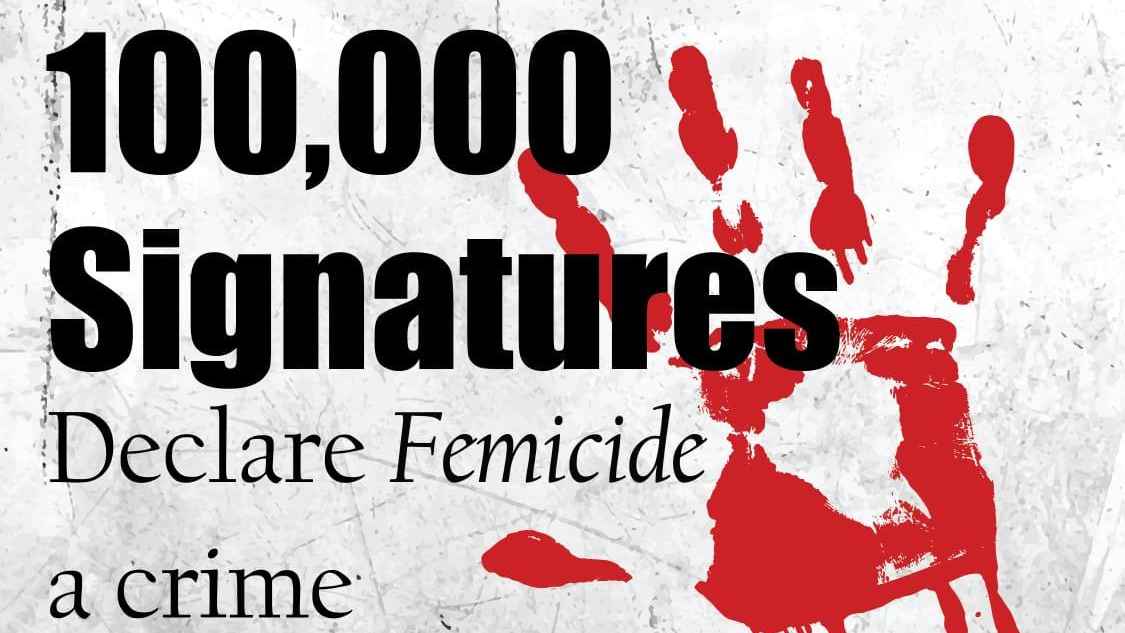
Photo Credit: Photo Credit: Usikimye, Kenya
"Femicide stands apart in both cause and consequence, yet it remains dangerously under-recognized"
In any society, the taking of a human life is among the gravest offenses — this act is legally defined as homicide. But not all homicides are the same. One form, femicide, stands apart in both cause and consequence, yet it remains dangerously under-recognized.
Femicide is not simply the murder of a woman. It is the killing of a woman because she is a woman — an act driven by misogyny, control, and the belief that her choices, voice, or very existence are somehow less valuable. These are not random crimes. They are acts deeply rooted in systemic gender-based violence and reflect disturbing cultural patterns that normalize abuse, silence, and erasure.
Consider the following examples:
- A woman is murdered by her partner after expressing the desire to leave the relationship.
- A schoolgirl is assaulted and killed on her way home, her youth and innocence offering no protection.
- A woman is targeted and attacked by a stranger simply for saying “no.”
- Another disappears after reporting domestic abuse — her voice silenced permanently.
These are not isolated tragedies. They form part of a recurring, well-documented pattern: control, harassment, abuse, and eventually murder. This cycle is driven by patriarchal norms and a culture that often protects the perpetrator more than it defends the victim.
And yet, in our laws and justice systems — including here in Kenya — femicide is not recognized as a distinct category of crime. It is lumped into generic homicide statistics, hidden in plain sight. That’s not just a bureaucratic oversight; it’s a systemic failure that erases the specific nature and intent of these crimes.
Kenya has laws that, on paper, should protect women. The Sexual Offences Act and the Protection Against Domestic Violence Act are meant to provide legal recourse and safety. However, implementation is painfully weak. Gender-Based Violence (GBV) units are chronically underfunded, forensic investigations are often inadequate or nonexistent, and corruption corrodes the process of justice.
As a result, many perpetrators of femicide walk free. Some are never prosecuted. Others are shielded by their communities, excused by societal norms, or even protected by those tasked with upholding the law. Families grieve while justice goes unserved. Victims, already failed in life, are failed once more in death.
Recognizing femicide as a distinct crime matters. It matters because naming something is the first step toward understanding it — and changing it. It matters because women deserve to be protected, not just in theory, but in reality. It matters because behind every statistic is a name, a face, a story, and a future stolen.
We need structural change. That begins with legal recognition. It continues with education, community awareness, and the strengthening of institutional support for survivors and families. It means refusing to accept silence as the norm, and choosing to hold perpetrators — and the systems that enable them — accountable.
There is a growing call for action. A national petition has been launched to push for the legal recognition of femicide in Kenya. Signing this petition is a small but powerful act of solidarity. It is a step toward demanding that our justice system no longer turn a blind eye.
You can add your voice here:
- Human Rights
- Gender-based Violence
- Our Impact
- Moments of Hope
- #ShiftThePower
- Stronger Together
- Global