
Reflections on the Young Journalists Summit: Mental Health & Gender Sensitivity in Media


Reflections on the Young Journalists Summit: Mental Health & Gender Sensitivity in Media
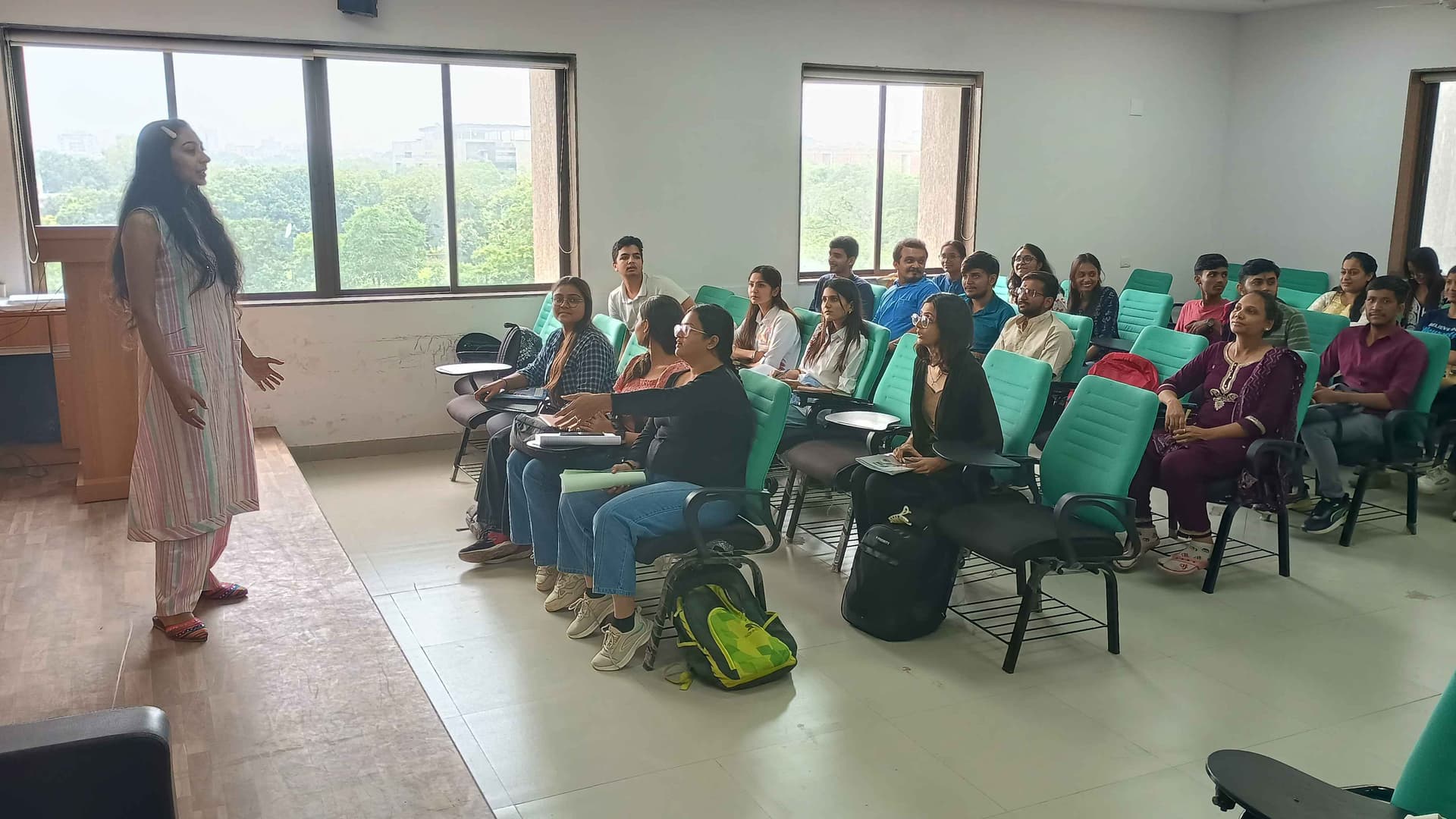
I recently convened a summit with 40–50 young journalists, representing diverse backgrounds — from rural areas, marginalized communities, and aspiring change-makers determined to advance gender equality.
We began by focusing on mental health and the accessibility gap in reporting. Through practical exercises, participants explored how journalism can address mental health issues in an informed, empathetic, and accessible way. This was followed by an in-depth discussion on gender sensitivity in media reporting — examining how reporting styles affect people from different backgrounds and perpetuate stereotypes, particularly for women.
The conversation also extended to covering pressing social issues and understanding the perspectives of young journalists who represent various communities. Whether in advocacy, development, or driving social change, the summit reaffirmed that journalism plays a vital role in shaping narratives through words.
Some moments were revealing — and, in certain ways, concerning. Even among young women, there was resistance to acknowledging poor reporting practices, such as in the dowry demand angle of the Raja Raghuvanshi case. Likewise, the use of “Kanyamaan” in branding — a term that reinforces the idea of women being “given away” in rituals — sparked disagreement. While a few women encouraged progressive change, several resisted it.
My overall experience was mixed:
• Mental health advocacy was relatively well-received. Most participants were aware of depression and anxiety as concepts, but there was limited understanding of their adverse effects or the role of a support system. Strikingly, no participant was familiar with any existing articles or reports specifically on mental health issues. The accessibility gap — in resources, coverage, and representation — was widely overlooked.
• Gender sensitivity proved harder to embrace. Except for a few young women from urban areas, there was significant reluctance to challenge entrenched stereotypes. One young woman from a rural background even attempted to justify dowry in the Raja Raghuvanshi case.
• Women’s mental health remains an under-discussed area, with little scope for transformative change at present. Few were willing to critically examine headlines such as “Girls top CBSE results” or “Only 32% women in workforce”, which subtly reinforce inequality.
• On a positive note, social media hate linked to gender and mental health was discussed in depth by two urban women journalists, whose perspectives on gender sensitivity give me hope for future change.
The summit highlighted an important truth: while there are sparks of progressive thinking, many young journalists — including women — still find comfort in established stereotypes. Change will require not just awareness-building, but sustained dialogue, deeper engagement with lived experiences, and challenging the norms embedded in media narratives.
Finally, we discussed the resources available to us for driving change and how, together, we can walk the path of development. The summit encouraged participants to reflect on areas for improvement, recognize the tools already within their reach, and commit to using their words thoughtfully — and courageously — when it matters most.
I feel genuinely encouraged that I chose to work with young people who are ready to channel their strength and the power of their voices toward meaningful change. Together, we mapped out the direction to move forward, with a shared commitment to responsible, impactful journalism.
- Leadership
- South and Central Asia