
REVICTIMIZE A VICTIM OF CHILD VIOLENCE IN A JUDICIAL PROCESS
Jun 9, 2024
story
Seeking
Encouragement


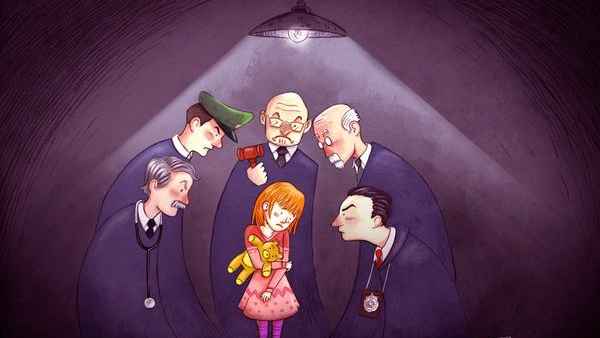
REVICTIMIZE A VICTIM OF CHILD VIOLENCE IN A JUDICIAL PROCESS
Considering the reality of criminal proceedings and the importance of the credibility of testimony, this essay has the purpose of exposing the effect of revictimization on minor witnesses and how ethical it would be to apply it as forensic psychologists. Thus, we will start by explaining what we understand as revictimization or secondary victimization, it is what arises from the fact that the person who has lived a traumatic experience, and upon coming into contact with the authorities or institutions of the state, is the recipient of treatment. unfair and may even be criminalized for the same act of which she was the recipient.
The increase in victimization today reveals the failure of legal institutions, evidencing the lack of preparation of professionals to deal with complaints about crimes in general or complaints about specific crimes. In other words, the dignity of the victims is affected when they do not find fair assistance in the legal apparatus, such as access to the judicial system, social and medical, psychological, economic assistance, accompaniment during the process, etc. It is also true that in several cases the victim ends up being defamed, suspected, criticized and in the worst of cases questioned and abandoned to their fate.
Furthermore, the credibility of testimony is understood as a subjective assessment of the estimated accuracy of a witness's statements. Nowadays we must take into account keep in mind that, within judicial processes, this point is essential for decision-making within a trial. Because from this we can evaluate the statements made in the case by the victim and the witnesses.
However, considering that these witnesses may be minors and that they are in a stage of development, having witnessed a traumatic moment and going through revictimization goes far beyond the unpleasant steps of psychosocial and legal interventions after the complaint. of an incident of sexual abuse, and is a significant threat to all human subjects, especially when: he is a minor and dependent because he leaves his mark on the compositional side. In reality, children hit a wall of apathy and institutional silence. In a childish or youthful imaginary sensitivity, they experience feelings of dread, inexplicable feelings, and a perception of the adult world to which they do not belong. When in helplessness you find silence and indifference instead of symbolic words.
Within the institutional journey, another cause of revictimization, this time when there is finally attention, is the multiplication of interviews, tests, expert examinations, interrogations and other tests, which are repeated without anyone in charge of centralizing and coordinating the type of care provided to the minor nor the information obtained; so that the child often feels harassed by so many questions, and chooses not to answer any more, which often leads to him being considered a liar.
To this discouragement and fatigue of the child, we must add the psychological wear and tear of the companions, in the face of the indifference and clumsiness of the institutions. Along with this lack of attention, another element that greatly affects children's affectivity, although it is not usually taken into account in the course of the psychosocial and legal process, is the experience within the family. In fact, it very often happens that during the slow way of reporting sexual abuse, the homeostasis of the group is disturbed by even the mother or father expressing feelings of hostility against the child for having caused a stir in their family.
A child's imagination is very different from an adult's imagination. He experiences situations that involve him from a psychological level where sensations and emotions prevail that he cannot easily verbalize. Since an adult's fear of what happened during the threat of abuse and/or punishment can preclude all forms of expression, whether verbal or pictorial, the interrogation and testing he or she undergoes are completely the typical view of an untrained professional who treats children.
At this level different aspects can be distinguished; often, professionals do not take the time to explain to children what is happening. the reasons for such investigations, and the implications of re-experiencing such instances, so that the child may experience a kind of depersonalization. of interventions where the objectives of the course are not understood.
Arguably the worst form of revictimization at this level is to ignore children's language and the way it expresses what they have experienced. This fact is especially evident in the interviews and interrogations of lawyers seeking truths that suit them, rather than the truths that children experience. Thus, despite their contempt for minors and their efforts to remain very loyal to their perception of what happened, they very often tend to treat them as liars.
Finally, we must not forget that the absence of institutional responses and the interruption of processes can lead to the return of the child to the hands of his perpetrator; a regrettable situation with devastating consequences that portends a very sad future for those who have been attacked in the most intimate part of their soul, when the pain of the attack is enclosed in the silence of incomprehension and meaninglessness; when the impression of an inescapable destiny is recorded in a being still in a relationship of physical and emotional submission with the adults around him. This type of judicial, family and social treatment that a victim goes through can generate guilt, feelings of inferiority, low self-esteem, lack of emotional control and serious damage to their mental health.
Take this into account if you deal with a victim of violence.
Thank you for your attention, leave your comment.
- Health
- Human Rights
- Education
- Shout Your Vision
- Member Introductions
- World Pulse at 20
- Latin America and the Caribbean