
Rising from the Ashes - Judith Mutinda Gilgal’s Story of Loss, Resilience, and Redemption
Apr 23, 2025
story
Seeking
Encouragement


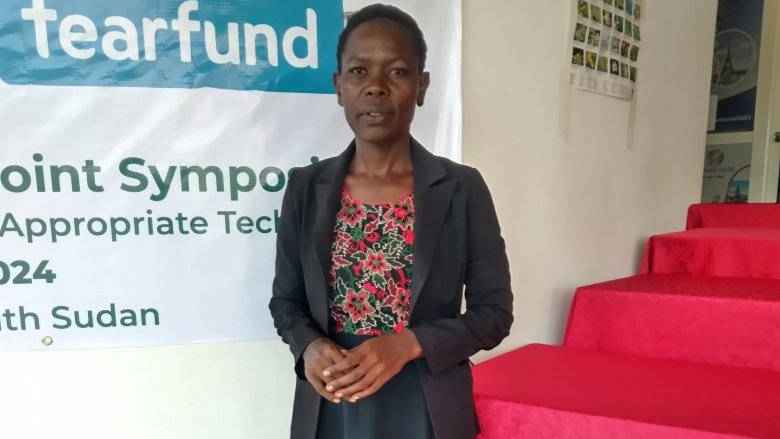
Photo Credit: Judith Mutinda Gilgal
"Despite her illness, Judith never lost sight of her most sacred role: being a mother"
Judith Mutinda Gilgal’s journey is one of quiet defiance against forces that tried to silence her, dispossess her, and ultimately reduce her to nothing. A widow, mother, and former schoolteacher, Judith now tills the dry but defiant soil of Eastern Kenya, having transformed her grief and struggle into a form of resistance—through farming, motherhood, and faith. Her life is a powerful testimony to the unbreakable spirit of a woman determined to reclaim her dignity.
Born and raised in Kitale, in the lush, fertile fields of Trans-Nzoia County in Western Kenya, Judith’s early life was marked by structure and stability. The daughter of a disciplinarian father and a nurturing mother, she grew up with a deep respect for education and community service. That passion led her to a career in teaching—an opportunity not just to earn a living but to serve as a mentor to young minds, and a symbol of leadership in her community.
Judith later married and moved to Eastern Kenya with her husband, a respected civil servant. Together, they built a modest but fulfilling life, raising children and investing in property with hopes of a secure future. However, life took a dark and unexpected turn when her husband passed away. What should have been a time of mourning and consolidation turned into a prolonged legal and personal battle.
With her husband gone, Judith became a target. She was harassed and pushed out of her teaching job under dubious circumstances. She traced her dismissal to the hands of corrupt officials within both the education sector and local civic government. Judith believed that her refusal to yield to intimidation and give up her husband’s property made her a marked woman. What followed was a drawn-out fight to retain what was rightfully hers—both her job and her home.
It was during this period of emotional and financial strain that her health began to fail. She was diagnosed with Graves’ disease, a condition that affected her performance and energy levels. Eventually, two years ago, she was officially removed from the payroll on grounds of non-performance—a verdict she attributes more to political sabotage than her medical condition.
Despite her illness, Judith never lost sight of her most sacred role: being a mother. Her youngest son, an academic achiever, remained determined to succeed in school even as the family’s finances crumbled. Judith recalled how, during this time, her son received a partial scholarship to join Emobilis College to study software engineering and develop IT skills—an opportunity he had earned through hard work and merit.
Yet the triumph was bittersweet. Judith found herself staring at costs she could not meet: a Ksh 1,500 registration fee, Ksh 45,000 in tuition balance, and a Ksh 48,000 hostel fee for the semester. Her only savings—Ksh 39,000 invested in an education-focused Sacco—remained inaccessible. She wrote to the Sacco, explaining her situation, but months passed without a single reply. She reached out to other savings cooperatives where she was a shareholder, but the lack of a payslip sealed her fate. Not a single institution responded with assistance.
Left with few options, Judith turned to her children, choosing transparency over despair. She gathered them and explained the situation in full. Rather than panic, they proposed a creative and humble solution. Her children suggested that they apply for the government-sponsored Hustler Fund. Her son received Ksh 475, her daughter another Ksh 475, and Judith herself got the same amount. With a total of Ksh 1,425 in hand, they used it to pay the registration fee, effectively securing his spot at the college.
It wasn’t much, but it was a start. The family clung to their faith, trusting that the rest would somehow fall into place. When the question of hostel accommodation arose, Judith turned to her network. She shared her story with a former classmate, who was moved by her honesty and determination. The classmate offered her 10,000 Safaricom Bonga Points, which were enough to pay for a week’s stay at Ngara Hostel in Nairobi. It was an act of generosity that carried the weight of a miracle.
Her son has now been in college for four months. He is set to complete his final project and assessment this very month, after which he hopes to start working before joining university in September 2023. The journey has been anything but easy, and Judith admits that without clearing the outstanding balances, the chapter cannot close peacefully. Yet, even in the face of these remaining hurdles, she remains proud—not of material gain or validation from society, but because she refused to dwell on what she lacked.
Judith reflects on her journey with a calm assurance. She acknowledges the pain and betrayal she endured at the hands of institutions meant to protect her. But she also speaks with gratitude for the few who extended a hand when it mattered most—like-minded angels, as she calls them, who acted without fanfare or expectation.
Today, Judith finds solace and strength in farming. Working the land reminds her that growth is slow, often invisible at first, but inevitable for those who keep planting. In the rhythms of soil and seed, she has discovered healing. Her modest harvests now support her family’s basic needs, and in nurturing the earth, she continues to nurture the dreams of her children.
Though still scarred by injustice, Judith stands as a symbol of unwavering faith and relentless hope. Her story is not merely about survival; it is about a woman who, despite being dragged through the mud of systemic failure and personal tragedy, emerged with her dignity intact.
Judith Mutinda Gilgal's journey is far from over, but it is already a story worth telling—a beacon for anyone who has ever been told they can’t.
- Leadership
- Economic Power
- Human Rights
- Girl Power
- Moments of Hope
- Shout Your Vision
- Global