
Safety Starts with New Passwords
Nov 3, 2025
story
Seeking
Encouragement


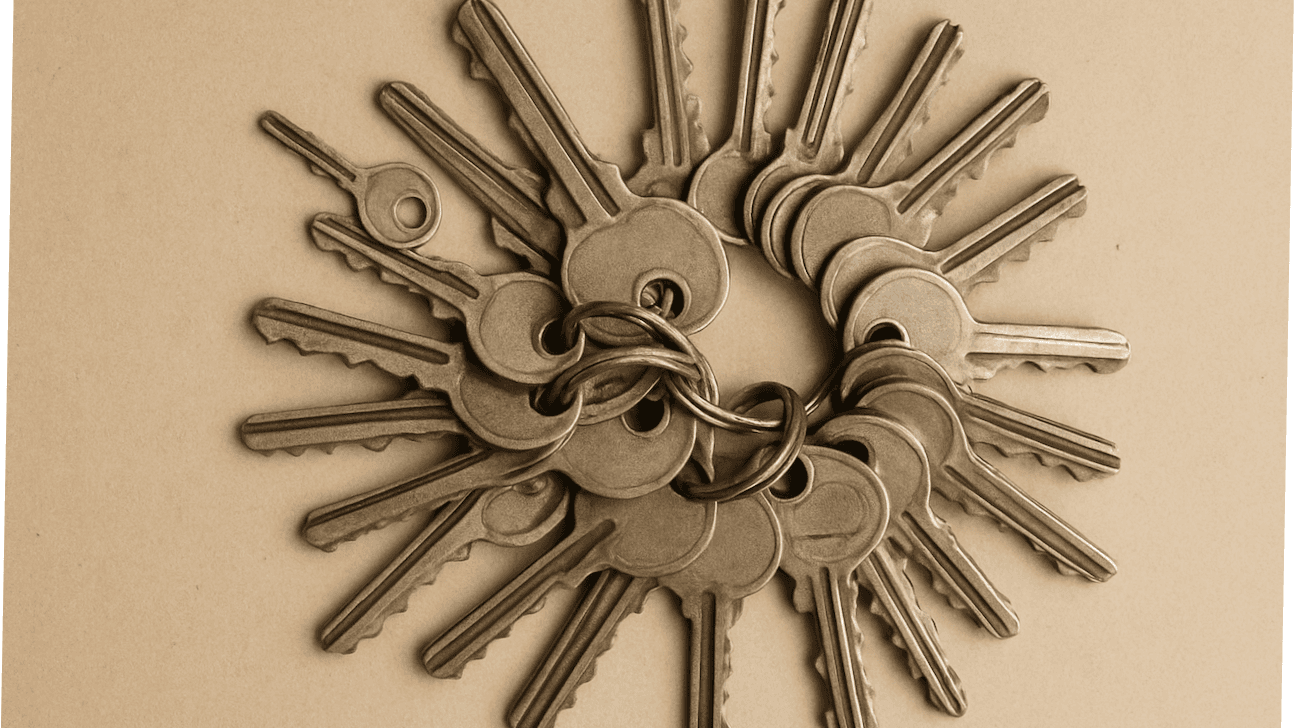
Photo Credit: Image was generated by AI using ChatGPT.
A bunch of almost identical keys, about 20 of them tied in one keychain.
Today, I attended a training on Safety and Security online. Thank you World Pulse and Head of Training @Kirthi Jayakumar for making me realize that my emails, social media, online bank accounts (as if I have a huge deposit) and data are at risk of being stolen.
I thought I knew how to protect my accounts online. I have been using the internet for decades. I have more than one (1) personal user email accounts and separate accounts for the operations and projects of WEAVERS (Women Enablers, Advocates and Volunteers for Empowering & Responsive Solutions). There are also social media and communities, subscriptions and shopping accounts that require passwords. If I had to undergo a test on internet safety and security, I would have failed on day one, the first module. If you are like me, who uses the same password for my email and social media accounts for more than one year, then it's time to change your password. Refrain from using the same password for email, social media, shopping and bank accounts. This means that each account should have a unique password. That's what I learned.
However, this may mean that I will be clicking "Forgot Password" more often which is the very reason I decided to use one password for all as a matter of convenience. Senior moments. I get that all the time, especially on passwords and names. The only remedy that I know was to make an easy- to- remember password and used it for all my personal and financial accounts. Perhaps this is the reason why I receive emails from strangers who introduce themselves as heirs of rich and powerful men in Africa, who have millions in bank accounts. They bring good cheer and wish to partner with yours truly in establishing a charity foundation in exchange of a huge sum and ask me to click the link if I agree. I don't click such links, of course and just let it pass. However, these emails appear occasionally with a slightly different information using different names. I don't respond to these emails knowing that these are from scammers. Besides, I don't want to be a conspirator or a party to a money laundering scheme. There are also mails from different sources that lands in the spam folder. I delete them to free up space but they keep on coming again despite deleting them forever. I learned from the training that scammers and hackers can be prevented from getting into the account by changing the password once every three (3) months using a combination of symbols and alpha numeric characters. The longer the password, the better because it is stronger and difficult to copy.
Here comes real life challenge. Remembering the unique passwords of each account will be more difficult for seniors like me. It's like having a bunch of almost identical keys for the apartments in the entire building. Writing the passwords on a notebook which I alone know, will help. But which notebook? I can imagine the notebook where I wrote the passwords. But where did I place it? Is it at home? in the bedroom? in the shelves among the books? is it in the office? or it could be just in my bag all along. And which bag?
While writing this assignment , it occurred to me that people my age, the senior citizens, needs a specialized module on Safety and Security. Our needs and challenges are different from the younger ones who have better memory and eye sight. The longer the password, the more difficult it is to type. We might miss a letter or number and have to repeat encoding the password several times. Sometimes, it reaches a point where we won't be allowed to access our own account. This happened to my 6-digit PIN code in one of the banks. The account was declared inactive since I did not have the chance to withdraw money using my ATM (automatic teller machine) card. I forgot the PIN code after activating the card. I was certain that I wrote the PIN somewhere. It can happen that older people maintain more than one bank account , thus, needing more passwords and PIN codes to memorize and keep. There are apps specifically for saving passwords. I kept my password on Passkey. But I forgot the password to open Passkey.
I learned from the training that passwords can be saved on the browser of your personal computer- a laptop or your smartphone. I didn't know this until now. It was an AHA! moment for me because I always answer No every time the browser asks if I want to save the password for that particular site. I thought all the while that it was the website which will collect the password. That's how the important the training is. I don't regret spending several hours glued on the training on All Soul's Day.
What will I do to make my online accounts safe and secure despite my limitations and challenges? Forgetfulness should not be an excuse. My personal and financial information should be protected from hackers and scammers. These are some of the steps I will undertake to keep my accounts safe and secure:
- Stop using the same password for email, social media and bank accounts.
- I will no longer use my birthday or that of my beloved as a password.
- Bronson who is now in dog heaven will not be invoked every time a new person wants to access the WIFI at home.
- Create new passwords for my personal email account, office account, my training account and online shopping and bank accounts.
- Come up with a naming protocol in order not to interchange the passwords of the different accounts. There must be a technique to match the account name with the password.
Lastly, I wish to invite everyone who's reading this to check out your eligible trainings at World Pulse. We have a rich array of topics and they are FREE!
First, change your password.
- Education
- Technology
- Internet Access
- Digital Skills
- Training - Safety and Security
- Global