
Silencing a Generation: How Taliban & State Neglect Are Killing Education in Pashtunkhwa
May 17, 2025
first-story
Seeking
Action

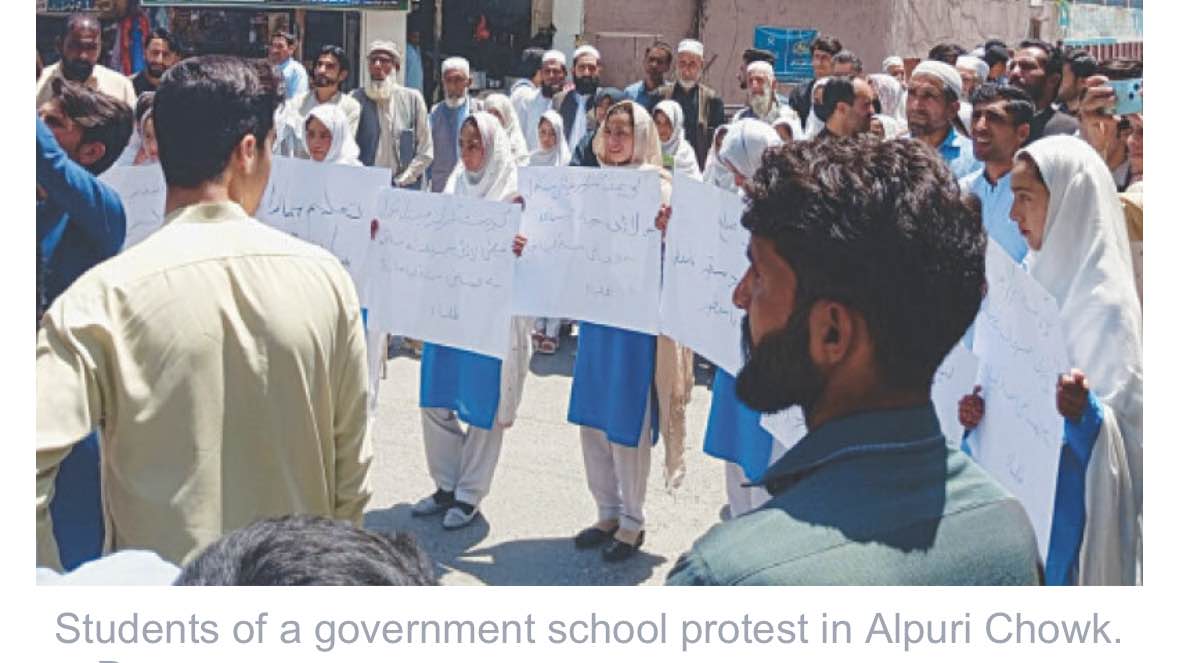
Photo Credit: Image from Dawn news
School girls protesting in Shangla, Swat due to shortage of teachers in government school.
When the Taliban returned to power in Afghanistan in 2021, it wasn’t just the end of freedom in Kabul—it marked the slow suffocation of hope across the entire Pashtun belt. For many in Pakistan, especially in the tribal regions of Khyber Pakhtunkhwa and Balochistan, the fall of Afghanistan was the rise of a nightmare they knew all too well.
The Taliban’s ideological influence didn’t stop at the Durand Line. It seeped into North and South Waziristan, into Shangla and Birmal, into classrooms and communities still struggling to recover from decades of war, displacement, and abandonment. The fighters didn’t need to conquer; they were welcomed by a vacuum—of justice, of governance, of protection.
Just recently, in the town of Shewa, North Waziristan, Taliban militants entered a school during working hours. In front of children and teachers, they announced that all government schools would be shut from Monday, warning of serious consequences for anyone who disobeyed. It wasn’t an attack—it was a public message: education is a threat, and they will not tolerate it.
Girls are always the first victims. In South Waziristan's Birmal tehsil, Iqra Girls School—the only private school for girls in Azam Warsak—was forced to shut down after threats from armed men. Now, in this densely populated area, there is no school left for girls. Imagine the silence that follows the closing of a school—the silence of lost dreams, stolen futures, and a generation being pushed back into darkness.
In Shangla, 6th grader Laiba Khan said something that pierced straight through the heart: “We travel from a remote village and our only demand is for the government to send teachers to our school so that we can receive an education, which is our basic right.”
But in Pashtun regions, even this basic demand goes unheard. The chronic shortage of teachers, resources, and protection in these areas isn't a coincidence—it’s systemic oppression. This neglect by the state is not just negligence; it is a deliberate marginalization of Pashtun communities, where education is being treated as optional, dispensable, or even dangerous. What message does that send to girls like Laiba, who are still clinging to hope?
Even the United Nations High Commissioner for Refugees (UNHCR) has acknowledged that the Taliban's actions have created "systematic obstacles" to education, healthcare, and livelihoods, further marginalizing women and girls and deepening cycles of poverty and despair.
This isn’t just a border crisis—it’s a human crisis. And it is being ignored.
As an activist, and daughter of this soil, I cannot be silent. My fight is in places like Shewa, Birmal, and Shangla—where the right to learn has become an act of resistance. Education is not a luxury. It is our shield against darkness, our pathway to justice, and the birthright of every child.
We must speak. We must act. Because silence is complicity.
- Disability Justice
- Girl Power
- Peace & Security
- Education
- Human Rights
- First Story
- Indigenous Rights
- Global