
Stop Controlling Us. Respect Abortion Rights.
Jul 14, 2022
story
Seeking
Visibility


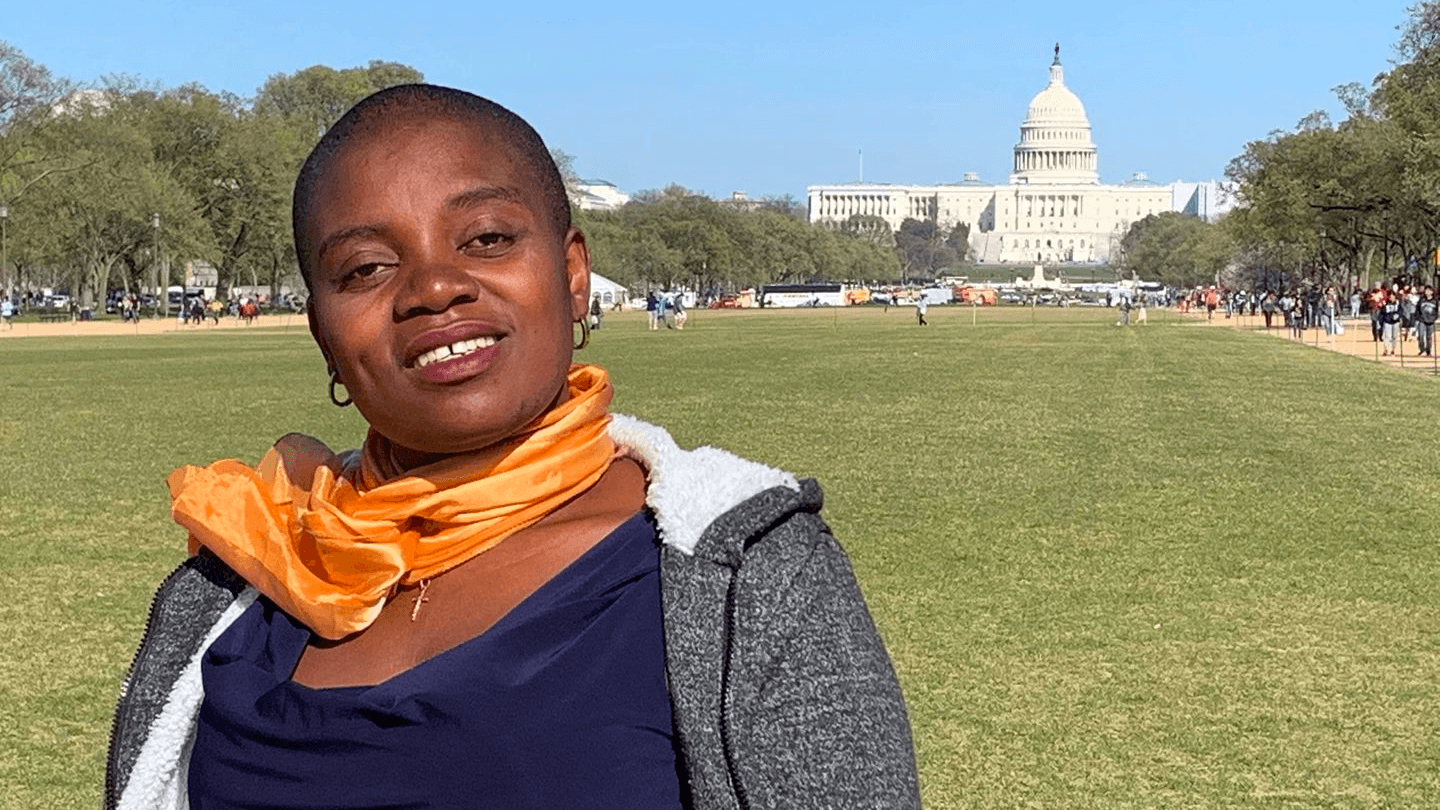
Sally Maforchi Mboumien survived a crude abortion at 16. Following the reversal of Roe v Wade in the US, she advocates for women and girls to have full autonomy over their reproductive health.
The world keeps letting women down with these exaggerated politics and power plays to control women's bodily autonomy.
Sally Maforchi Mboumien
Ever since I heard about the reversal of Roe v Wade in the United States — a decision that takes away a woman’s constitutional right to bodily autonomy — I have not gone to bed without pondering this lie we want to continue living around the globe. I can't help but wonder why there are these continuous politics and policies surrounding women's reproductive rights.
The day I heard that news, I sat in my office looking at the mid-year reports of our organization COMAGEND and thought, "Sally, would you have been able to sit on this seat and do all this work for women and girls' sexual and reproductive health rights if you had kept your pregnancy at 16?"
I must admit that a frank conversation on abortion rights is one of the hardest to have, even 27 years after I had a crude abortion at the back side of a drug store as a teenager with no other options. From generation to generation, abortion care is needed by women at some stage of their lives. Yet, the world handles this basic need with stigma, shaming, and politics — even in a country like the US.
I have worked on reproductive rights in Cameroon for over a decade, meeting more than 50,000 young women and girls. The stigma and insensitive laws continue to be flagged as a significant barrier for women and girls to attain their full potential.
In my country, abortion is considered a crime and sin, but what options besides laws and rules did I have as a teen to prevent an unwanted pregnancy?
Cameroon’s national penal code criminalizes abortion, with a provision for cases of rape or fetal malformation posing a threat to a woman’s life. Interestingly, this exception still leaves those in need at the mercy of the judiciary system to decide their fate. Seeking legal consent could last more than nine months, with a woman having a baby before gaining permission for a safe abortion.
This provision of the abortion law couldn't have benefitted me because it was not a case of rape or fetal malformation that posed a threat to my life. I look at such a legal provision as selfish and insensitive to our local reality. As a teenager, was it not a threat to my health carrying that pregnancy to term? How could I have raised the baby being a child myself?
I know many from my community would say, “Why didn't you abstain from sexual intercourse?” How could I, considering it was a natural desire supported by fragments of information from my peers who were already gambling with their sexual and reproductive life? My parents, who were supposed to accompany me through this life stage, were silenced by our cultural and religious norms, and they did not discuss sexual and reproductive health with their children.
I must confess that this continued hypocrisy I experienced as an adolescent gives me the energy to keep advocating for the rights of women and girls to have bodily autonomy.
Having survived the crude abortion — something sex education and a comprehensive abortion care package would have averted — I feel I owe women and girls my story and voice as an advocacy tool to get policymakers to respect abortion rights. The barriers women and girls experience trying to access quality reproductive health services and make their own choices are unacceptable.
Comprehensive abortion care is a life-saving service, especially during an armed conflict like the Anglophone Conflict in my community. Unfortunately, health care units in our communities continue to track unsafe abortions. These health care units report that unsafe abortions account for up to 30 percent of the maternal mortality rate.
As a feminist and reproductive rights advocate, I feel the world keeps letting women down with these exaggerated politics and power plays to control women's bodily autonomy. I am trying to understand why a need being articulated by those affected keeps being undermined by lawmakers who are supposed to ensure justice and freedom of expression for all.
I look forward to a day when conversations on abortion rights are not centered on controlling a group with laws, but instead centered on ensuring a basic right to life for those who need it. Yes, this is when the conversation will be driven not by our personal biases and egos but by our rationality and compassion.
STORY AWARDS
This story was published as part of World Pulse's Story Awards program. We believe every woman has a story to share, and that the world will be a better place when women are heard. Share your story with us, and you could receive added visibility, or even be our next Featured Storyteller! Learn more.
- Peace & Security
- Health
- Human Rights
- Our Abortion Stories
- Featured Stories
- Africa