
Sudan’s Silent War: Power, Greed, and Africa’s Betrayal
Nov 5, 2025
story
Seeking
Action

What is really happening in Sudan?
Behind this war is a story of power, greed, and betrayal. Sudan didn’t just fall overnight, it was broken piece by piece by men who learned that in Africa, power is taken with a gun and sold with a handshake.
The two men at the heart of this devastating war are General Abdel Fattah al-Burhan, the head of the Sudanese Armed Forces (SAF), and Mohamed Hamdan Dagalo, widely known as Hemedti, the commander of the Rapid Support Forces (RSF) a powerful paramilitary group.
At one point, these two men were allies. Together, they toppled Omar al-Bashir, Sudan’s long-time dictator who ruled for thirty years. But as history in Africa has taught us, when you remove one strongman without fixing the system that created him, another always rises to take his place.
Now, the generals are locked in a brutal struggle, not for freedom, not for democracy, but for power, money, land, and gold. The stakes are high, and the human cost is unbearable.
According to Amnesty International, this war isn’t just an internal Sudanese affair, it’s part of a wider business transaction disguised as a civil war. Amnesty’s May 2025 investigation found that Chinese-made weapons, including GB50A guided bombs and 155 mm AH-4 howitzers, were supplied to the RSF through the United Arab Emirates (UAE) in clear violation of the UN arms embargo.
These weapons have been used in Darfur and Khartoum, where countless civilians have been killed, hospitals destroyed, and entire neighbourhoods flattened. Amnesty called the transfers a “breach of international law”, urging the UAE to stop supplying arms that fuel atrocities. The UAE, however, denied the accusations, calling the report “baseless.”
But the evidence is hard to ignore and it paints a grim picture of how foreign interests profit from African wars.
As journalist Lynn Ngugi explained in her powerful video “Sudan’s War and Africa’s Silence: Who Are Our Presidents Protecting?”, the UAE’s deep involvement in Sudan isn’t about compassion, it’s about resources.
Sudan has what the Gulf does not: fertile land, minerals, and water.
Over the past decade, Emirati companies have quietly bought tens of thousands of acres of Sudanese land, running massive agricultural projects that most locals know nothing about. The crops grown there aren’t feeding Sudanese families, they’re exported to Gulf markets. The profits don’t return to Sudan’s struggling communities; they flow into the accounts of shareholders in Abu Dhabi.
This isn’t new. The same pattern repeats itself in Ethiopia, Somalia, and Djibouti, African lands turned into foreign farms while locals are left hungry.
When Sudan’s transitional government began questioning some of these shady land deals and blocking new ones, the tone shifted.
Investment turned into influence, and influence evolved into interference.
Today, one side is fighting for survival to maintain control and sovereignty. The other side is fighting for profit, power, and foreign backing. And somewhere in between, the UAE and other actors stand to gain the most, while Sudanese civilians lose everything.
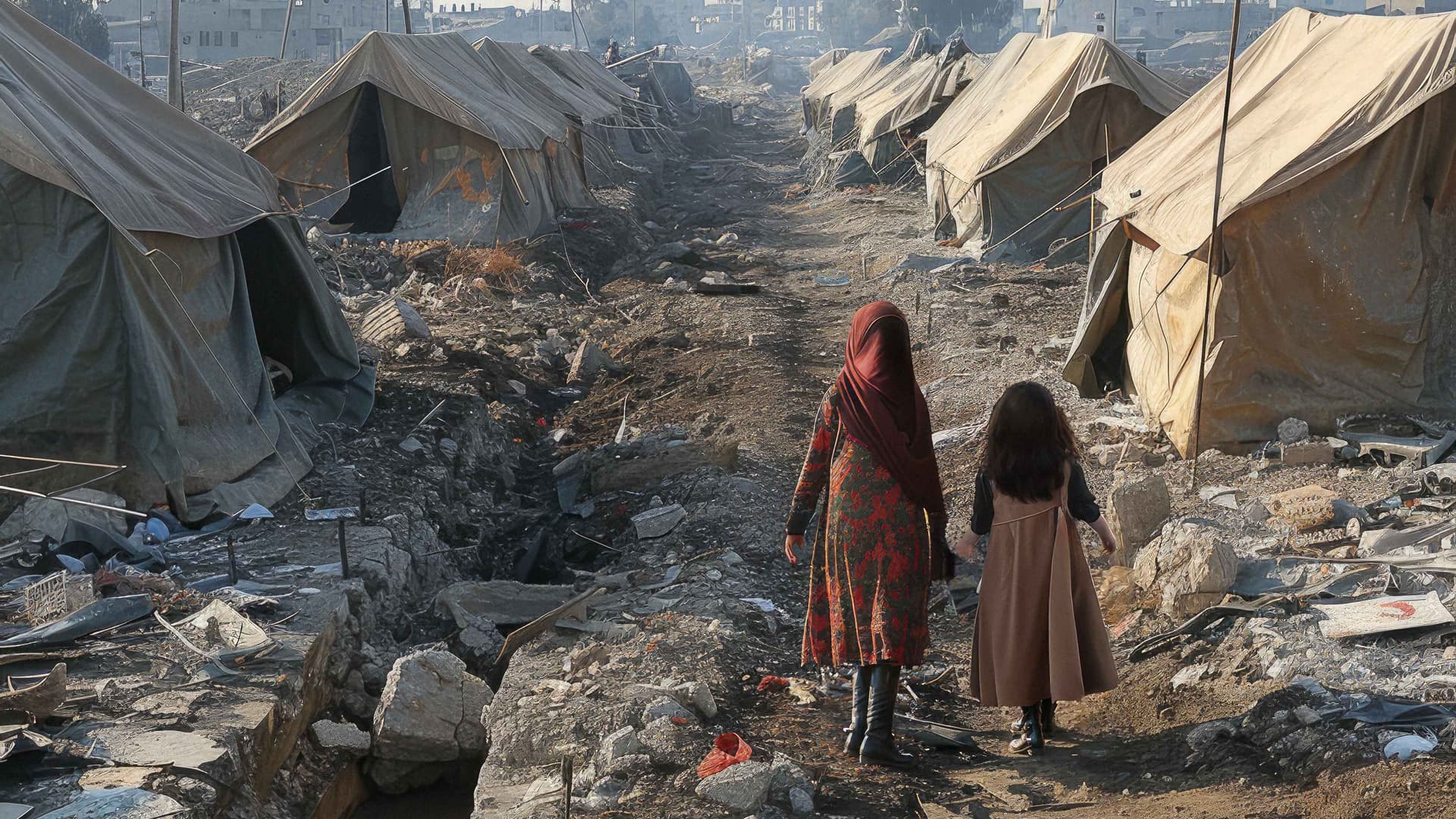
Hospitals, schools, and homes are bombed.
Aid can’t reach the displaced.
Children are starving in camps while political elites negotiate over gold and guns.
It’s no longer just a war for territory it’s a war over who owns Sudan’s future.
Perhaps the most haunting part of Lynn Ngugi’s message is her question:
“Who are our presidents really protecting?”
Because while Sudan bleeds, African leaders remain silent.
Not a single united voice from the African Union or regional blocs has risen to demand justice or accountability. It’s as if Sudan’s suffering is a mirror too painful for the continent to look into.
Maybe, as Lynn Ngugi says, they are silent because they too are signing the same deals, selling land, mortgaging resources, and allowing their nations to be stripped piece by piece.
If Sudan falls completely, the playbook will move to another country. The chaos will repeat itself, the same hunger, the same displacement, the same foreign hands stirring the pot while pretending to mediate peace.
Just like Congo, freedom becomes elusive because chaos is profitable.
Ignoring Sudan now will only lead to worse outcomes: a longer war, deeper fragmentation, and spill-over into neighbouring states.
Civilians are being targeted, infrastructure is collapsing, and a new generation is growing up knowing only bombs and betrayal.
Sudan’s war is not just Sudan’s problem, it’s a continental crisis that exposes the fragility of African governance, the greed of global interests, and the silence of leadership.
If we don’t speak now, we risk normalizing the destruction of nations one by one until there’s nothing left to save but memories and graves.
- Leadership
- Peace & Security
- Human Rights
- Stronger Together
- Peace Building
- Behind the Headlines
- Global