
Tears in the Dust: The Killing of Innocent Women and Children in Sudan’s Forgotten War
Nov 2, 2025
story
Seeking
Action

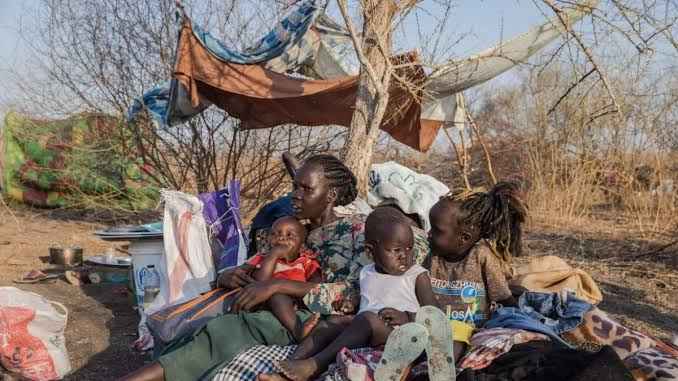
Photo Credit: |UNHCR
Women and children in Sudan |UNHCR
The sound of gunfire has replaced the laughter of children in Sudan. Mothers bury their sons with trembling hands; fathers search through rubble for daughters they may never find. The war raging across Sudan has become a graveyard for innocence, a conflict where women and children are not only victims but deliberate targets in a nation’s descent into darkness.
Eighteen months since fighting broke out between the Sudanese Armed Forces (SAF) and the paramilitary Rapid Support Forces (RSF), the human cost has become unbearable. What began as a struggle for power has turned into a campaign of terror against the very people the soldiers claim to protect. In city after city, bombs rain down on homes, schools, hospitals, and markets. Every explosion takes another child, another mother, another future.
A Nation in Ruins
Once vibrant neighborhoods in Khartoum and Omdurman now lie silent, reduced to ghost towns. In Darfur, where memories of past genocide still haunt the living, villages are again being burned to ashes. Families flee into the desert with nothing but the clothes on their backs. Mothers walk for days with babies strapped to their chests, hoping for safety, often finding none.
According to the United Nations, more than 10 million people have been displaced, making Sudan the world’s largest internal displacement crisis. At least 25 million now depend on humanitarian aid to survive, over half of them children. And yet, aid convoys are routinely attacked, looted, or denied access. The war has turned hunger into another weapon.
In camps across the border in Chad, South Sudan, and Egypt, exhausted mothers cradle malnourished children too weak to cry. Many arrive alone, their husbands killed, their homes destroyed. “I buried my daughter in the sand because there was no time to find a grave,” says Mariam, a 28-year-old mother from El Geneina. “I told myself she was sleeping.”
The War Against Women and Children
In Darfur, reports of mass killings, rape, and ethnic cleansing are mounting. Women are being assaulted in front of their families, children are abducted or recruited by armed groups. The RSF and allied militias have been accused of using sexual violence as a weapon of fear. Government airstrikes continue to hit civilian areas indiscriminately, flattening hospitals and schools.
For many survivors, the pain is both physical and invisible. Trauma runs deep in every displaced camp and shattered village. “I hear the bombs even when it is quiet,” says twelve-year-old Adam from Khartoum. “When I close my eyes, I see my brother’s face.”
Every child killed in Sudan’s war is a story unfinished. Every woman lost is a light extinguished. Behind the statistics are lives that mattered — teachers, farmers, nurses, daughters — erased while the world looks away.
The Silence of the World
The international community’s response has been timid at best, indifferent at worst. While Sudan burns, the world’s attention drifts to other crises. Ceasefire talks stall, and global powers issue statements that mean little to those dying on the ground. The United Nations warns of famine, yet food convoys remain trapped behind frontlines. Aid workers are targeted, and journalists silenced.
Sudanese activists, both inside the country and in the diaspora, have pleaded for help, not pity but action. They call for targeted sanctions against commanders fueling the war, for unimpeded humanitarian access, and for renewed peace efforts that include civilian voices, especially women.
“The world cannot pretend it does not know,” says activist Reem Abbas. “Our children are being killed in plain sight.”
A Call to Action
Sudan’s war is not just a political conflict; it is a moral test for humanity. Each passing day without action deepens the stain of complicity. Silence is no longer neutrality; it is consent.
The international community must move beyond statements of concern. The United Nations Security Council must impose an arms embargo on both warring sides and ensure accountability for war crimes. African and Arab leaders must unite to push for an immediate, enforceable ceasefire. Humanitarian agencies must be granted full, protected access to reach those starving and trapped.
Most of all, ordinary citizens around the world must not turn away. Raise your voice. Share their stories. Pressure your governments to act. Sudan’s people are not faceless victims; they are mothers, children, dreamers, human beings who deserve to live in peace.
As the sun sets over Sudan’s scarred landscape, the cries of the innocent echo across deserts and rivers, begging to be heard. For every mother mourning her child, for every child who will never see another dawn, peace cannot wait another day.
The world owes Sudan more than words. It owes them justice. It owes them life.
- Refugee Rights
- Sexual and Reproductive Rights
- Widows' Rights
- Peace Building
- Global