
Tears of Vulnerability
Jan 21, 2015
story
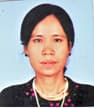

It was one of those days. I was working with MSF Switzerland (Doctors Without Borders) in 2008 for the Nargis cyclone emergency project in Phya Pon, Myanmar in the delta. I noticed my supervisor Anaja’s face looked sadly red when one of my colleagues passed him the message he was answering. He was still holding the line and I was deeply nervous when Anaja told me it was for me. I was walking heavily to answer the phone because I could guess the message. I was right; it was the message of my younger sister’s death that had happened while I was trying for her last chance to live longer. My "cousin brother" said she had passed away three days before and my mother had arranged the instant funeral to bury her soon after her death. It was too difficult for him to understand my words explaining that I had been trying to send money for her operation. The whole room was entirely silent except for my sobs. Buddhist people here celebrate the funeral for one week and Anaja told the admin officer to arrange a taxi for me to go to my mother for the rest of the mourning period. She lived in Thanlyin, a township in Yangon District, about a hundred miles away from Phapon where I was working. I arrived there in the evening and my mother, my brother and my aunt greeted me with grief. I couldn’t say anything but was listening to them talking about my sister’s last moments and it made my heart and body tremble. My mother said my sister had kept asking when big sister (me) was coming until she could no longer hold her strength. I knew my return with money for her operation was her great hope for reducing her pain and extending her life longer. My mother lied to her by telling her I would be coming soon, and she was waiting. One day after my mother’s last lie, my sister gave up her hope and left us for ever. My aunt took me to the cemetery where I told my sister before her grave (just a little heap of ground) to forgive me for failing to save her.
My sister had been suffering from a build up of brain fluid, a consequence of the infectious disease she had got from a man when she was about 32 and had run away for two days, two years before her death. The doctor said that although it was a deadly disease, she could live longer if she would have an operation. We felt a light of hope. I also discussed my sister’s case with some doctors from my work who agreed that the operation would help to remove the fluid in her brain to cure the intense headaches and to lengthen her life.
The single and the biggest challenge for us was the cost of the operation, about 500,000 kyats, which was equivalent to five hundred US dollars at that time. I was the only source of support in my family and I tried to transfer the money as soon as I had saved it from my salary. Unfortunately, I couldn’t reach my aunt through the phone to ask her NRD number in order to access the transferred money. The phone was out of order for days. The money for a longer life for my sister could not reach her in time and she died of the vulnerability of not being able to afford the expense of health care. If we could have afforded the charges in time or if she could have received free medical care that included operations, she would not have left earlier from earth.
Many people in Myanmar are in tears, feeling vulnerable because of high medical charges. Medicines and medical items like tools for operations are unaffordable. The free things we get from the hospitals are the bed and the treatments from the doctors and medical staff. Many people try to save their beloved ones till they have nothing left. Many of them end up in debt for a long time. Several of them, like me, fail to save the life of their loved ones. I have heard many people in grief over their inability to save a life.
The most threatening diseases in Myanmar are malaria and HIV/AIDS. Margie Mason, AP medical writer, noted in 2007, “Myanmar has one of the world's worst health care systems, with tens of thousands dying each year from malaria, tuberculosis, AIDS, dysentery, diarrhea and a litany of other illnesses.” She also mentioned big killers, including tuberculosis, with nearly 100,000 new cases reported annually. The AIDS virus has reached the general population, with more than 1 percent of the nation infected while malaria kills 3,000 people a year. Another big health alert is the mortality of mothers in childbirth. At least 360 of every 100,000 women die in this way.
In Myanmar, some chronic diseases like heart disease, and even some preventable diseases, are also threatening the people because of the unaffordable expense of paying for treatment. I am not sure whether it is funny or depressing that many parents are struggling with big families because they cannot buy birth control pills. I feel very sad when I witness or hear from people in tears telling their stories.
When I was working with ACF (Action Contre La Faim ) in Rakhine State in 2005 as an English teacher to the local staff, my students told me they saw some people who had died in their tiny huts without the notice of the people surrounding them. When I visited Kachin State, I was told about the threat of malaria; the people there do not get preventive medicines or free medical charges. I have thankfully found several NGO’s that are providing medical supports, but there are not many places for people to go to get the care they need. A very reliable local NGO in Yangon is Thukha Charity Clinic, attached to the Free Funeral Service Society where I am voluntarily teaching in their free education project. MSF Switzerland and MSF Holland are two other NGO’s that sponsor malaria and HIV prevention projects.
Some people are undertaking the adventure of traveling to refugee camps in Thailand to get free medication. They know it is extremely risky, but they have no choice. My youngest sister’s family is in one of those camps, for her husband needs frequent visits to the clinic since he received the wrong treatment during his gallstone operation in Yangon. They have been there for three years and they have had their sixth child there. Now three boys and a little girl are facing challenges with their education. They cannot follow the school lessons in a second language (Thai) and it is not possible to return to Myanmar as their father cannot pay his medical expenses here. The eldest child is living in Myanmar with my mother and going to school. I wonder how many families in our country are faced with similar challenges.
In December, 2009 I went to Mae Sot, a town in Thailand on the border with Myanmar, during the Christmas holiday to try to meet my sister’s family, but I was not allowed to visit the camp and we could just talk on the phone. While I was crossing the bridge between the two countries, I was greatly concerned to see people across the river in Myanmar with big tire tubes using their bare hands as oars to row across to Thailand. One woman was even holding a child in her one arm. That scene made my eyes tear up. There are many sad stories of Myanmar people who are struggling in Thai refugee camps for their health care. Margie Mason, the AP writer, noted down ; "They travel for days though checkpoints, across dangerous roads and past Myanmar's bribe-hungry soldiers to make it to the Thai border. They're not refugees fleeing the junta -- they simply want to see a doctor." According to Dr. Cynthia Maung, who started the Mae Tao Clinic a year after she fled Myanmar in 1988 following a violent crackdown on student pro-democracy protests, "Many patients come too late and die in the clinic, while newborn babies and the elderly are sometimes abandoned by family who simply cannot afford to care for them." It was heart breaking for me to hear this.
At the moment, it is very frustrating to see that most of the country's wealth is owned by the top ranked military officials and their partners while a roughly estimated 90 percent of Myanmar lives on just $1 a day. Margie Mason says that the United Nations ranks this resource-rich country among the 20 poorest in the world. If I were able to have a chance, I would build free health care centers everywhere that there is a demand. There would be no more people crying for the lack of help in fighting diseases. Now, the most possible thing I can do is to provide a link between patients and existing health support organizations. I will go to those organizations to ask for help in the areas where I surely know the risk. Although I cannot stop the suffering completely, I feel positive that I can help my vulnerable community to some extent.
This article is part of a writing assignment for Voices of Our Future, which is providing rigorous web 2.0 and new media training for 30 emerging women leaders. We are speaking out for social change from some of the most unheard regions of the world.
- South and Central Asia