
Terminating the cycle of violence in Chinese families
Jan 21, 2015
story


I got flowers today. Today was a very special day.
It was the day of my funeral.
Last night, he finally killed me.
He beat me to death.
If only I had gathered enough courage and strength to leave him,
I would not have gotten flowers today.
In 1992,Paulette Kelly wrote the poem “I Got Flowers Today” for all battered women. Twenty years later, in 2011, an American mother named Kim “threw away” the “flowers”, causing uproar. Unlike most Chinese women, she made the domestic violence public.
Her husband is named Liyang, the founder of Crazy English in China, a famous English training institute. When he was four years old, he was sent back to his parents from his maternal grandmother, his parents were strangers to him. They often quarreled and were rude to him. As a child, he was shy, introverted, and afraid to meet strangers. Many people criticized Liyang, but few people noticed that he was a victim too. His childhood left a negative shade about marriage in his heart.
Liyang thought he was a victim too. He said Kim was partly responsible for the violence because she drove him to anger before and was wrong to make the family affairs public.He said:” Others fight everyday. Dad beats Mum, Mum beats Dad, parents’ beats children, don’t take the ‘beat’ as a big deal.”
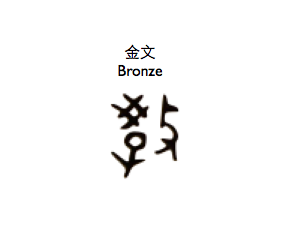
Liyang told the turth about China. The word “educate” is written as “教”in Chinese. The seal style version is a child being beaten on the head with a stick. It is indicated by the cartoon-style “X” which symbolizes the striking of the child. This ideograph shows that Chinese think beating children is a kind of education; it is common in modern China that children are educated with a “strike” by their parents. People always say that” Strikes shape an obedient son.”
“Obedience” is another key word in Chinese family education, especially for girls. Children are encouraged to be quiet and obedient instead of asking questions and challenging authority. This kind of culture raises many silent victims. Last year, a recent sample survey by China Women's Federation showed that 16 percent of women admitted to be beaten, 14.4% of men admit that beat their spouses. A survey by a social work institute in Shenzhen shows that:“88 percent female victim will not ask for help after the first violence. They only ask for help until the violence beyond their tolerance.”
Actually, contrary to Liyang’s previous statement, the violence is “a big deal.” Liyang himself is an example of individual who was influenced by domestic violence. After witnessing violence or being beaten as a child, people are more likely become perpetrators of the "cycle of violence". The researcher, Jialun Li of Institute of Family Education National Chiayi University said in the article” Investigation of the Domestic Violence,” “The children perhaps assume that violence is the behavior of love.”
How to prevent the domestic violence? The most commonly used prescription is the law. In Nordic countries, such as Norway, Finland, and Sweden, the countries with highest status of women, a special bill in terms of gender has been developed, In Sweden, Women safety Protect Bill was launched to avoid women being hurt by domestic violence in 1998.
However, a survey by World Economic Forum showed that a new trend happened in Nordic countries: more and more men were the victims of domestic violence. In Denmark, three new Rescue shelters were established to protect men who are attacked in families. In Taizhong Taiwan, according to local court, 18% of the people who asked for habeas corpus are men. Does that mean the gender equality is promoted?
n my opinion, laws are not enough. The gender education in families is more important than laws. How the parents treat each other and their children will be inherited. Besides the violence between parents,boys are beaten more often than girls and girls are more often asked to be obedient than boys. That may be a reason why husbands beat their wives and wives maintain silence after been beat. If children are treated more freely, democratically, and equal in the Chinese families, Liyang would think that domestic violence is” a big deal” and more Chinese women like Kim will speak loudly when suffering family violence.
• This article is part of a writing assignment for Voices of Our Future a program of World Pulse that provides rigorous new media and citizen journalism training for grassroots women leaders. World Pulse lifts and unites the voices of women from some of the most unheard regions of the world.
- South and Central Asia