
The Beacon of Peace: A Champion’s Journey in the Fight Against TB in Kakamega Count
Nov 10, 2025
story
Seeking
Connections
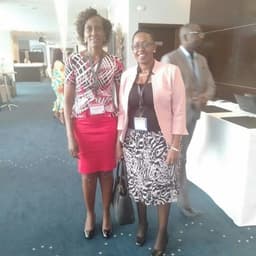


Photo Credit: Kristine Yakhama
In the heart of Kakamega County, where the lush green hills stand as silent witnesses to both joy and struggle, there lives a woman whose name is synonymous with hope and compassion. She is not just a trained TB champion and advocate; she is a beacon of peace, a warrior in a silent battle, and a guardian of health. Her story is one of resilience, empathy, and the unshakable belief that peace, like a seed, can grow even in the most barren of places.
The Call to Serve: A Journey of Purpose
My journey as a TB advocate began not from a place of knowledge, but from a place of deep empathy. I recall the first time I heard about tuberculosis (TB). It wasn’t in a clinic or a hospital, but in the heart of my village, where a neighbor’s child had fallen ill. The cough was persistent, the fever unrelenting, and the despair in the eyes of the parents was palpable. People whispered, unsure whether to help or stay away, for TB, like a shadow, cast a fear that isolated families and spread stigma. "A sick person is like a tree struck by lightning; it will not grow again," the old folks would say, a proverb that suggested hopelessness.
But I refused to believe that. I believed in second chances, in recovery, in healing. I realized then that my purpose had found me. Like the river that finds its way through the toughest rocks, I knew I had to forge ahead, and I embarked on the path of TB advocacy. I underwent training, learning everything I could about TB – its transmission, treatment, and prevention. I became the bridge between the communities and healthcare services, a voice for the voiceless, and a symbol of peace amidst the storm of stigma.
The Stigma of Silence: Breaking Down Barriers
Kakamega County, with its vibrant culture and communal spirit, is also a place where traditions and fears can sometimes hinder progress. When people hear “TB,” they often think of death or the curse of the ancestors. It is a disease that thrives in silence, feeding off the fear of being ostracized. As a TB champion, I encountered families who hid their sick loved ones, fearing the disgrace of a diagnosis that seemed to define them as unclean, unworthy, and beyond help.
To many, the stigma surrounding TB is worse than the disease itself. It spreads faster than the disease itself, and can isolate a person faster than any bacteria ever could. I remember one particular case – a mother who came to me in the dead of night, her eyes wide with worry, her voice barely a whisper. "Please," she begged, "Don’t tell anyone. My child is sick with TB. They will drive us away." It broke my heart to see how the fear of rejection weighed so heavily on her.
Like a warrior facing an invisible enemy, I knew I had to change this. I started with one household, one patient, one community at a time. I used every opportunity to educate people about the truth of TB. “A sick person is like a falling leaf,” I would say. “No matter how far it falls, it can always be picked up and put back on the tree.” Slowly, but surely, people began to listen.
One by one, the barriers of fear and silence were broken, and the whispers turned into conversations. People began to see TB not as a curse, but as an illness that could be treated, and that a diagnosis was not the end but the beginning of a journey to health. The proverb, “A single bracelet does not jingle,” became my guiding principle. We could not fight TB alone. We needed each other.
Creating a Culture of Peace: The Healing Begins
Peace, I learned, is not just the absence of conflict, but the presence of understanding, kindness, and solidarity. In the battle against TB, I realized that peace is created not just in the clinics, but in the hearts of the people. As I walked from house to house, I didn’t just bring medicines and information; I brought hope. The communities in Kakamega County began to change, one person at a time. They started to embrace TB patients as part of the family, as fellow villagers, as people who deserved love and support just as much as anyone else. The proverb "When there is peace in the home, the village flourishes," became the essence of my work. Every patient I referred for treatment was not just a number; they were a person with a family, a story, and a future. I made it my mission to ensure that their journey toward recovery was not only a medical one but a social and emotional one as well. I remember one particular patient, a young father who had been diagnosed with TB. He had distanced himself from his family, too ashamed to accept help. But after several visits and conversations, he finally agreed to start treatment. When he completed his course, he came to me with tears in his eyes. “Thank you,” he said. “You brought peace to my heart.” These small victories, these quiet moments of healing, were like drops of water that slowly filled a river. They spread far beyond the individual patients and their families. They spread through the community, creating a ripple effect of peace, understanding, and support. Like the sun that rises slowly over the hills of Kakamega, peace began to shine on every face.
The Importance of Unity: Strength in Numbers
In the fight against TB, unity is not a mere word; it is a powerful force. In Kakamega, where people are bound together by deep ties of kinship and culture, I knew that the strength of the community could be harnessed to fight TB. No matter how far the disease stretches, the collective strength of a community can always overcome it.
I began to form support groups, where patients could come together to share their experiences, their challenges, and their triumphs. “Unity is strength,” the elders would say, and I saw this truth unfold before my eyes. The support groups became safe havens, places where laughter and tears were shared, where advice and encouragement were given freely. These groups were not just about medicine; they were about restoring dignity and humanity.
Together, we formed a network that reached across villages, providing resources, raising awareness, and breaking down the walls of stigma. We created a peace that was tangible, one that could be felt in the smiles of those who once lived in fear, in the confidence of patients who dared to seek treatment, and in the unity of a community that had risen above the darkness.
The Power of Education: Knowledge as a Tool for Peace.
The most effective weapon against TB, I have learned, is not just medication, but education. Knowledge is the light that dispels the darkness of fear. “A bird does not forget its wings,” an old proverb reminds us, and I believe that knowledge is the wings that will carry us forward in the fight against TB.
I became not just an advocate, but a teacher. I held workshops, community meetings, and even radio broadcasts, reaching out to as many people as possible to educate them about the signs, symptoms, and treatment of TB. Each session was an opportunity to plant seeds of peace. By sharing knowledge, we were dispelling myths and creating a foundation of trust and understanding.
I also worked with local health workers, training them to be not just caregivers, but educators in their own right. It was important that every health facility in Kakamega became a place where peace was not just found in the medicine cabinet but in the hearts of the people who worked there. The Road Ahead: A Future of Hope ,As I reflect on my journey, I realize that the road ahead is long. TB continues to challenge us, but I no longer see it as an insurmountable obstacle. With each patient I meet, with each community I work in, I see the growing strength of a united Kakamega County. Just as the river carves its path through the land, the work we have done together will leave a lasting mark on the future.
In every corner of Kakamega, there are champions like me, and even more importantly, there are countless others who have been touched by the peace and hope we’ve fostered. I stand proud, not just as a TB advocate, but as a champion of peace. For I know that as long as we walk together, no matter how dark the road may seem, we will always find the light.
As the old proverb says, "If you want to go fast, go alone. If you want to go far, go together." In this journey against TB, we are going together – and together, we will go far.
- Health
- Human Rights
- Moments of Hope
- Peace Is
- Global