
The Day After Christmas
Dec 14, 2021
story
Seeking
Encouragement


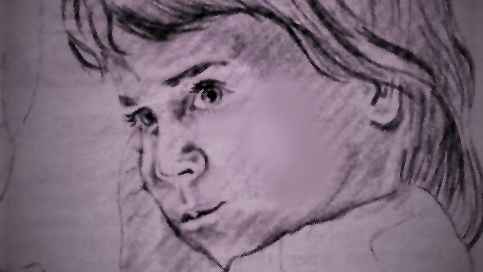
Photo Credit: Sketch of Sunny Nash by a Friend
Sunny Nash's Grief
The sky was hazy that Friday, December 26, 1958. Hanging low just above the houses, dense, moist gray clouds spawned a fine cold mist that drifted to the ground, freezing everything it touched. Pointed tin rooftops and tall leafless trees glistened in the distance like Colorado postcards. Near the ground, electrical wires sagged under the weight of ice, and the slippery front steps of our house and the porches of our Candy Hill neighbor shimmered under a frosty crust. Still ill with the mumps, I could do nothing but read and look out of the window.
The house smelled of peppermint, oranges, turkey, nutmeg, and, of course, cedar; but our small brown Christmas tree had shed nearly all its tiny dried branches, leaving little to hold up the sparkling red balls my mother had so carefully placed upon them. Fear of burning down our house had prompted her to stop the flashing of colorful lights on Christmas night. My grandmother had warned her that she was putting up the tree too early.
Through our living room window, when my grandmother let me out of bed for a few minutes that day, I noticed nothing moving on the street—not a person, not a car, not a dog or cat. I didn’t expect to see a cat out in that wretched weather, not the way they tiptoed around lightly in a spring shower, trying to keep their dainty feet from touching the ground and getting wet. No one I knew personally, except a yellow-slickered trash man who lived around the corner, owned the proper winter clothing to be out that day after Christmas. The winter before, a storm had blown in while I was at school. My woolen overcoat absorbed cold moisture and soaked my sweater underneath. I came down with the flu. The cough hung on until spring.
At times, my clear plastic rain slicker kept out rain but welcomed cold that seemed to chill me to the bone. On East 19th Street, now East Martin Luther King Street, the students’ unpaved main route to our elementary school was so thick and sticky with mud that it pulled off our shoes and sent us home in soggy socks. During entire winters when I was a child, my toes stayed cold. I was plagued with sore throats and lost my voice every other week.
It was my guess that, by this time, our Candy Hill neighbors—after tossing out their shiny gift paper and picking their turkeys clean—were huddled around a pot-bellied wood stove or a kerosene heater or a gas jet burner, trying to keep warm.
I can’t remember what was in the box with my name on it; presents didn’t matter to me that year, and Christmas dinner was a blur alone in my bed. I was preoccupied with the loss of my brother. His seventh birthday would have been that day after Christmas, had he not died that past October. Our one-day-late Christmas gift, as my mother always called him fondly, was gone. And my broken heart was not prepared for any festivities or joyous celebration.
My hot breath fogged the window pane and I traced fragile stick figures with my fingertip. Through my delicate drawings, I saw a lonely road in front of me.
“The Day After Christmas” is from my book about life with my part-Comanche grandmother, “Bigmama Didn’t Shop At Woolworth’s,” selected by the American Association of University Presses as a Book for Understanding U.S. Race Relations; and recommended by the Miami-Dade County Public Library System for Native American Collections.
- Disability Justice
- Girl Power
- Human Rights
- Youth
- Northern America