
The Drums of War are Rolling: Militarization and Caribbean Women's Call for Peace
Oct 19, 2025
story
Seeking
Connections
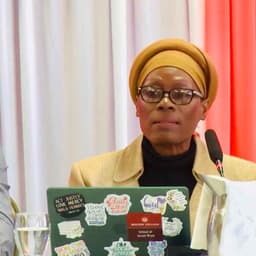

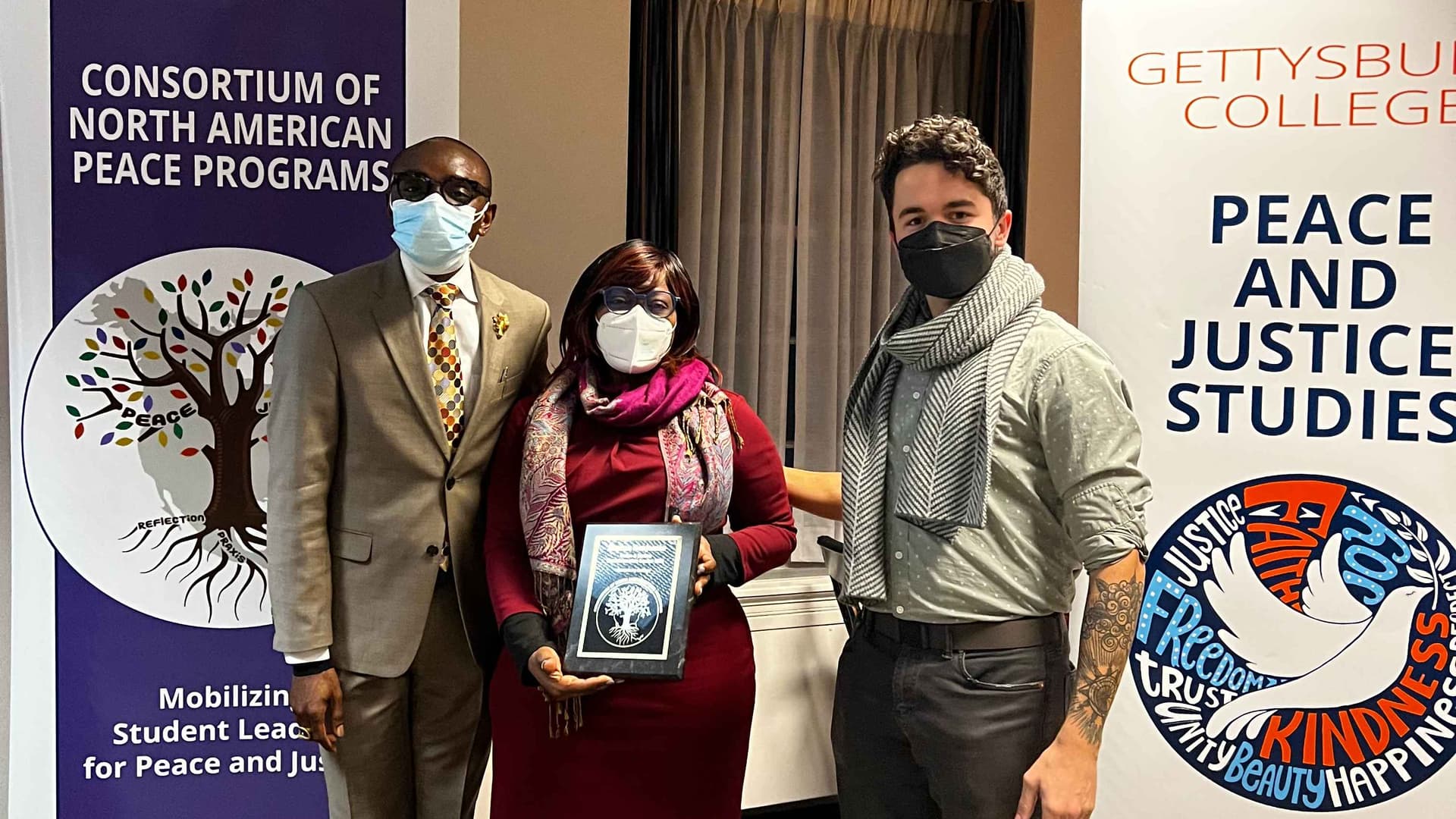
Photo Credit: Gettysburg College Peace and Justice Studies Department
Sherna Alexander Benjamin being awarded a Fellowship Plaque from Gettysburg College
In the 2004 movie Troy, Odysseus tells Achilles, "War is young men dying and old men talking. You know this. Ignore the politics." War never enters any region politely. It enters uninvited with calm brutality, undressing families of their dignity and undermining their peace and security.
Wars do not begin on battlefields like Hastings, Gettysburg, or Waterloo; they start in the mind and body. When women and girls are stripped of their dignity, when girls' education is suspended, when access to resources is weaponized, and when anxiety, fear, and insecurity replace freedom, today, such fears are no longer speculative. They are real. Growing by the minute and inching closer to our beaches.
The increasing risk of militarization, heightened regional and geopolitical tensions, and the steady erosion of democracy and social protections facilitate a climate building up to a perfect storm. When the storm erupts, it will unleash its fury first on women and children, not on presidents, prime ministers, or elected officials.
The Silent Compromise Toward Militarization
Across the tranquil Caribbean, there are undeniable signs. Since August, U.S. military assets have been circling our air and waters, focused on Venezuela. The U.S. claims that its presence is to combat drug cartels: 10,000 U.S. troops, a submarine, drones, dozens of warships, and aircraft.
To date, U.S. strikes have killed twenty-seven (27) individuals (alleged drug smugglers) in "defensive operations." No interception, interrogation, or upholding of human rights, strike and destroy, and the international silence is deafening.
Trinidad and Tobago's woman prime minister, Kamla Persad-Bissessar, SC, has publicly endorsed the U.S. military presence and actions. In one of the U.S. military strikes against a Venezuelan vessel that killed 11 people, Prime Minister Persad-Bissessar said, "No sympathy for traffickers.” She went on to make a statement that would echo into the future: the U.S. military should “kill them all violently.”
On the 18th of October, CARICOM leaders met in an emergency meeting due to increasing tensions and military buildup, and "Reaffirmed the principle of maintaining the Caribbean Region as a Zone of Peace and the importance of dialogue and engagement towards the peaceful resolution of disputes and conflict...They reaffirmed unequivocal support for the sovereignty and territorial integrity of countries in the Region and the safety and livelihoods of the people of the Region." The Trinidad and Tobago government was the only CARICOM member "who reserved its position." Many in Trinidad and Tobago wonder if the country's sovereignty has been cheaply sold and at what cost.
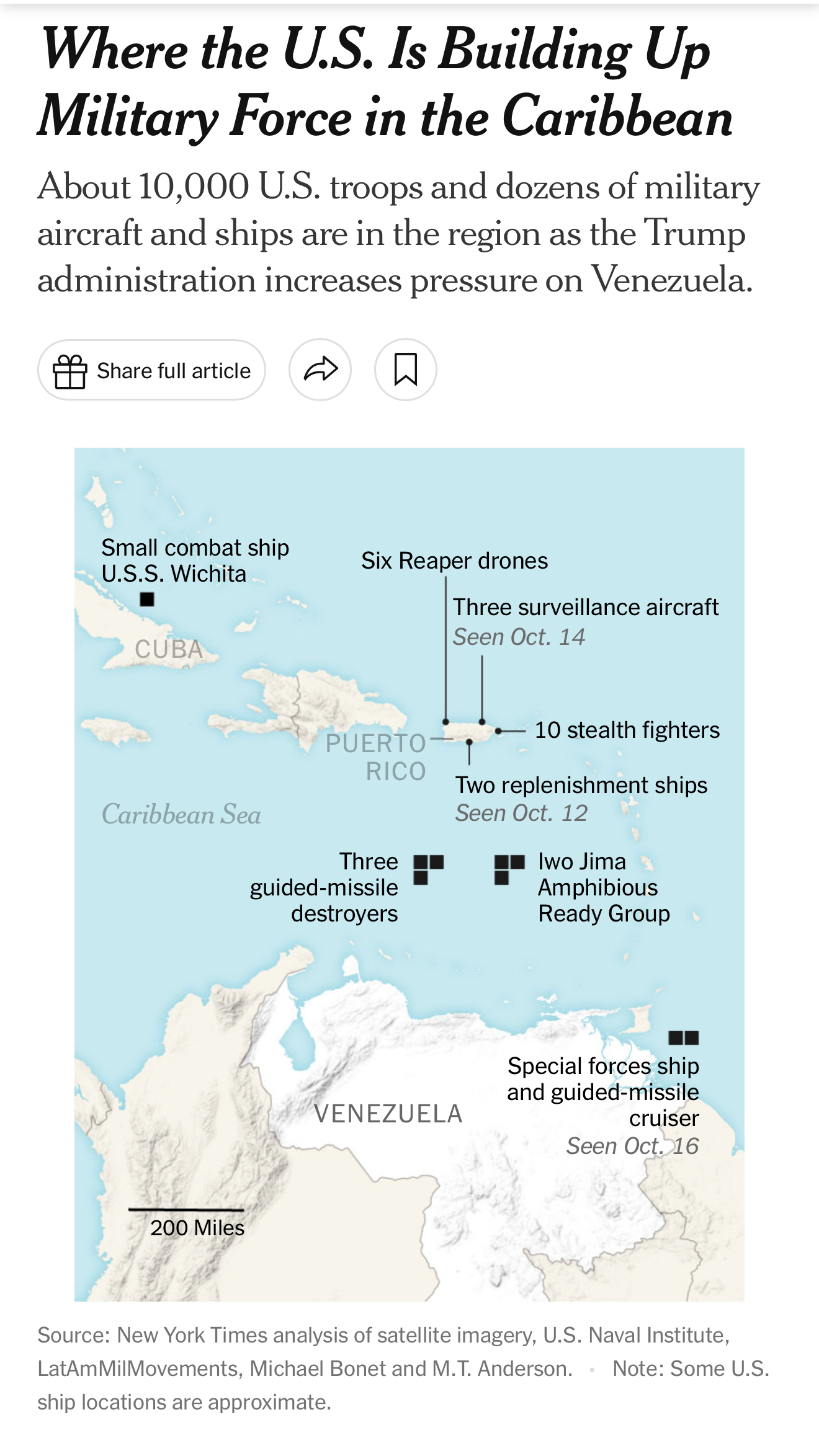
Image Source: The New York Times
It would be foolhardy to say that a narco-human-trafficking issue does not exist in the region. Is striking boats and increasing tensions between Venezuela, and placing Caribbean states in the middle of a potential war, the only recourse to addressing the drug challenge? Many argue that the presence of the U.S. military in the Caribbean, and the U.S request to countries like Grenada and Antigua and Barbuda to host military assets on their islands, speaks to an agenda beyond narco-trafficking. If these countries reject the request, it will come at a cost to them. Additionally, due to France's eagerness to strengthen military ties in tech, defence, and drone training with Guyana, many question international power players' high interest in the Caribbean waters and region.
The new militarized stance does not make Trinidad and Tobago safer. It shows its vulnerability, diplomatic, social, and economic fragmentation, raising questions about sovereignty.
Militarization comes with a heavy price, which is measured in bodies, lost futures, displacement, and budgets. As the U.S. military circles our Caribbean waters and as tension heightens, many International leaders are silent concerning what militarization actually means for everyday citizens. Especially women, children, and marginalized populations, who already bear the burdens of economic instability, violence, displacement, and poverty.
To Odysseus, war in the Caribbean would mean women and children massacred, and the decision-makers of the war would be celebrating—such a politics we cannot ignore. But one thing is sure: it will never be forgotten when war erupts. Odysseus understood the horrors of war but also wanted his glory. Much is the same for leaders today.
The Fall of the Women, Peace, and Security Agenda
There was a time when the Women, Peace, and Security (WPS) agenda gave women hope—recognizing that women should be at the forefront of sustainable peace. Their leadership was crucial to peace processes. However, this commitment is fading quickly in the Caribbean.
The voices and participation of women are excluded from national security discourses. Access to resources for women-led conflict prevention and peacebuilding is sparse. And while international powers position themselves for control of our region, leaders in the Caribbean are withdrawing from one of the key agendas that could preserve lives.
Beneath the Surface, Social and Economic Desperation is Boiling
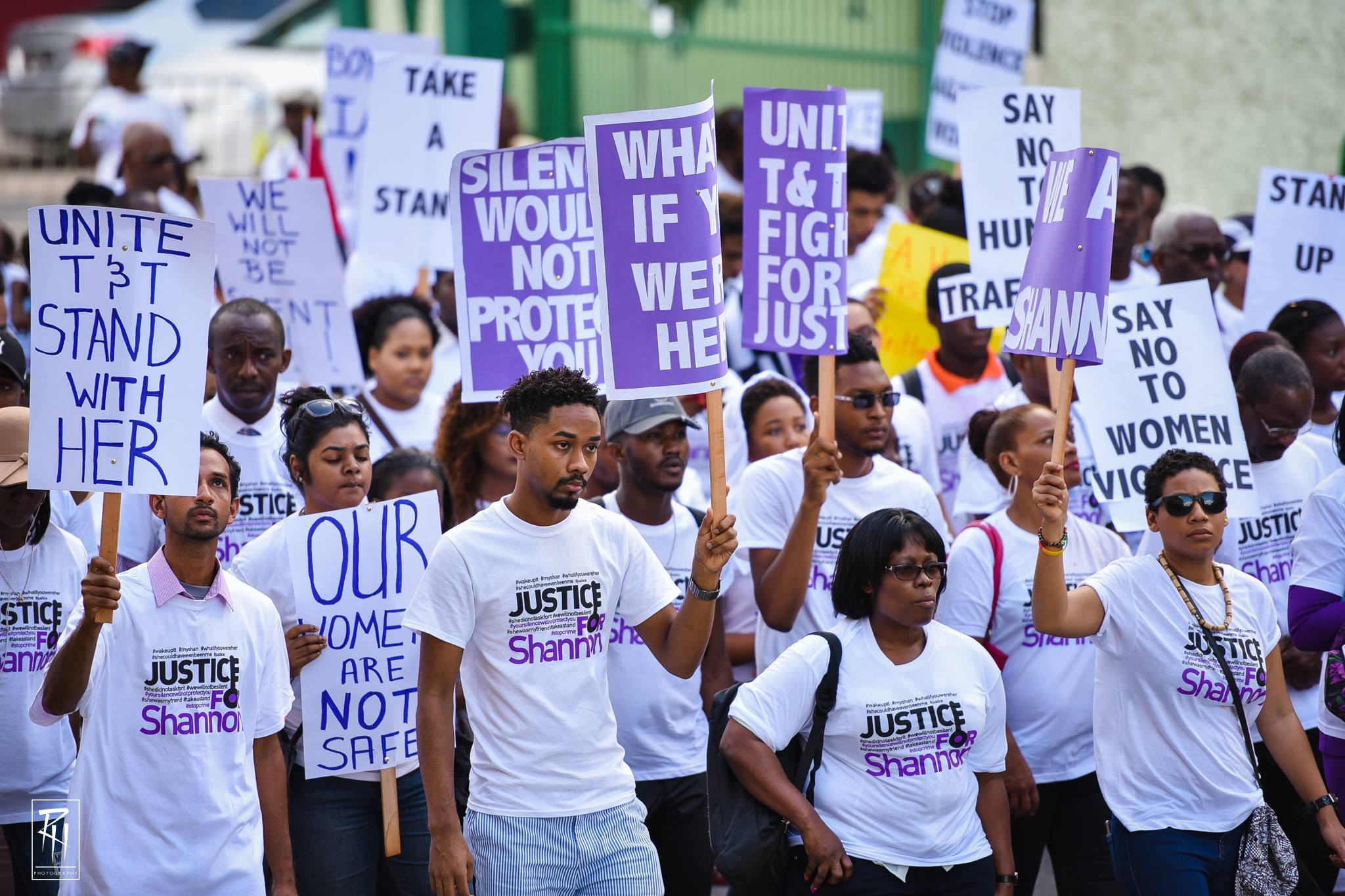
Long before President Donald Trump deployed U.S. military to the Southern Caribbean waters, igniting the imminent threat of war, women in the Caribbean were enduring various forms of socioeconomic warfare.
- Prevalence rates of violence against women are as high as 55% in some countries.
- In Trinidad and Tobago, eight women were murdered in less than two months in 2025.
- Food prices have grown faster than general inflation. The food price index has risen by over 25% since pre-pandemic levels in states like Trinidad and Tobago.
- Women’s unemployment in LAC consistently exceeds men’s by two percentage points.
- Access to quality healthcare is still an unrealized dream as hospitals and clinics are underfunded and understaffed.
- "Caribbean women still face significant barriers to equal participation in the labour market, including low employment rates, informal work, wage gaps, and inadequate social protections."
- Women are being pushed out of the Micro, Small, and Medium Enterprises space as they face more significant barriers, and "Data shows that women-led businesses in the region face a $93 billion financing gap — the money they need but cannot obtain — which corresponds to 8% of the global financing gap for women-led SMEs."
- In LAC, 4 out of 10 STEM graduates are women, varying widely across countries. Women are losing out on opportunities in technology and innovation, reducing their upward mobility.
History shows that women are often the first to feel the impacts and the last to recover from wars when economies collapse. Imagine what the lives of women in the Caribbean would look like if war broke out.
Disrupted supply chains, blocked remittances, rationed food and fuel, and vast empty markets. Imagine the displacement of women without safety nets and women undergoing severe forms of violence.
Most women in Trinidad and Tobago and the Caribbean have no social protection and have no reserves for emergencies. War in the Caribbean will not only destabilize a region, but it will also destroy the very existence of women.
Women and Children in the Caribbean Will Pay the Price of War
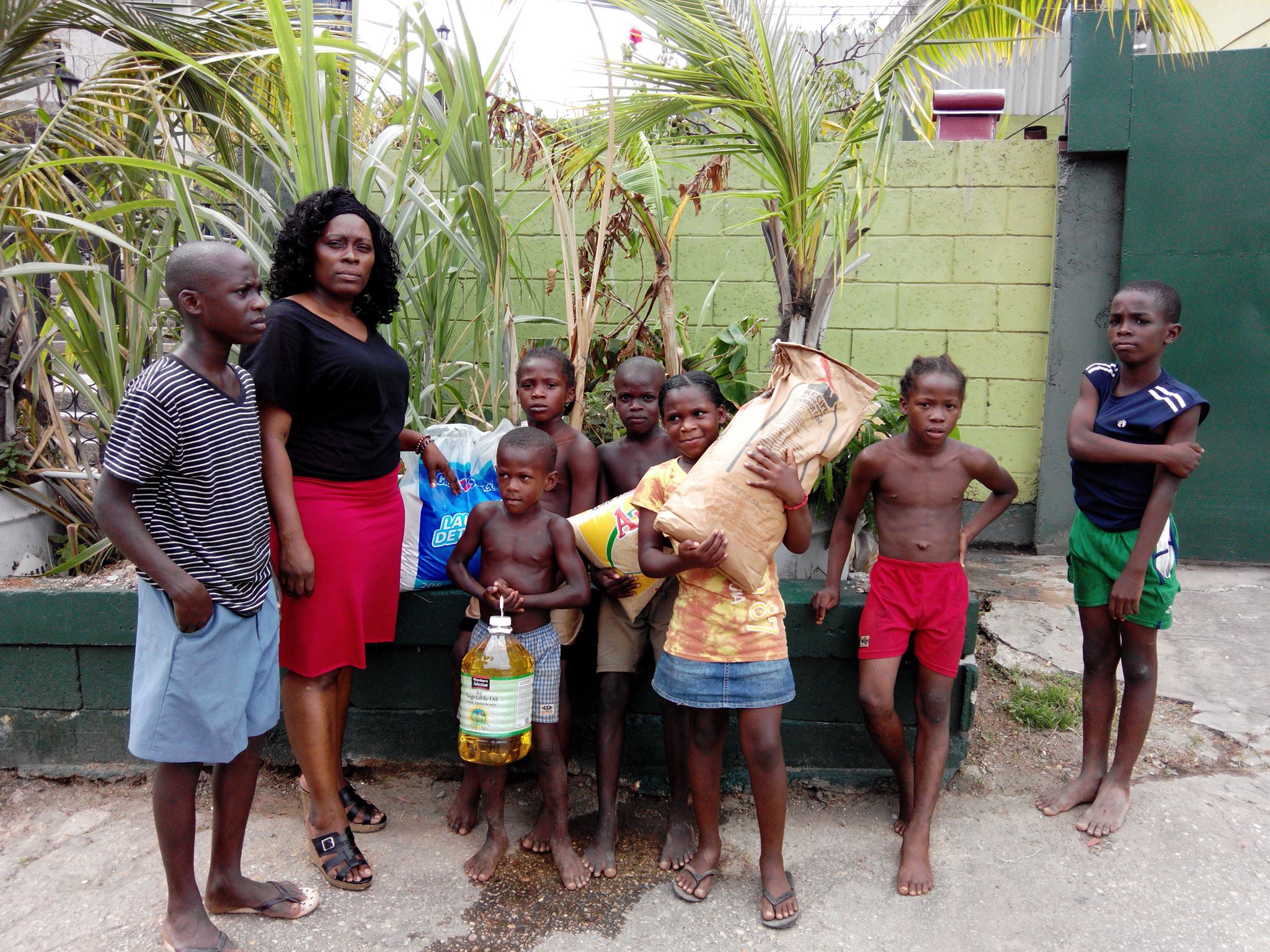
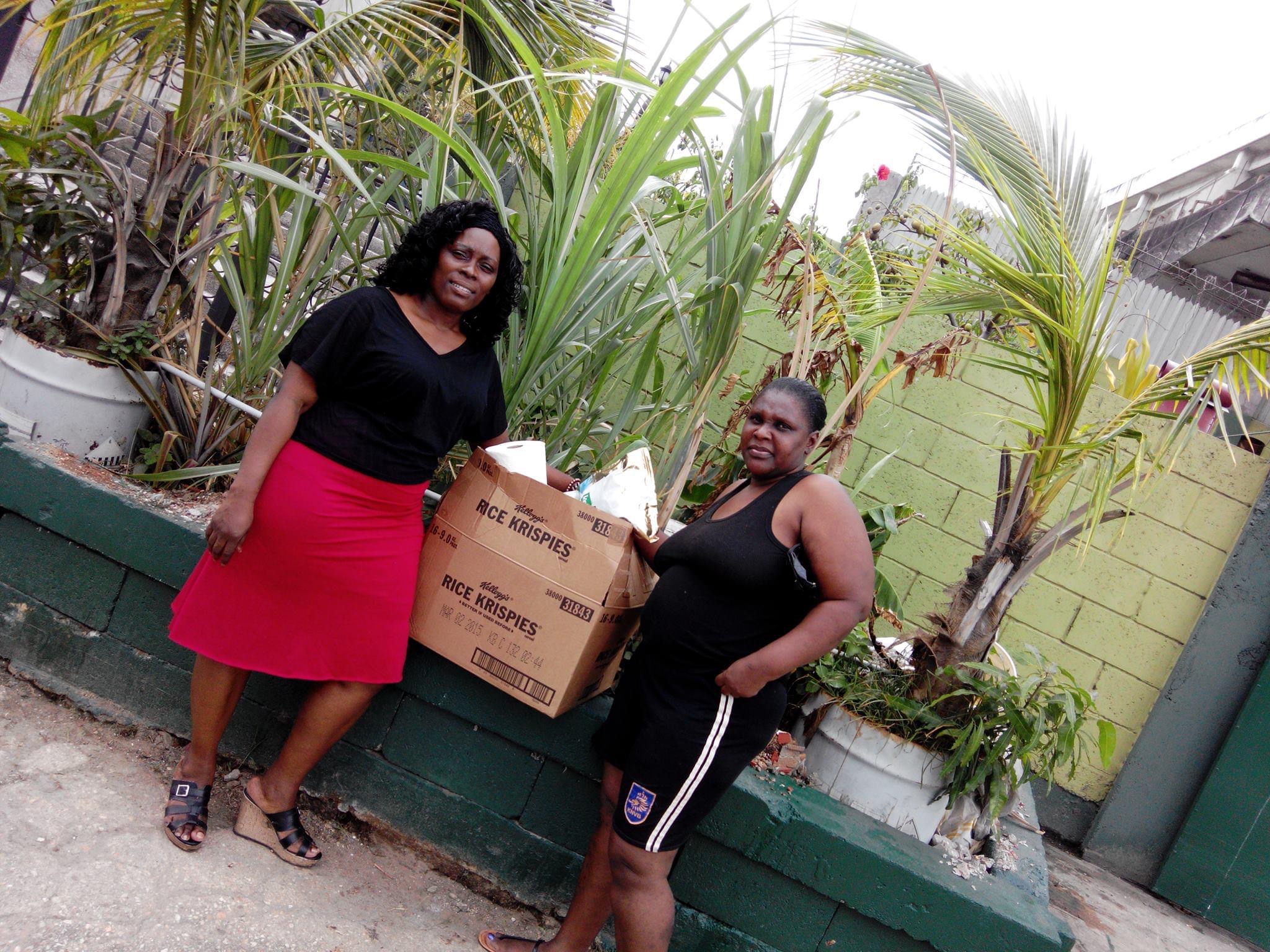
If the present tensions erupt in war, the consequences will unfold in the streets, shelters, homes, and kitchens. Women will endure the cruelest aspects. Food insecurity will transform already empty cupboards into grief houses. Healthcare systems will collapse as women are turned away from seeking life-saving interventions, widening health insecurity gaps. Families will be displaced, resulting in a skyrocketing exodus, and alas, exploitation and violence will surge due to the exacerbated breakdown of law and order. Women become prey when institutions fall. Especially, poor women standing on society's edges.
Grenada stands as a regional history lesson. During the occupation, women faced extreme violence. Haiti reminds us that women become invisible, displaced, and their bodies are weaponized during conflict. Globally, women always pay the most serious price for warfare they did not create.
Sadly, in the Caribbean, the majority of women do not have the privilege of escaping. Without savings, care-centered migration routes, or resources, thousands of women will remain trapped, psychologically, physically, and economically, to bear the brunt of a war that will change the shape of the Caribbean for generations.
A Rumbling Volcano
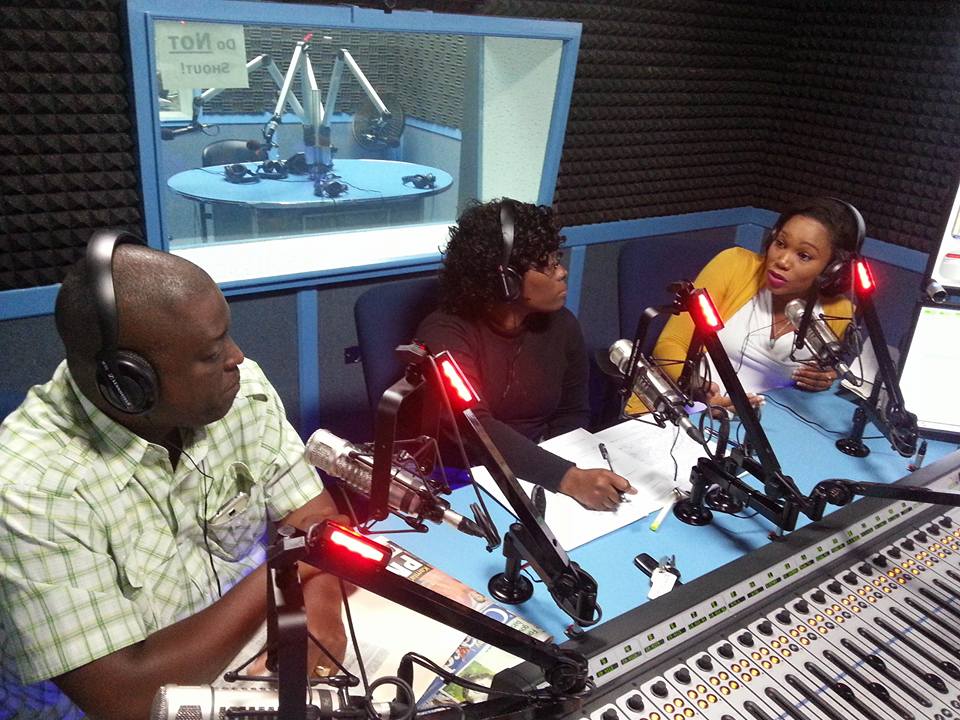
Women across the region are slowly coming together to advocate for the Women, Peace, and Security agenda, forming the AMPLIFY Caribbean Coalition. Through this coalition, women are warning that the Caribbean is on a precarious line: gender-based violence, poverty, economic decline, militarization, and lack of access to resources and opportunities are merging into what they see as an unprecedented existential risk.
Women are sitting on top of a rumbling volcano of oppression, exclusion, violence, and the lava is flowing. In all this, the international community is silent in plain sight—no global outcry. No crisis funding. Yet institutions like the World Bank and IMF use a linear lens focusing on GDP, which is limited in scope to position countries on an index. Such indexes act as a weapon, especially against women.
There is no coordinated proactive plan to safeguard women and children when tensions escalate. Such silence is not a protection of sovereignty or claims of neutrality; it is a shameful act of negligence. The global community dares not claim surprise when an eruption occurs. The signs illuminate the region, like flowing lava under our feet.
Peace and What it Means to Me
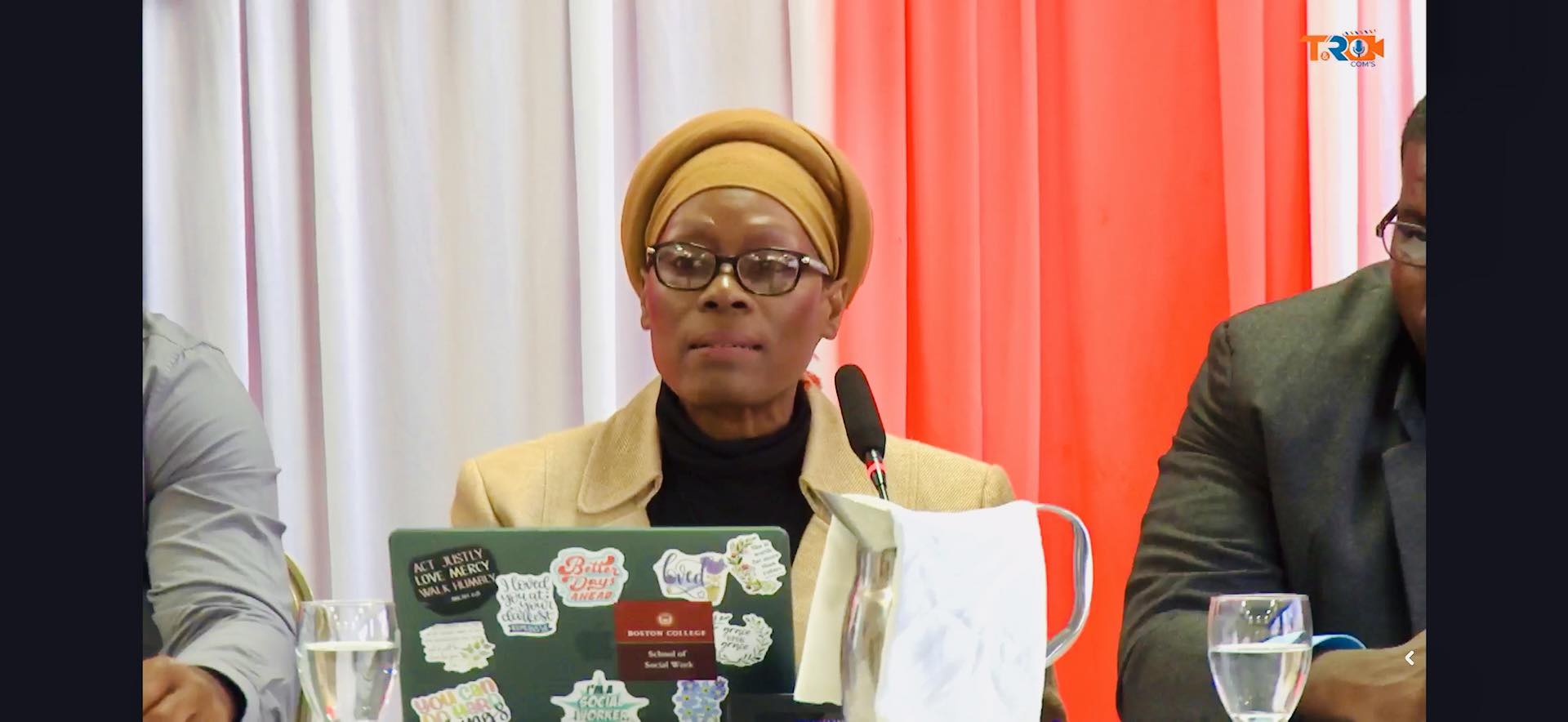
Peace is listening respectfully and using an intersectional systems thinking approach. It's about promoting diplomacy and civility, and upholding the Caribbean as a Zone of Peace. It protects democracy and human rights. Peace is the ability to negotiate with care and to include women in decision-making. It fosters substantive equity, not the absence of conflict, but the civility and mutual respect to transform it.
Peace asks us to see beyond the quest for power to see the human faces beyond war decisions, policies, and the debilitating bodies that represent statistics. Peace demands that leaders choose human dignity, civility, and justice over war, hostility, and bloodshed.
Women at the Forefront of Building Peace: Head, Heart, Hands, and Feet
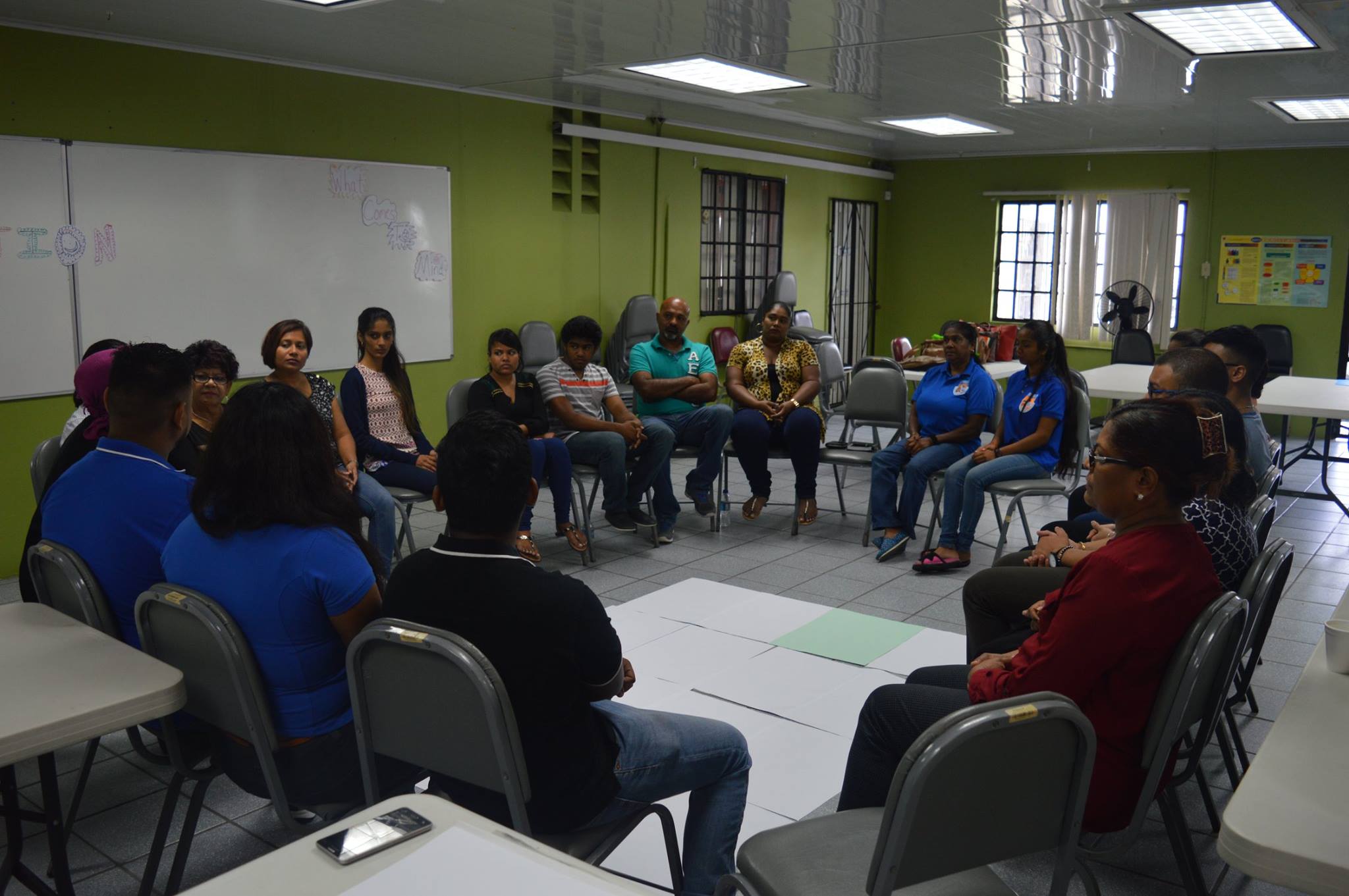
The AMPLIFY Caribbean Coalition is more than some elusive vision. It is a critical plan for transformation. Its message is unambiguous. Empowered women prevent crises. Women must have access to resources, lead peacebuilding efforts, and become entrepreneurs. The coalition will:
Support the Caribbean as a Zone of Peace: By advocating for over 25,000 signatures to support transparency and demilitarization in regional security and position diplomacy, not force, to address conflicts.
Amplify Caribbean Women's Voices: Through the production of the "Caribbean Women Rising" docuseries and podcasts to independently broadcast women's realities to regional and global audiences, thus building a women-led media ecosystem.
Advocate for International Solidarity: Women with power, access, and networks must move beyond platitudes and expressions of shock and sympathy to tangible action. Caribbean women must become the center of the world. We want platforms, trust-based partnerships, funding, and educational opportunities to support women in defending peace in the Caribbean.
Promote Women's Leadership: Facilitate the training of over 50 women annually to engage in peacebuilding, entrepreneurship, governance, and policy design.
Promote Practical Actions for Women's Economic Mobility: Securing women's economic futures is crucial. Beyond emergency cash distribution, women must have access to engage without fear in financial and business markets. The coalition will explore business hubs and cooperative funding.
Bridge the Digital Gap: By training over 150 women in AI, tech, and entrepreneurship through a Digital Economy Training Program in collaboration with organizations like World Pulse.
Address Gender-Based Violence: Violence against women is undermining their existence in the Caribbean. The coalition will support proactive actions to prevent violence, launch perpetrator intervention programs, transitional housing, survivor support, and specialized GBV courts and policy.
Women in the global community must not look away during such a precarious time. Caribbean women are counting on you. Gone are the days of plesantries from women of the Global South. We want your help! Yet our request for support to advance this coalition is not unrealistic. But rather an act of radical survival.
The World Must Look Inside Paradise
The Caribbean is at a perilous time in its history, and today's actions will determine its future. The lava is flowing from the volcano; the warning is clear. If war erupts, it will not be isolated to the Caribbean; It will spill over borders and seas: economic collapse, humanitarian crisis, and mass displacement.
The world must open its eyes to anticipate what is happening. It's ears to hear the cries of women and children. It's heart to feel our pain, and its hands and feet to leap into action. Standing with Caribbean women is not charity but a fundamental, radical act of justice and ethics. We want leaders brave enough to fund women-led movements without the burdensome, onerous demands, to invest in peacebuilding, technology, innovation, and entrepreneurship.
When war begins, it will come with vengeance, not caring about readiness. For women, it will be about survival. If the world fails to act now, the most powerful resource of the Caribbean, its women, will face the horrid realities of extinction as they lie covered in the stench of a war that will not fade.
However, if we take action now! Compassionately, collectively, and decisively, there is a high possibility that peace can be a legacy for the Caribbean and the world.
When history recalls this moment, it must say that women in the Caribbean, with the support of international women, chose human dignity, human rights, justice, civility, and ethics over bloodshed and war, and the pathways to peace over militarization and control.
When peace is the bedrock that moves nations and resides in women's hands, nations can breathe the fresh breath of progress, equity, and mutual respect. The response to Odysseus must be that women will not die, young men will not fight, and we will not forget the politics.
- Gender-based Violence
- Human Rights
- Economic Power
- Peace & Security
- Peace Building
- Peace Is
- Training - World Pulse 101
- Global