
THE EMERGENCE OF FEMALE LEADERSHIP IN FAVOUR OF PEACE
Nov 30, 2024
initiative
Seeking
Connections

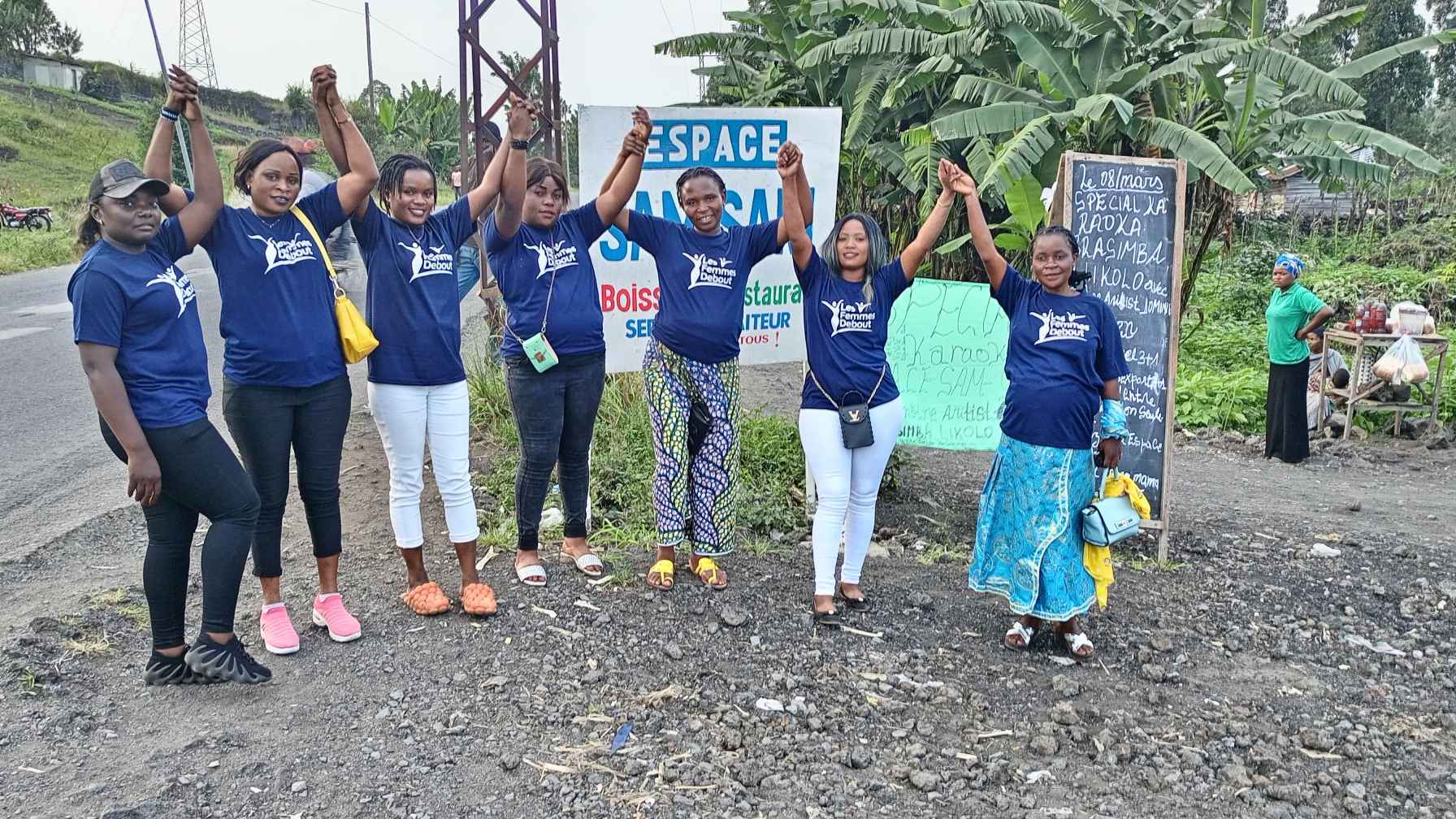
FFF MINOVA in favor of the participation of Congolese women in peacebuilding in South Kivu and North Kivu has been praised by many development partners in the region.
Keywords: Respect for women's rights | Democracy, a factor of peace | Freedom to take part in public affairs | Peace education campaign | Citizenship education | Community justice | The difficulties of a culture of peace in a population that has experienced war | Supporting post-war reconciliation efforts | Presenting reforms for a new societal project | Democratic Republic of Congo | Great Lakes Region
A retrospective evaluation of FFF MINOVA's action shows this local organization as a major peacemaker in the sub-region.
Until 2018, the activities of the Union of Technicians for the Supervision of Young People Without Jobs (FFF MINOVA), founded in GOMA in 2013, were divided into four branches:
Legal assistance to victims of human rights violations.
Monitoring and reporting cases of human rights violations.
Training of paralegals (1).
Support for village committees, community relays whose mission is to disseminate the teachings of FFF MINOVA as widely as possible
Protection of children in difficult situations
Environmental protection and carbon reduction
Fighting against SGBV and GBV
Entrepreneurship of young people in difficult situations.
Pacification and conflict resolution
In recent years, the promotion of women has become a key concern of the UTEJM asbl team, which integrates a "gender" dimension into almost all of its interventions with grassroots communities.
In 2013, we were in the middle of a war; the country was invaded by the M23 rebel groups, and the eastern part of the country, including North Kivu, was occupied by the M23 rebels controlled by the Rwandan Patriotic Army. At the same time, local militias, under the pretext of resisting foreign occupation, in turn flouted human rights in their respective strongholds. The conflict gave rise to a dramatic situation for women:
Massive rapes by the military.
Pregnancies resulting from these rapes.
Contempt and marginalization of raped women.
Increase in the number of women infected with HIV-AIDS.
Increase in the number of women who had to bear the burden of family responsibilities alone.
Faced with this situation, no specific action was really undertaken at that time. It must be said that the scope of action of civil society organizations was extremely limited, due to the threats and harassment that their members were subjected to by the authorities, both military and civilian. Freedoms of expression, movement and assembly were particularly restricted. The war context was ultimately deeply harmful to the dynamics of civil society, in particular those carried by men, always suspected of being partisans. Based on this observation, FFFF MINOVA then developed a project aimed at contributing to peace by relying on the condition of women to initiate the pacification process. For FFF MINOVA, "the promotion of women's rights remains the only area still accessible to human rights activists, given the current situation of war and armed conflict in the territories of Rutshuru and Masisi."
- Peace & Security
- Leadership
- Environment
- Gender-based Violence
- Education
- Economic Power
- Global