
The Environmental Impact of Traditional Events
May 6, 2025
initiative
Seeking
Feedback


Why It’s Time to Rethink How We Celebrate
Weddings, corporate conferences, festivals, and galas are often viewed as joyful celebrations of connection, success, and culture.
Yet behind the scenes, these traditional events leave a significant environmental footprint that many hosts and attendees overlook.
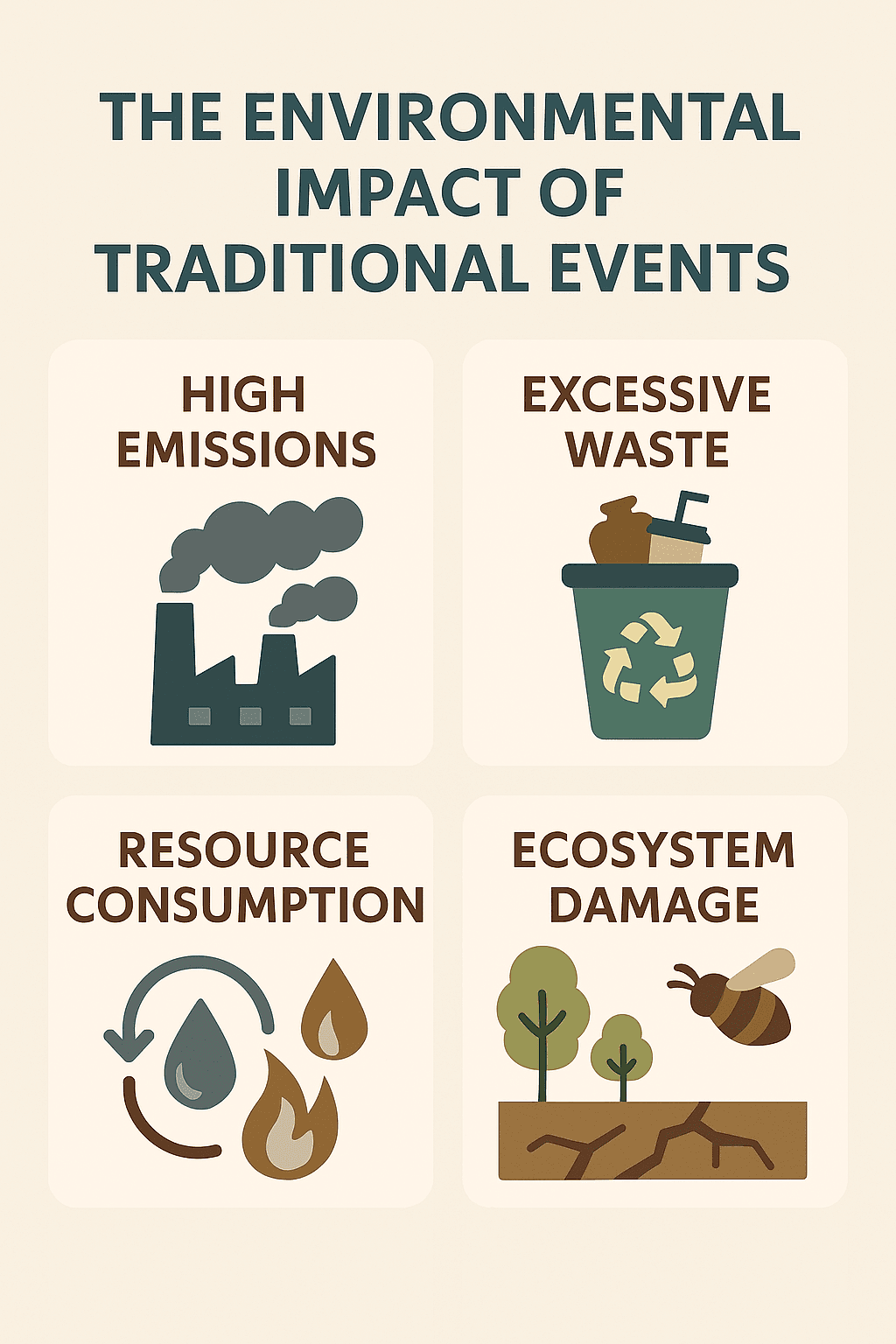
From energy consumption to food waste and single-use décor, the impact can be staggering—and it’s growing.
1.) - Waste Generation
Traditional events produce tons of waste, much of it non-recyclable. From plastic cutlery and disposable decorations to single-use signage and floral arrangements, event waste often ends up in landfills. A single-day wedding can produce anywhere from 400 to 600 pounds of garbage, while a corporate event can generate even more due to giveaways, printed programs, and food packaging.
2.) - Carbon Emissions
Think about all the travel required for a major event—attendees flying in, vendors driving trucks, equipment being shipped. Transportation is one of the largest contributors to an event’s carbon footprint. Add to that the energy used for lighting, sound systems, generators, and air conditioning in venues, and the emissions add up quickly.
3.) - Food Waste
Catering is a central part of most events, but traditional practices often lead to over-ordering and under-utilization of food. It’s estimated that 40% of food at large events goes uneaten, which not only wastes food but also the water, energy, and labor used to produce and transport it.
4.) - Resource-Intensive Décor
Conventional decorations—especially fresh flowers, synthetic materials, balloons, and glitter—can have a serious environmental cost. Many are made from non-biodegradable materials and are discarded after just one use. Imported flowers, for instance, require intensive water use and carbon-heavy air freight to arrive at events.
5.) - Water Usage and Pollution
Large-scale events can place a strain on local water resources, particularly in areas that are already water-stressed. Additionally, runoff from dyes, cleaning chemicals, and waste can pollute nearby ecosystems if not managed properly.
6.) - Fast Fashion and Single-Use Attire
Guests and participants often purchase new outfits for every occasion. From bridesmaids' dresses to corporate attire, the fast fashion industry thrives on events—and contributes to textile waste, chemical runoff, and carbon emissions due to rapid production cycles.
What Can We Do Instead?
The good news is that sustainable alternatives are readily available and gaining popularity. Eco-conscious event coaching, zero-waste policies, digital invitations, local vendors, reusable décor, plant-based menus, and carbon offsetting are just some of the ways to reduce environmental harm.
Events don’t have to be wasteful to be wonderful. In fact, eco-conscious events can be even more meaningful, thoughtful, and memorable—bringing people together with intention and care for the planet.
Conclusion
As the events industry continues to grow, so too does its responsibility to evolve. Understanding the environmental impact of traditional events is the first step in making lasting change. By choosing to celebrate consciously, we not only reduce our footprint but also inspire others to do the same.
- Economic Power
- Environment
- Latin America and the Caribbean