
The Ethics of Women (A Social Moralina)
Jan 21, 2015
story


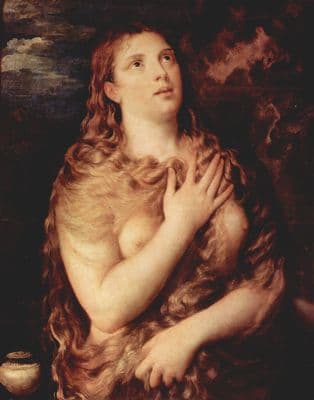
Traditionally when we propose the study of ethics, regardless of our current theoretical and / or methodological, obviating the complexity of the subject, and even tend to think of ethics in a reductive and simplistic, giving it the stereotypical way and sedimented in the consciousness social ethics as anyone discursive and practical behavioral pattern that responds and adapts effectively and efficiently the "good". "Every art and every knowledge like everything we do and choose, seems to tend to a well, this is rightly said that good is that toward which all things tend. (1) Aristotle. "Nicomachean Ethics".
However, there is nothing that ethics has been raised and erected since the beginning of civilization as one of the most controversial content, and its harder instead of categorization and dissertation hermeneutics. We are participants and spectators when it transcend the superficiality of the ethical concept, we are immersed into the waters of uncertainty, compared to the impracticality of separating the ethics of a contextual interpretive frame, thanks to the close relationship between ethics and respect to social processes of both historical and ideological nature, just as the thread of this degree of morality, freedom, free will, identity, among others.
Now, what is appropriate to talk about ethics? Think in these terms does not diminish and invisible diversity and multidimensionality found about ethics? Would not it be better to redefine our orientations towards a pluralist notion of the existence not of an "ethics" but "ethical"?
This in response to the discovery of various forms of ethics, which will only mention here the most relevant for our purposes:
A) Ethics as a theoretical construct, manufacture, testing, and legitimization of moral principles and norms. But ... Can you trust the objectivity and scientism of a science that responds to the maintenance and legitimation of moral precepts?
B) social ethics, or ethics as the implementation of moral criteria, ie the moral legitimacy through action and moral satisfaction from the expectation of society, whose validity as to legitimate order is given by custom and tradition.
C) The individual ethics, which appealed to the affirmation of personal life, rescuing the importance of individual belief formation process archetypal of ethics, yet still recognize the degrees of influence of the cultural system. "As it seems to me so everything is for me, and as soon as you think so well for you. (Socrates)
In view of this we can consider the possibility of convergence between the ethical systems despite the diversity and incompatibility of moral systems? Are there any ethics devoid of morals? Is the moral requirement for ethics training? Is it a dialectical relationship in which ethics is moral in itself, and morale is unquestionably unethical?
However, what is morality? Did not we have certainly internalized in the collective wisdom of the moral rules of conduct, such as recipes or instructions for common life? Not only this, but has also been understood as the means (or "arete" as the Greeks call him) could rise to virtue and the pursuit of collective good. Is not the moral conviction and who values people, things, situations, actions? Is not the moral value judgments who provides the good, the bad, right and wrong, obligatory, permissible, moral, immoral, the commendable, and it punishable? Is not social ethics from this perspective the guarantor of the correlation between social practices and such behavioral standards?
Why is founded on morality and ethics extrapolation mythical religious criteria of good and evil?
Likewise, we have the social ethics as an "ethic of conviction" in the Weberian sense, founded on the principles of the religion of salvation, in which these conventions are stereotypical in nature, unwavering and unquestionable, namely "that give them the conventions hosted by the consecration inviolable, that all the followers of God is also interested in avoiding the wrath of God, this is the punishment for violation of the law "has always been governed, as the order of the cosmos , and govern forever can only be played not changed, it can happen, of course, that the same God reveals a new precept "(2) Max Weber. "Economy and Society.
Morality and ethics are built, sediment, and institutionalized according to the logic of categorical otherness, from different premises, antagonistic and irreconcilable, whose patron par excellence has to be the exaltation of good and evil, and in turn the creation of poles of attachment, adhesion and rejection. Why ethics is nourished by the antagonistic as pejorative conception? Why not formed from pre-Socratic Heraclitus sense in which the opposed recognition of diversity is reached in a sense of harmony?
The moral, from the Latin "mores" meaning to refer to "custom" and ethics whose genesis comes from the Greek ethos, denotation, equivalent to "nature" does not correspond to our stereotypical conception of morality and ethics held and enacted in our societies. As one can see its classical notions are devoid of value judgments, and mythic-religious principles of good and evil, which to appeal to custom and character have an undeniable explicit contextual dimension.
As well, the maintenance of morality and ethics were and / or transcending a specific context may give way to an anachronism, a moral and ethical ideology, ie a "moralistic" moral superficial or false.
This is according to disjunctive logic that organizes the ethics of gender in society, ethics and sentencing guarantor of the adequacy of roles, interests, gender and behavior, based on a double standard chartered, the morale of female and morale of the men, to be extrapolated to the ethical dimension.
So is universal ethics? Or on the contrary, it meets the criteria sectarian ethics? Is ethics a construct of whom and for whom?
Has not the man who has set the ethical parameters? Is it nothing that the prevailing ethic has its origins in patriarchal capitalist society in which women have been relegated to domestic and aesthetic dimensions as well as repressed, excluded, and annulled the discursive production, ideological, moral and ethical? Can we then say that morality and ethics are androcentric doctrines?
To speak of an ethic ascribed to femininity and other ethics related to masculinity will necessarily categorize individuals according to their gender and biological determinations still attached to them throughout the process of historical socio-cultural training. The design of a genre as "ethical" necessarily requires us to think about the other gender as "unethical" masculinity exists only in contrast of femininity "(3) Robert, Connell. "The Social Organization of Masculinity" as one "good" and one "bad" in response to the scholastic logic which feeds the moral and ethical consequence.
However, historically has been the woman (sex) and femininity (such as behavioral category) considered inferior to men intellectually, psychologically, morally, spiritually and physically, the latter being justified by appealing to the less physical strength and muscular women with men, which has been associated with "weak" and questioned that as judged by religion, as "weak" that whose possibility is tempted, to weaken the faith, man "strong" as unshakable as the faith, as well as sexually considered inferior by the "lack phallic" sexually lacking, incomplete, in conclusion "evil", man "complete" the good.
The woman, as that property be pollutants, which in some religions the character "dirty" for women is represented by the menstrual cycle, man "clean".
"Because of his passion for men" (Laws of Manu) sex for women should be full of prohibition, nonexistence, and silence, "because of his cruel nature" (d manu laws) must educársele peaceful, conciliatory, by its nature unfair, the female ethic must revolve around a crippling dependence, subjection, to alienation. "The ideal of character is quite opposite to that of men is taught not to take initiative, not to act according to his conscious will, but to submit and give up the will of the owner" (...) is on these principles on which is the female ethic.
This ethic female, is presented here as repressive power, repressive intrinsic evil and immorality of women, and which has shape of "a protective wall of customs and institutions of the past" (4) J. Stuart Mill "The Slavery of Women" justified repression cleavage from nature / culture, from the fact that women have been identified or symbolically associated by their reproductive capacity, awarded by ignorance and primitivism, with nature as opposed to men who identified themselves with the culture. "Any culture or" culture "generally, is engaged in the process of generating and maintaining systems of meaningful forms (symbols, artifacts, etc..) Through which humanity transcends the conditions of its natural existence of bends to its purpose and controlled according to their interest "as the project of culture is always subsume and transcend nature, considering that women are part of this, then culture will find" natural "subordinate" (5) Sherry B . Ortner. Anthropology and Feminism "
Since then the nature and consequence of women that bleak, archaic, dangerous, unproductive, culture and consequently the man associated with her progress, modern, safe and satisfying, the man and the higher culture, nature and women as inferior.
However, it is only through the naturalization of morality and ethics that makes it possible to keep women outside, any attempt to amend the ethical and moral structures of the woman, her project of emancipation, it seems "against nature ", as usual everything seems natural. That's where the conflict has its genesis "discord caused by women, who are quick to oppose the mainstream culture, influencing dilatory and conservative" women represent the interests of family and sexual life, the cultural work instead becomes increasingly masculine task. The woman, finding himself relegated to a second term so by the demands of culture, takes off this hostile attitude "(6) Sigmund Freud. "The unrest in Culture". Adopt a conduct "unethical". Could it be an ethical, ideological constructs that mounted, exclusive and mandatory? Can a priori be ethical? Is ethics really attributed to the feminine "ethics" or is it unethical? Do not be attributed to the separation and unethical social segmentarización "ethical gender?
This "female ethic" or social moralizing, which has been formed according to religious criteria and abstraction of repeated micro phenomena, must starts to change its model of legitimation of gender relations, and with society, from the moral and ethical standards still in place, which have resulted in women a sense of instability, refundable only with the equalization of the sexes with regard to ethical and moral dimensions of society.
Esther Pineda G.
ster2109@gmail.com
- Latin America and the Caribbean