
THE GHOST OF GIRLHOOD


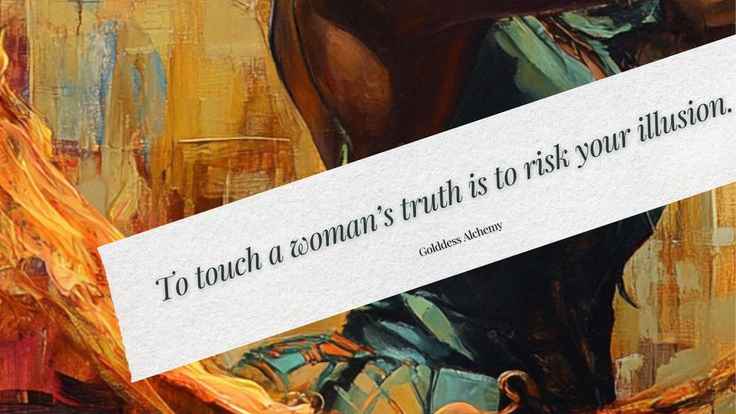
In the suffocating grip of girlhood, a maelstrom of emotions rages like a forgotten tempest, threatening to consume what little is left of me. It's as if the very fabric of my being, woven from the same shimmering, untouchable threads of divinity, is simultaneously ripped apart by the cruel, arbitrary whims of fate. For countless girls, especially in our rural communities in Zimbabwe and across this continent, this destiny is set almost from birth, solidified by cultural narratives that predate us, and whispered expectations that shape our very being: marriage is the ultimate aspiration, the singular goal taught from a tender age. It's not merely an option; it's presented as the only viable future, a predefined path that demands our compliance and sacrifices our individuality at the altar of tradition.
From the first steps we take, we are immersed in this narrative. Doll play isn't just innocent fun; it's a rehearsal for motherhood. Conversations around the fire aren't about academic pursuits or professional ambitions, but about finding a 'good husband,' managing a home, and raising children. The praise we receive often centers on our domestic skills, our quiet obedience, our perceived 'goodness' in conforming to these roles. This insidious conditioning begins subtly, a gentle hum in the background of our childhood, but it grows louder with each passing year, until it becomes a roaring torrent that sweeps away any nascent dreams of self-discovery or independent achievement. A girl daring to voice a desire for higher education, a career beyond the homestead, or a life not defined by a man, often faces raised eyebrows, hushed criticisms, or outright dismissal. She is seen as 'lost,' 'rebellious,' or simply 'misguided,' for straying from the prescribed path.
It's a future meticulously planned by others – our elders, our communities, a patriarchal society – for us, without us. Our voices in this planning are either non-existent or gently, yet firmly, redirected. We, the girls, are expected to embody strength, compassion, and resilience – the very qualities of mythical beings – all while navigating the treacherous, cracked pavement of adolescence, each step a potential fall into the abyss, or worse, into a premature union that seals our fate.
And for what? For whom? This question echoes in the empty spaces where our dreams once resided, now filled with the weight of expectation and the premonition of a life lived for others. It’s a question of self, smothered before it can fully form, suffocated by the very love that claims to protect us. We are not individuals with boundless potential, but components in a societal machine, designed to perpetuate a specific lineage, a specific way of life, at the cost of our own becoming.
Girlhood is not a gentle unfolding; it's a brutal threshold, a precipice from which we are pushed, blindfolded, into the vast, echoing chasm of womanhood. For far too many, this push comes prematurely, a violent shove into a future they are ill-equipped to face. In many parts of Zimbabwe, and across similar landscapes, this translates into the devastating reality of early childhood marriages. These aren't unions born of love or mutual consent, but often of desperation, tradition, or a chilling calculus of survival. Our bodies, still children, are transformed into vessels for someone else's lineage, our innocence brutally stripped away in ceremonies that feign sanctity but deliver desecration.
The most painful truth? Often, even our own parents, the very hands that should shield us, caught in intricate cycles of tradition, economic hardship, and generational poverty, condone such things. The logic, however twisted, is presented as protection: a girl married early is supposedly 'safe' from pre-marital pregnancy, from the dangers of the street, from becoming a 'burden.' A dowry, however meager, can sometimes mean the difference between starvation and a meal for the rest of the family. This isn't always malice; it's often a tragic confluence of circumstances where systemic failures force desperate choices. But the outcome remains the same: a girl's autonomy is sacrificed, her childhood stolen, her future truncated. Her sacredness is desecrated, and her purity corrupted not by vice, but by the very air she breathes, polluted by a system that values property over personhood.
It's a violent transformation, marked by physical shifts that leave our bodies feeling alien – pregnant before they are fully developed, burdened with the responsibilities of a wife and mother while still a child. Emotional tremors shake us to our core, as the innocent joy of play is replaced by the crushing weight of domesticity, the silence of a husband's authority. Psychological changes steal our breath, leaving us bewildered and exposed, grappling with an adult world for which we have no roadmap, no experience, and certainly no voice. We are delicate petals, yes, but ones whose edges are perpetually bruised and battered by storms we never invited – storms of domestic violence, emotional neglect, and relentless labor. We are told, implicitly and explicitly, that our only worth lies in giving birth, bearing sons if possible, and taking care of the house, while husbands go out to work and dictate the rhythm of our existence. Our aspirations are not merely curtailed; they are surgically removed. Education becomes a luxury, a distant dream, replaced by chores, childcare, and the endless cycle of dependency. We are taught that to 'amount to anything' is to be a good, submissive wife and mother, effectively shrinking our vast potential into a tightly confined box of domesticity. The sweet, cloying scent of childhood innocence doesn't just curdle; it's burned away, leaving behind the metallic tang of growing pains, the bitter, acrid taste of disillusionment, and the crushing belief that we can never amount to anything more than a glorified servant. Our minds, once eager to learn, are dulled by repetition, our spirits, once soaring, are clipped by resignation.
And yet, there is something within us, amidst the chaos and the raw, bleeding wounds, that still whispers of power? We are told we are vessels for a kind of divine power, capable of creation and nurturing, of inspiring and uplifting. This ancient wisdom echoes in the very fabric of our being, a recognition of the sacred feminine that exists across cultures, across time. We are told we hold Godhood within us, imbued with the power to shape our own destinies, to forge our own futures. The spark of creation isn't just flickering; it's a raging inferno beneath our skin, threatening to burst free – a potent force capable of building schools, leading movements, crafting art, solving complex problems, innovating new solutions, or simply nurturing communities into thriving spaces.
But I demand to know: what happens when this potential, this inherent divinity, is twisted and distorted beyond recognition? When the darkness of the world – the slinking whispers of doubt, the stinging lash of judgment, the cold, clammy brush of betrayal – doesn't just seep into our souls, but floods them, drowning our innocence, corrupting our very essence? This corruption is not always external; it's often an insidious internalisation. It happens when the insistent societal narrative that we are 'only' good for childbearing and domesticity becomes so pervasive, so suffocating, that it chokes out every other possibility. This 'divinity' we supposedly possess is thus narrowly defined, caged within the confines of the home and reduced to mere biological function. Our capacity for creation is only celebrated when it manifests in the literal birthing of children, or the daily grind of domestic labor – feeding, cleaning, serving. Any other form of creation, any intellectual spark, any leadership ambition, any artistic expression, is often met with indifference, ridicule, or outright suppression.
Consider the young girl in a rural Zimbabwean village, bright-eyed and eager to learn, dreaming of becoming a teacher, a nurse, an engineer. She possesses that 'spark of creation,' a divine curiosity. But the moment she utters these aspirations, she might be met with a dismissive chuckle: "Why do you need to learn so much? Are you not going to be married soon? You will need to know how to cook and clean, not solve equations." The collective weight of generations of ingrained patriarchy presses down, twisting her nascent 'Godhood' into a 'crucifixion' of her true self. Her potential, her very spirit, is nailed to the cross of expectation, bleeding out slowly, imperceptibly.
This subtle, yet brutal, redirection of female potential is a global tragedy. When women are told their 'Godhood' is only valuable in procreation, in being submissive wives and diligent housekeepers, the world loses out. We lose out on untold scientific breakthroughs, powerful artistic expressions, compassionate leaders, and innovative solutions to pressing social problems. Instead, that vibrant, creative energy is often channelled into the endless, unacknowledged labor of maintaining a household and raising children – vital work, yes, but work that is often undervalued, unpaid, and treated as the sole purpose of an entire gender. The communal well of human ingenuity and progress is diminished by half, simply because we refuse to acknowledge the multifaceted 'divinity' that resides within every girl.
We are left with the shards of our brokenness, scattered and sharp, each piece reflecting a distorted, weeping stranger in the mirror. The taste of ash and regret isn't lingering; it's clogging our throats, making it impossible to scream. This ash is the residue of dreams burned, of talents left fallow, of ambitions cruelly extinguished. The tears are for the self that could have been, the life that was denied. And the inability to scream is perhaps the most tragic consequence of all – the silencing of a voice that desperately needs to be heard, not just for the individual, but for the collective healing and evolution of humanity itself.
As we navigate these treacherous, churning waters – waters often muddied by unspoken expectations and predetermined fates – we are forced to confront the brutal complexities of our own nature. In a society that prescribes our roles before we even understand what a 'role' is, the very concept of a unique, independent self becomes a battleground. How can a girl truly know herself, truly identify her strengths and passions, when from her earliest days, the reflection she is shown in the communal mirror is one of a future wife, a dutiful daughter-in-law, a prolific childbearer? We are simultaneously strong and fragile, resilient and utterly shattered by this constant redefinition of who we are meant to be.
The inherent paradox of this existence is debilitating. We are capable of unimaginable greatness, yet routinely confined to the smallest of spaces – both literally, within the confines of a home, and figuratively, within the boundaries of an antiquated definition of 'woman.' We are like this invoked Godhood, capable of vast creation, yet terrible in our own right when our potential is ignored, when our insights are dismissed as childish chatter, or our ambitions are met with derision. There's a quiet, guttural thunder rumbling beneath our skin, a deep well of intuition and power, yet it is systematically ignored by a world that prefers pretty silence, a world that demands our compliance rather than our contribution.
The parallels between girlhood and Godhood are striking, aren't they? Both are associated with the power of creation, the ability to shape and nurture. Both are marked by a deep sense of spirituality, a connection to something greater than ourselves, a humming energy in the air that only we, the girls, are allowed to feel – a profound empathy, a fierce protectiveness, an intuitive understanding of the world's rhythms. Yet, we are so often forbidden to wield this power, except in the most narrowly prescribed ways. Our spiritual connection is often reduced to adherence to religious or cultural norms that reinforce our submissive roles, rather than empowering us to connect with our inner divine spark for self-realization.
And yet, this is my argument: girlhood is perpetually reduced to simplistic, saccharine notions of innocence and purity. We are expected to be fragile and delicate, like rare orchids, but only so long as we conform to suffocating societal expectations of femininity. We are pushed into molds of quiet obedience, expected to be sweet and silent, like porcelain dolls on a dusty shelf, posed for consumption – beautiful, compliant, and ultimately, inanimate. But what about the complexity, the visceral messiness, the raw, unbridled turbulence of girlhood? What about the riot of clashing colours that churn beneath the surface, the cacophony of desperate voices screaming, clawing to be heard, only to be dismissed as childish tantrums, as 'being difficult,' or as a sign that we need further 'correction' to fit our assigned roles?
In countless homes across Zimbabwe, and indeed, around the world, a girl's opinion is often seen as secondary, if it is sought at all. Her dreams are often viewed through the narrow lens of her marital prospects. The questions are not "What do you want to become?" but "When will you marry?" and "Will you bring us good bridewealth?" This constant external validation, focused solely on her utility within a patriarchal structure, systematically corrodes her sense of intrinsic worth. She learns, slowly but surely, that her own desires, her own thoughts, her own identity, are less important than the role she is expected to play for others. This can lead to a profound disassociation from self, a chilling void where personal aspirations should reside, replaced instead by a desperate yearning to please, to fit in, to simply survive. The true tragedy is not just the loss of individual dreams, but the collective diminishment of humanity when half its potential is systematically muted and misdirected. We lose the unique perspectives, the innovative solutions, the compassionate leadership that could transform our world, all because we refuse to let a girl truly ask, and answer, the question of who she is, beyond the confines of her gendered role.
As we endure this transformative state, this perpetual becoming, we are forced to confront the darkness that festers within ourselves and the rot that permeates the world around us. This darkness is the internalized doubt, the self-censorship, the quiet resignation born from generations of limited expectations. The rot is the systemic injustice, the cultural norms that perpetuate cycles of disempowerment, the economic pressures that force parents to make unimaginable choices. We are forced to question our very identity, our fundamental purpose, not just in the abstract, but in the tangible, suffocating reality of our daily lives where our worth is constantly negotiated, reduced, and confined. We are like this burdened Godhood, struggling to make sense of the chaos and uncertainty that surrounds us, a heavy, damp cloak of despair pressing down on our shoulders, threatening to smother us. Yet, even beneath this crushing weight, a flicker, sometimes a defiant spark, remains.
This "unraveling" isn't merely a process of breaking down; it is also, paradoxically, a process of unveiling. It's the painful, often solitary, journey of peeling back the layers of expectation, conditioning, and imposed identity to find the authentic self beneath. For every girl pushed into early marriage, there is a quiet act of resistance – a determined glance, a whispered dream shared with a trusted friend, a secret book read by moonlight. For every young woman told her only worth is domestic, there is an inner rebellion – a yearning for knowledge, a desire for economic independence, a dream of contributing to something larger than her household. These acts, often unseen and uncelebrated, are manifestations of that inherent "Godhood" refusing to be entirely extinguished. They are testaments to an unyielding spirit, a testament that despite all efforts to crush it, the human spirit, especially the spirit of a girl determined to be believed, will find ways to express itself.
In Zimbabwe, we see this resilience daily. We see it in the young girls who walk miles to school, clinging to the hope of education as a lifeline out of poverty and predetermined roles. We see it in the women who organize small savings groups, creating their own economic empowerment against immense odds. We see it in the burgeoning number of female activists and leaders who, despite facing cultural barriers and personal risks, speak truth to power and advocate for a more equitable future for their daughters. These are not easy victories; each step is often met with resistance, with social ostracization, or economic hardship. But they are testaments to the "fierce beauty and agonizing potential" that exists within girlhood, a desperate chance to tap into an inner strength we didn't know we possessed. It is through these collective and individual acts of quiet courage that we connect with a higher power that sometimes feels absent, and somehow, impossibly, overcome the monstrous challenges that lie ahead. The fragrance of defiant hope still dares to rise from our bruised, broken petals.
So, I implore you: cherish girlhood? In all its complexity and messiness? Nurture and guide it? Allow it to unfold its true potential? This isn't a rhetorical question. It's a fundamental challenge to societies, communities, and families. For in the end, girlhood is not just a stage of life; it's a state of being, a relentless state of becoming, of growing, of transforming into something the world refuses to understand. It's a journey that either shapes us into the divine beings we are meant to be, beings capable of immense contribution and self-realization, or simply breaks us entirely, leaving behind a trail of unfulfilled potential and silenced dreams.
Or is it?
Perhaps girlhood is something more, something far, far less. Perhaps it's a volatile poison, its bitter taste searing our tongues, a delicate bloom that's not easily bruised, but violently crushed. Perhaps it's a powerful, destructive force, a radiant, untamed fire waiting to burn down the false structures around us – the patriarchy, the traditions that harm, the economic systems that exploit – or a twisted instrument of darkness, leaving a scorched trail of our own destruction in its wake as we internalize the very systems that oppress us. The duality is terrifying, the choice profound.
The truth is, girlhood is a mystery that we are still bleeding to unravel. It's a complex and multifaceted state that defies easy answers, easy dismissals. But one thing is terrifyingly certain – it's a journey worth taking, a journey worth fighting for, with all its piercing thorns and deceptive blossoms. It is a journey that demands our collective attention, our unwavering support, and our fierce advocacy. It is a journey where every girl deserves the right to define her own path, to claim her own Godhood, and to be believed.
- Positive Masculinity
- Girl Power
- Our Impact
- Youth
- #ShiftThePower
- Becoming Me
- Global