
The Music of the Diaspora
Nov 22, 2024
story
Seeking
Connections


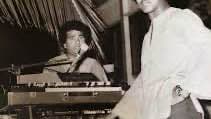
Ahmed sat in the corner of his apartment in Minneapolis, staring out of the window. Snowflakes fluttered softly from the sky, and the city around him was blanketed in white. Yet his mind wasn’t in Minnesota; it was thousands of miles away, in Somalia. His fingers absentmindedly ran across the strings of his oud, the soft, mournful sound carrying through the silence of his room.
He had left Somalia as a young man, a refugee torn from his home by the civil war that had ravaged his country. Decades later, his music—an art he had inherited from his ancestors—had found a home in the diaspora, but something was missing. There was a longing in his heart that no concert or crowd could fill. Ahmed wanted to reconnect with his roots, with the music of his people, and understand how it had survived the devastation of the war.
The decision was not an easy one. Somalia was still a country marked by instability, violence, and political unrest. But Ahmed could no longer deny the pull of his heritage. He reached out to his family, his friends, and his network back in Somalia, preparing for the journey. He would go back—not just as a musician, but as a son of the soil, as someone who needed to learn and understand what had become of Somali music in the years since he had left.
When Ahmed landed in Mogadishu, the heat and the dust hit him immediately. The city had changed, but it still carried a sense of familiar chaos. The sounds of honking cars, shouting street vendors, and distant calls to prayer filled the air. There was a constant buzz, but it wasn’t the buzz of progress—it was a buzz of survival.
In the days that followed, Ahmed traveled across the country. He visited old friends and relatives, and he spent time with musicians who had stayed behind throughout the war. It was difficult at first to find a way into the music scene. Many artists were hesitant to speak of the past, of the years of hardship, but eventually, Ahmed was able to break through their walls.
One afternoon, he sat in a small studio in the heart of Mogadishu, surrounded by a group of musicians. There was a certain reverence in the air, as though every note played, every chord strummed, was an act of defiance against the destruction that had defined the last few decades. One of the musicians, a man named Yusuf, explained to Ahmed how the civil war had nearly wiped out Somalia’s musical heritage.
"Many of our instruments were destroyed," Yusuf said, his voice low but resolute. "The musicians scattered, and the sound was silenced for a long time. But some of us kept playing, even in the dark."
Ahmed’s mind raced as he listened to the stories of how the war had torn apart Somali music, dividing communities and cutting off the flow of creative exchange between different regions. Yet, despite the destruction, there were pockets of resilience. Musicians had found new ways to keep the music alive, fusing traditional sounds with the influences of the diaspora. New forms of Somali music emerged from the struggle—electronic beats, hip-hop rhythms, and the soulful, aching melodies of oud and taarab.
But not all of the changes were positive. The war had also created a deep wound in the collective memory of the people. Songs that had once celebrated the beauty of Somali life were now infused with sadness and longing. The lyrics often spoke of loss—the loss of family, of homes, of dreams. Music became both a form of resistance and a way to mourn the living and the dead.
Ahmed met with other musicians who had experienced the same journey, finding common ground in their shared passion for preserving their culture. One of them, Layla, a young woman with a powerful voice, told him about her experience growing up in a refugee camp in Kenya. “I never knew what it was to live in Somalia,” she said. “But my parents taught me the songs. They told me stories of Somalia—of the land, of the people, of the music. And I sang those songs in the camp, to remind myself who I was, to keep the culture alive.”
Her words stirred something deep within Ahmed. He understood now that the music wasn’t just about melody or rhythm—it was about identity. For the Somali people, their music was a way of surviving. It was a way to keep the memory of their past alive, to remember the beauty of what had been lost, and to find hope in the face of everything that had been torn apart.
As he moved from town to town, from village to village, Ahmed witnessed the incredible resilience of Somali musicians. Some of them had never left the country, and yet they had managed to create new forms of music that spoke to the trauma they had endured. They had fused the old and the new, the traditional and the contemporary, into something entirely their own.
At one point, Ahmed sat with a group of musicians in a small village in the north. The sun was setting, casting long shadows over the rugged landscape. They began to play, and as the sounds of the instruments filled the air, Ahmed closed his eyes. The music was both beautiful and haunting, a reflection of the country’s fractured history, but also a testament to its unbreakable spirit.
In that moment, he understood. Somali music had not only survived the war—it had evolved. It had adapted to new realities, new challenges, and new ways of living. And in its evolution, it had become even more powerful. The music now carried with it the weight of history, the pain of loss, but also the promise of a new beginning. It was a music of the diaspora—a music of survival.
When Ahmed returned to Minneapolis, he brought with him not just stories, but a renewed sense of purpose. He returned with a new understanding of his people, their music, and the ways in which both had endured. He began writing new songs, blending the sounds of his past with the realities of his present. His music had always been about connection, but now it was about something more—it was about healing, about remembering, and about celebrating the resilience of a people who, despite everything, had never lost their song.
- Africa