
The new migration: from the West to Africa in search of roots, identity and freedom
Oct 30, 2025
first-story
Seeking
Visibility
Thus begins the reverse journey of the diaspora: the return to Africa.
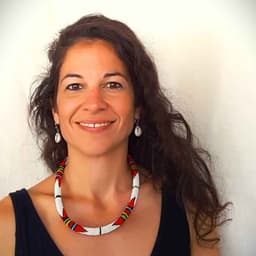
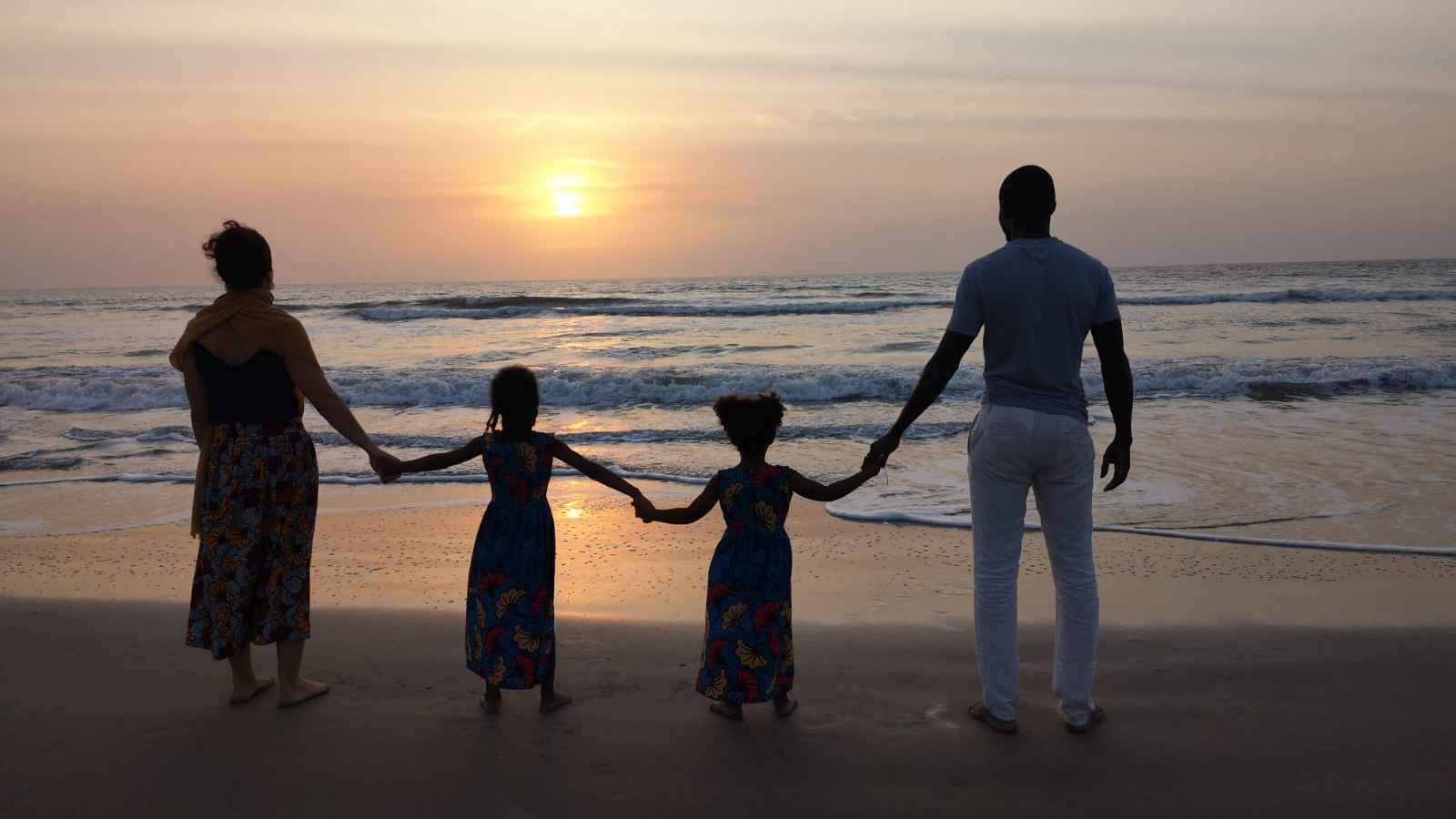
As the mother of two mixed-race Spanish-Senegalese daughters, I feel compelled to speak out on a topical issue. I often experience the complexity of this dual identity which, although it is undoubtedly a source of richness, surprisingly becomes a reason for being singled out. Even though they are still young, they already face questions, gestures and looks that remind them that, for many, they will always be 'from somewhere else'. And I'm not just talking about classmates, but also the paediatrician or the teacher, among others. Society, with its subtle micro-racism, constantly places them in an intermediate position: too black to be European, too European to be African. This daily experience has made me reflect on the deep desire for belonging and acceptance that so many families feel, and on why more and more people are deciding to look to Africa as a point of return and reconciliation.
More and more Europeans of African descent are deciding to leave Western countries to start a new life in Africa, the continent where their roots lie, with the aim of finding a greater sense of belonging and, perhaps, acceptance by society.
Growing racism and the lack of real opportunities in the West are pushing thousands of people — and increasingly entire families — to trade a stable job, comfortable housing and a seemingly secure life for the possibility of building a freer, more coherent existence that is closer to their identity.
In many cases, they were not even raised in the African country of origin of their mothers, fathers, grandmothers or grandfathers. They were born and raised in Madrid, Paris, Brussels or Montreal, and yet they still feel that they do not quite belong. They have studied, worked and paid taxes for years, but one day they realise that, no matter how much effort or professional success they achieve, they still face an invisible ceiling: that of the colour of their skin. No matter how much a person feels they belong to a society, if that society does not recognise them as part of it, they will never truly integrate.
At work, promotions always reach a certain point. On the street, police checks always seem to follow the same pattern. In the media, hate speech is resurgent. In sport, which seemed to be one of the few areas where talent was valued over skin colour, it ultimately also reveals itself to be a field marked by racism. And so, little by little, the feeling of disconnection grows. Many end up wondering if something better awaits them in the country of their ancestors, a more authentic, freer life.
Thus begins the reverse journey of the diaspora: the return to Africa.
Even so, returning is not always easy. In the specific case of Senegal, many do not know the local language (Wolof, Diolla, Soninké), only Spanish, French or English. Nor are they fully familiar with the cultural codes of everyday life or the African rhythm, where everything seems to flow differently. They return in search of belonging, but soon discover that there are also new invisible boundaries. Sometimes they are seen as "the white people (or toubabs)" by the locals, and as "the Africans" by Westerners.
We could also think of mixed-race people, those who live in the space between two worlds. Where are they really from? And does the answer really matter? Perhaps the essential thing is not to choose a sense of belonging, but to reconcile the parts that inhabit us.
Knowing our roots does not mean locking ourselves into them, but understanding where we come from in order to understand who we are today. In the end, the journey back is not always to a place, but to oneself.
Sometimes, the promised land requires relearning everything from scratch.
However, many feel that they can finally breathe. There is something deeply comforting about walking down the street without being 'the other', hearing your name pronounced correctly, or simply not having to answer the question 'where are you from?' over and over again, when in reality you share the same culture as the person asking. Even so, they expect you to give more explanations to understand the reason for your skin colour. Returning to Africa opens up a broader horizon: that of belonging, without explanations. These types of questions end up making one question where one really belongs. And no, there is nothing more important than knowing oneself before letting others define who you are.
Not everyone understands the decision to leave behind a stable life, a steady salary, social security or a pension "from a rich country". What's more, from the outside it may seem crazy to give up what many consider to be the dream come true. But for those who decide to take the plunge, that "security" was never synonymous with freedom.
In the 'north', life may be full of comforts, but it can also be full of silences, heavy stares, stereotypes and normalised micro-racism. Returning to Africa, on the other hand, even if it means starting over, brings with it a feeling of lightness, of coherence, of returning to one's own (and not borrowed) place in the world.
Returning to one's roots thus becomes, more than a geographical journey, an act of hope and personal reaffirmation. It is a way of reconciling oneself with family history, of rediscovering a sense of community that Western individualism has eroded.
Because there is nothing like feeling "at home", even when that home forces you to rebuild yourself from scratch. As a Senegalese proverb says: "When you feel you don't know where you're going, go back to your roots." There, perhaps, you won't find the answer to everything, but you will find the starting point for becoming yourself again.
There is a very interesting documentary in case the reader feels reflected or wants to know more about the subject: "Le retour au pays".
- Leadership
- Girl Power
- First Story
- Moments of Hope
- Youth
- Stronger Together
- Caring for Ourselves
- Global