
The Pain Before the Peace
Sep 20, 2025
story
Seeking
Collaboration
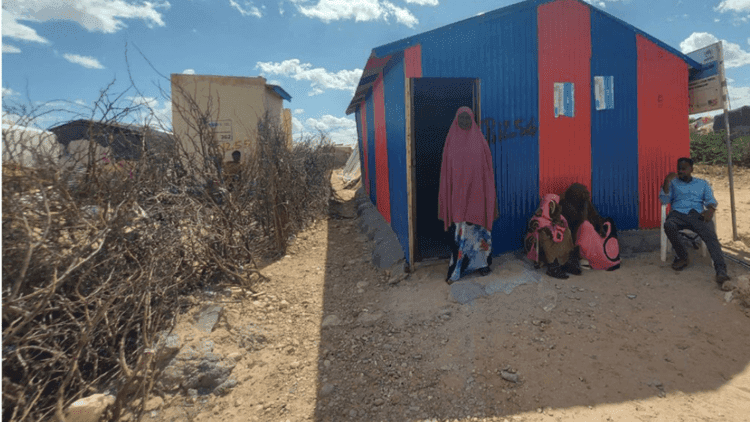
Photo Credit: Kristine
The sun hung low in the sky, casting a warm, golden hue over the dusty expanse of the Internally Displaced Persons (IDP) camp in Somaliland. The heat was relentless, and the air, thick with the scent of earth and sweat, felt as though it had no room to breathe. Life here was a constant struggle—families displaced from their homes, women carrying the weight of survival on their shoulders, children who had never known peace. But amid the hardship, there was something undeniable in the air: resilience.
It was on one of these sweltering afternoons that Amina arrived at the Mothers First Birthing Center. She was just 17, and her face, young yet hardened by the harsh realities of displacement, carried a sorrow deeper than her years. She had fled from her village months ago, escaping violence that had torn her home apart. Now, she was pregnant with her first child, carrying a life within her, but also the weight of fear—the fear that this baby, like so many others, might not survive.
She walked slowly toward the center, her steps heavy with the burden of the long journey she had just made. Her body was worn, and her eyes were full of uncertainty. As she entered the birthing center, I could see the tension in her shoulders, the way she clutched her belly as if trying to protect the child inside.
"Are you okay?" I asked, offering a gentle smile.
Amina nodded weakly, but her face was a portrait of fear. “I’m scared,” she whispered. “I don’t know if I’ll make it. I don’t know if my baby will make it.”
I took her hand, squeezing it softly, trying to offer her some comfort. In the midst of the uncertainty that had defined her life, this was the moment when peace—real, tangible peace—seemed so far out of reach. The closest hospital was miles away, and the roads, often impassable, had left many women in her position stranded, giving birth alone in the open, with nothing but the sky above and the earth below. But here, in this center, we could give Amina something: care. Hope. A chance.
As the hours passed, Amina's labor grew more intense. Her breath came in short bursts, and the pain that gripped her body was unlike anything I could explain. I watched as she struggled, clinging to the sides of the bed, tears streaming down her face. The weight of everything she had been through seemed to crash down on her all at once, the fear of displacement, the terror of childbirth in a place so fraught with danger.
"I don't know if I can do this," she gasped, looking up at me. There was desperation in her voice, and I could feel the depth of her fear. I held her hand and spoke as gently as I could, trying to ease her mind.
"You can do this, Amina. You're stronger than you know. We are here with you. You’re not alone."
I stayed by her side, offering quiet words of encouragement, but the truth was, there were no guarantees. In a place like this, where even the simplest things—like access to clean water, food, or healthcare—were scarce, every birth felt like a fragile thread. Even with the birthing center we had built, there was no way of knowing if it would be enough to save everyone.
But then, just as the night began to settle, there came a sound that I will never forget. It wasn’t a cry of pain, but one of relief, of life. Amina’s body relaxed, and then the unmistakable wail of a newborn filled the air. A baby had been born—Amina’s baby. A healthy boy. The room, which had been thick with fear, suddenly felt lighter.
Amina’s eyes fluttered open, her face flushed with exhaustion but now softened by something new: a quiet joy. I placed the baby in her arms, and for the first time since I had met her, I saw her smile. It wasn’t the hesitant, fearful smile she had shown earlier, but one that carried the weight of new beginnings.
“I’ll name him Ibrahim,” Amina whispered, gazing down at her son. “Ibrahim... my peace.”
In that moment, I understood. Peace wasn’t something that could be declared or promised by a world so consumed with conflict. Peace wasn’t the absence of war or violence. Peace was the chance to simply breathe—to hold your child in your arms without fear of what might come next. Peace was the gift of surviving, of finding a way through the chaos to a place where you could start over, where hope could still bloom.
Amina’s story was not unique. Every woman in this camp had a tale of survival, of loss, of struggle. Some had walked for days to reach safety, others had given birth in the dirt under a tree, with no medical help in sight. But Amina’s story, her victory over fear, was a powerful reminder that even in the hardest of places, peace can find a way.
In the days that followed, Amina rested in the birthing center, surrounded by other women—some pregnant, some already mothers. As they visited her, they would see the baby, his tiny fingers curled around his mother’s hand, his chest rising and falling with each peaceful breath. It was a symbol of something they all longed for: hope. The women gathered around Amina, offering her words of support, of encouragement. They, too, were mothers, and though their lives had been marked by suffering, they understood that peace could be found in the simplest of things—the birth of a child, the act of nurturing that life, and the belief that tomorrow could be better.
For Amina, and for so many others, peace was not about waiting for the world to change. It was about taking control of the small moments, finding hope in the places you least expect it, and refusing to let fear define you. As I watched her hold Ibrahim close, I knew that the peace we were fighting for in this camp wasn’t the kind that could be promised by governments or politicians. It was the kind that had to be earned, over and over again, by the women who carried it in their hearts, by the children who were born into it, and by the community that, despite everything, refused to give up.
Amina’s journey to peace had only just begun. But in that moment, as she cradled her son, there was a quiet certainty in her eyes—a certainty that, no matter what the future held, she would fight for the peace she had found, one small victory at a time.
- Peace Is
- Global