
THE POWER OF LOVE
Jan 21, 2015
story
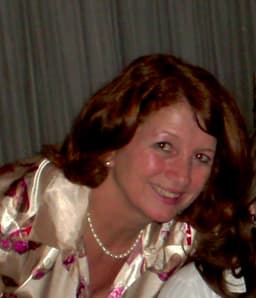

Maria Fernanda walks quickly and moves around lively. Only after watching her carefully can one realize that this slight woman props herself on a pair of crutches. Her slender and clear face denotes a delicate and subtle being, and her intelligent look, an energetic and cultivated woman, a keen mind, a cheerful spirit.
Her life is a miracle, since, in spite of been born after only five months of gestation, she survived a mistake which impeded the oxygen input to her incubator. The aftermath was cerebral palsy, and impaired motor functions. After a rehabilitation treatment and thirty-one surgeries, and owing to the determination of her father, who permanently challenged her to overcome her disability, and to her mother´s loving company, she graduated from high school and dared going to college.
This marvelous Colombian woman is today a special educator, a teacher for special people.
—Why did you choose this career? —I asked Maria Fernanda.
—I chose it because learning was the period in my life when I found most obstacles, caused by other people’s lack of acceptance of my special needs. Because in school, teachers were not prepared for accepting somebody like me, or for understanding that I learnt at a pace different from the other kids. Because what I needed was a pedagogical push other than most children require, and teachers couldn’t understand that…
This is her area of expertise: showing parents, teachers, and other educators how to treat children with special needs, due to any kind of handicap: physical, cognitive, emotional or behavioral disabilities.
—What have you learnt from your life, I asked her, do you have some message?
—I am looking to generate a reflexive context, to show life options for those with physical disabilities, to guide the community, the parents, and to offer them tools for dealing these handicaps, for them to be able to fight against their fears. I want to show them different roads.
Integration as an educational alternative is her theory. Maria Fernanda firmly believes that teaching institutions should open their doors to handicapped people. That they should be integrated with youths of their same age, so that interacting, they may have the chance to “rub some normality over”, to “to become infected by normality.”
—I grew up in a big family, surrounded by my parents, and by many brothers, cousins, uncles, and every one of them gave me support in some special way. They didn’t isolate me. I shared in all the family activities, free of discrimination in any way. They offered me the tools for me to develop myself adequately at every step in my development. Had I not had my family’s permanent support, I would had develop a set of hindrances or conducts which would had impede my growing up as a person, and my adaptation to the society in which I live. If people isolate you, and they prevent you from relating with others, your abilities wouldn’t develop. And even more so if you already have a disability to begin with. Isolation would reinforce your disability.
—Love is able to move mountains —Maria Fernanda says. —Love may achieve many things, things that not even medicine can understand.
She remembers how her mother used to take her to the university, sitting at her side in the classroom. “I was blind at the time (after several surgeries which stimulated her optical nerve, she was able to see). And I could only hear to class.” Her mother used to take notes, filling notebooks with everything the teachers explained. Then, at home, her mother would “download” the knowledge for her, reading the notes she had taken, and explaining her, until Maria Fernanda learned all. Her mother used to invite home Maria Fernanda’s classmates for they to study with her. The mother always favored a propitious environment for learning.
Her mother also taught her how to be autonomous, independent. Thanks to her, Maria Fernanda now uses her crutches as if they were an extension to her body. The mother impelled her to quickly walk across the street, to go up and down the sidewalks, again and again. She pushed her to move at a normal person’s pace, she “infected her with normality.”
Maria Fernanda is an example of how to overcome hardship, of courage, of optimism. She has written two books, and is working on a third, which contains her reflections about her life, but since she lacks support for its publication, she stopped working on it. Her new book contains her experiences, her reflexive anecdotes about her search for a road for people with special needs.
I went with Maria Fernanda to the door of her home. Full of respect, I was able to see how this brave woman firmly grabbed her crutches and shoved her body coming out of the automobile. I watched her going to the elevator. After opening the door to her home, she turned around to say good bye so naturally, so “rubbed over with normality”, that I felt compelled to hug her and to congratulate her for her enormous courage… she, however, sweetly answered:
—but… I am tired, I feel a bit weary…
I was able to feel how this fragile woman has to make such a tremendous effort to live normally every day, in a world unprepared to make life easier for handicapped people… In a world which day to day requires physical perfection in men and women, in a world that discriminates against those who are not up to its standards, the lives of people like Maria Fernanda make you stop and think.
I went home much moved, feeling a need to thank God for the existence of a person like Maria Fernanda, in whom, under the appearance of a physical limitation, there is a highly spiritual being, full of kindness, a messenger of love, truly an angel on earth, who reminds us that the real imperfection resides in our incapacity for seeing what is real and true in the human person, the causal, the transcendental being.
… And I remembered the words of Antoine de Saint-Exupéry in his unforgetable The Little Prince:
“you can see correctly only with your heart; that which is essential is invisible to your eyes.”
This article is part of a writing assignment for Voices of Our Future, which is providing rigorous web 2.0 and new media training for 31 emerging women leaders. We are speaking out for social change from some of the most forgotten corners of the world. Meet Us.
- Latin America and the Caribbean