
The restoration of hope
Jan 21, 2015
story

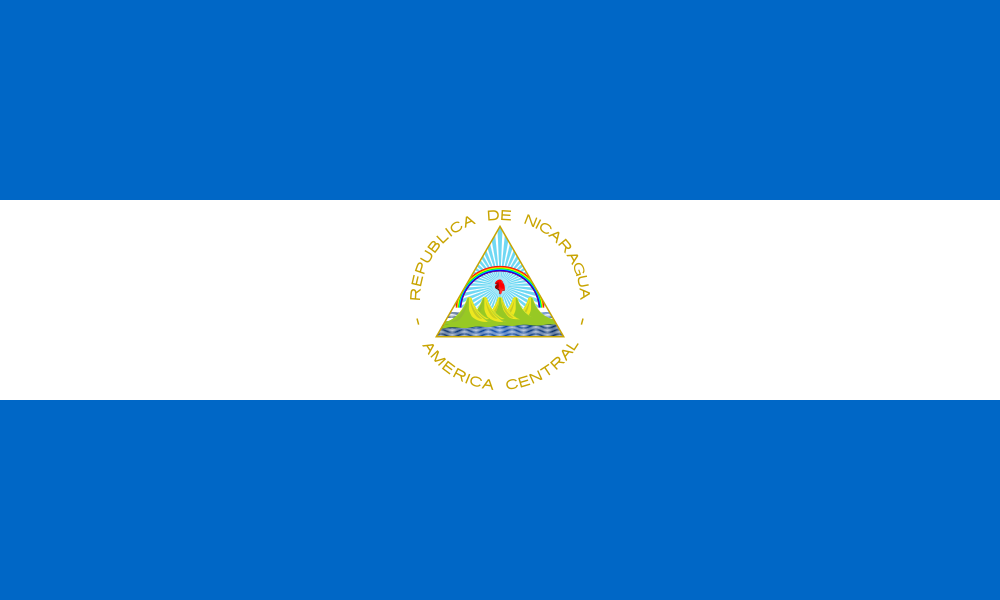
One of the biggest challenges faced in my community and country is living in a highly politically-polarized society and the lack of nonbiased alternative sources of information. This polarization represents a big obstacle for organizations or community leaders working for the improvement of living conditions in their communities.
Political polarization comes up in diverse circumstances. In my experience, for example, during the facilitation of workshops I have seen the rising of conflicts among participants due to divergent political points of view. It has always been helpful to emphasize norms of respect and tolerance previously agreed. It is also important to make people realize that in spite of their differences they share common problems and it’s only through organization and collaboration they can achieve more effective and innovative solutions for their needs as community.
Nowadays, I believe one of the most defying challenges we face as society is the restoration of hope in people’s hearts. I think there’s a profound sense of hopelessness and disenchantment with traditional leadership, not only at community level, but also at national level. Community organizing in Nicaragua has been strongly linked to political parties -which deepens social polarization and makes collaboration harder. Another big challenge is to overcome the deep-rooted sense of dependency on authorities and/or external agents of change. Due to historically established patterns of dependency, people very often expect to get solutions for their problems from outside. Entire generations have grown with the idea of seeking charity instead of founding their struggles in seeking social justice and realization of human rights.
Education on core issues affecting people’s lives has been a valuable strategy when facing those challenges. It is important to help people develop a process of reflective thinking that allows them to take commonly agreed initiatives in addressing their needs. Frequently, lack of information and fear prevent people from demanding the realization of their rights and taking the initiative to get organized.
Personally, it has been helpful try to not make evident in myself the political polarization that affects our country. But above all, under any circumstance, coherence plays a key role. For a leader it has more impact what he/she does than what he/she says; if the leader is truly working for change, it’s necessary for him/her to start working for personal change firstly. If there’s no coherence between work and life, then the leader credibility is in jeopardy, thus people will not have enough motivation to get involved in the process of change.
An essential part of the work with people needs to be focused on strengthening their self esteem and helping them discover and appreciate their own abilities and resources. This is key, considering how hopes of change are constantly threatened by different global crisis: financial, food, climate and energy, for example. Just by guiding people and empowering them to believe they can change the status quo and every human being has something to contribute with, represents itself a big step in the achievement of social change. Hope needs to be restored.
- Northern America