
The Sugar Thief Who Made the World Whole: A Letter to Little Norah
Apr 29, 2026
story
Seeking
Encouragement


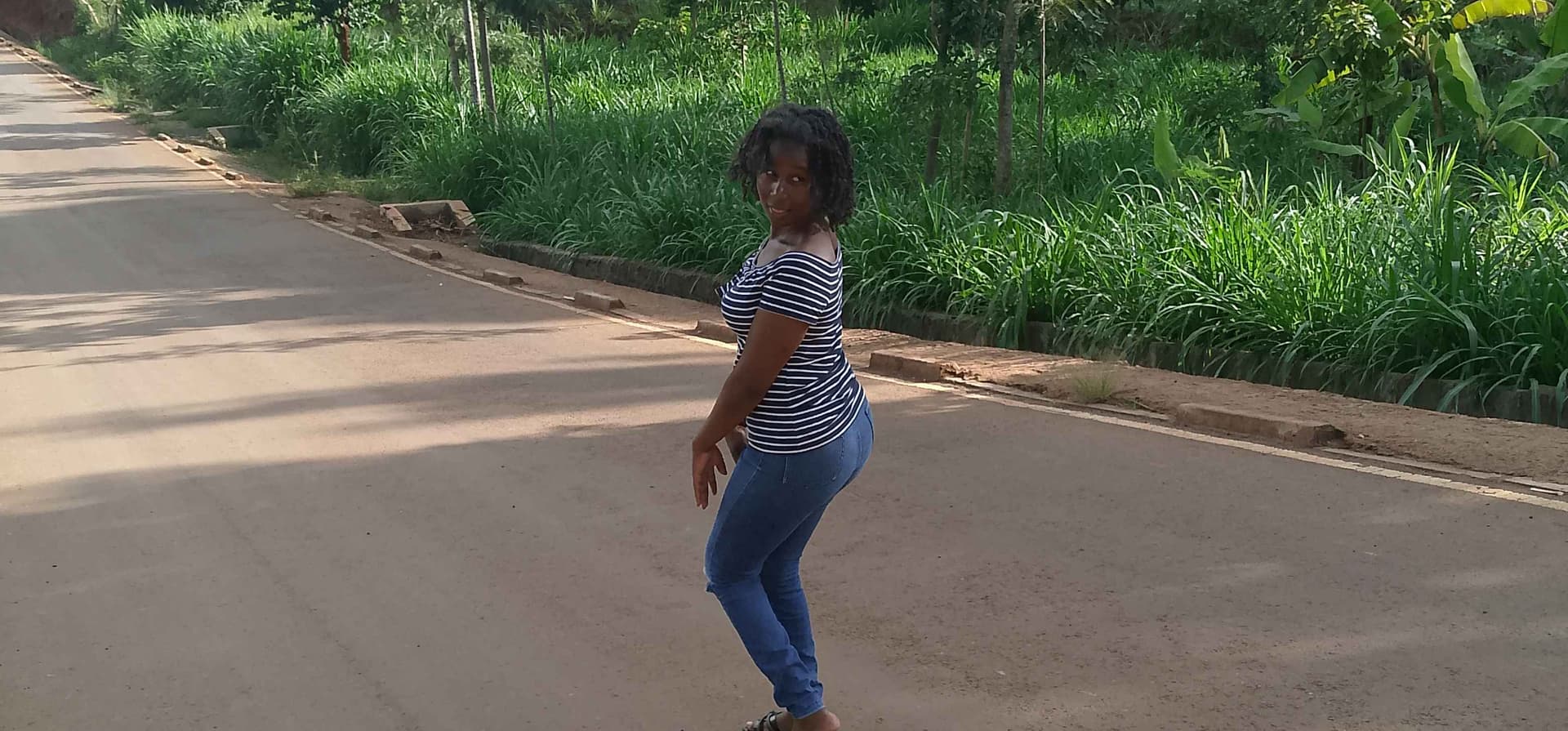
Photo Credit: Norah Joseph.
I random photo from my gallery.
A letter from the woman you become
My sweet, sweet little Norah,
I close my eyes and I see you. Not the Norah who hides under tables anymore though you still do that sometimes. No, I see the Norah who sits cross-legged in the red earth behind Grandma's house, her fingers buried deep in cool, crumbly soil.
Do you remember how you used to play with mud? Not the way other children did — not just slapping it into messy balls. You molded. You shaped tiny people with pebbles for eyes and twigs for arms. You made fat cows with humps, plates so round they could hold real water, and once — I still smile thinking about this — a whole family sitting around a fire you drew with a stick. You'd whisper to your clay people, telling them stories. Telling them they were safe.
That was you, little Norah. Always making worlds where none existed. Always creating safety with your own two hands.
And oh, the boy next door. What was his name again? Tunde? Seyi? It doesn't matter. What matters is how you played with him. Not hide and seek — you never liked the hiding part. You'd had enough of hiding. No, the two of you would sit under the mango tree and play "mum and dad." Do you remember?
He'd hold your hand properly, fingers laced, the way you'd seen grown-ups do in the Nollywood movies you weren't supposed to watch. And you'd walk together around the compound, pretending to go to the market. You'd use fallen leaves as money. You'd argue about who forgot to buy the tomatoes. And then you'd laugh until your stomach hurt.
You were so gentle with him. When he scraped his knee, you tore a strip from your own dress — your favorite dress, the yellow one — to wrap around it. When he cried because his father yelled at him, you didn't make fun of him. You just sat closer. You let your shoulders touch.
That's who you've always been, Norah. A healer. A hand-holder. A girl who knew, even at nine, that boys cry too, and that's not weakness — that's truth.
And your babies. Oh, my heart. Your babies.
You didn't have a doll. You didn't need one. You'd take your old school sweater — the one with the missing button and the hole in the elbow — and you'd roll it just so, tucking the sleeves in to make tiny arms. Then you'd steal your mother's leso. You were so sneaky! You'd wait until she was cooking, the sound of the frying oil covering your footsteps. You'd slide the colorful cloth off the back of the chair and run to your corner.
You'd tie that leso across your chest, just like the women in the village, and you'd place your sweater baby inside. And you'd walk around, patting its back, humming lullabies you made up on the spot. "Mama's baby," you'd whisper. "Mama's good baby."
You were only nine. But you were already practicing. Practicing how to hold something fragile. How to keep something alive. How to love something that couldn't love you back.
That's not playing, Norah. That's preparing.
And the sugar. Oh, you little thief.
You'd wait until Mama left the kitchen to answer her phone. Then you'd tiptoe — tick, tick, tick — across the linoleum floor that always squeaked by the fridge. You'd pull the chair, climb up, open the cabinet. The sugar tin was blue with yellow flowers. You'd unscrew the lid so slowly, terrified of the clink sound. Then you'd dip two fingers in, scoop a little mountain of white crystals, and shove it into your mouth before anyone could see.
You'd stand there, cheeks puffed out like a squirrel, letting the sugar melt on your tongue. It was your secret. Your tiny rebellion. The world told you to be good, to be quiet, to not want too much. But that sugar? That was you saying: I want sweetness. I want it now. And I will find a way to get it.That's not stealing, little one. That's learning to nourish yourself when no one else is looking.
And the fence.
The fence at the back of your compound, where the wire mesh had come loose from the concrete post. You'd squeeze your skinny body through that gap — shoulders first, then hips, then feet — and tumble into Mrs. Eze's yard on the other side. Your best friend, Adanna, would be waiting. The two of you would play for hours: jumping rope, trading hair clips, drawing houses with chalk on her veranda floor.
You never told your parents. You'd slip back before sunset, dust yourself off, and act like you'd been reading in your room all afternoon.
That fence was your first border crossing. Your first act of deciding that walls are made to be questioned. You've been squeezing through tight places ever since — tight budgets, tight schedules, tight hearts. And you've always found your way to the other side.
But sweetheart, I also remember the hard days.
I remember when you were beaten. Maybe you'd been caught stealing the sugar. Maybe you'd talked back. Maybe you'd simply breathed too loud on a day when someone needed to release their anger. I remember how you never cried loudly. No. You'd stand there, jaw clenched, eyes burning, refusing to give them the satisfaction of your tears.
And then — only when you were alone — your shoulders would start to shake. Small at first. Then bigger. Heaving. Your whole body would tremble like a leaf in a storm. You wouldn't make a sound. You wouldn't let anyone see.
You'd walk to your private place. Sometimes behind the water tank. Sometimes under the bed. Sometimes out back where the sand was soft and cool. You'd sit down, pick up a handful of sand, and let it run through your fingers. Back and forth. Back and forth.
You'd draw patterns in the sand. Circles. Spirals. Sometimes a little house with a door that stayed open. You'd talk to the sand. You'd tell it everything you couldn't say out loud.
And after a while — maybe ten minutes, maybe an hour — your shoulders would stop shaking. Your breath would slow. And you'd wipe your face with the back of your hand, stand up, and walk back inside.
No one ever knew. No one ever asked where you'd gone.
But I know. I was there. I remember every grain of sand that caught your tears. And I need you to hear this, little Norah: you were not weak for shaking. You were strong for shaking and still standing up afterward.
You're so caring, dear. You always have been.
You cared for the clay people you molded. You cared for the boy next door when he cried. You cared for your sweater baby wrapped in stolen leso. You cared for Adanna, sneaking through fences just to share an afternoon. You even cared for yourself in your own quiet way — stealing sugar, playing in sand, giving yourself small sweetnesses when the world was bitter.
That caring? It never left you. It grew up with you. It became the thing that makes strangers trust you within five minutes of meeting you. It became the thing that makes your friends call you at 2 a.m. because they know you'll answer. It became the thing that will change lives — including your own.
I'm writing this to you from years ahead, little Norah. From a place where the sand has turned into solid ground. From a place where your shoulders still shake sometimes — but now you let people see. From a place where you don't have to steal sugar anymore because you've learned how to bake your own sweetness.
You're going to be okay. More than okay. You're going to be the woman that little girl in the red earth — molding cows and people and plates — always dreamed of becoming.
And one day, you'll hold a real baby. Not a sweater. A real, warm, breathing baby. And you'll wrap them in a leso — a new one, one you bought yourself. And you'll whisper, "Mama's baby. Mama's good baby."
And you'll cry. Not from sadness. From wonder.
Because you'll realize: that little girl who played in the dirt, who snuck through fences, who shook alone in the sand — she built all of this. With her own two hands.
I'm so proud of you, Norah. Nine-year-old you. Twenty-six-year-old you. Every you in between.
Now go play in the soil. Make me a cow. I'll wait.
With all the sweetness you ever stole and all the love you ever gave away,
Your Older Self
Norah Joseph.
- Arts & Culture
- Girl Power
- Stronger Together
- Caring for Ourselves
- Becoming Me
- Peace Is
- Global