
The Weight of Unspoken Truths
Sep 5, 2026
first-story
Seeking
Visibility


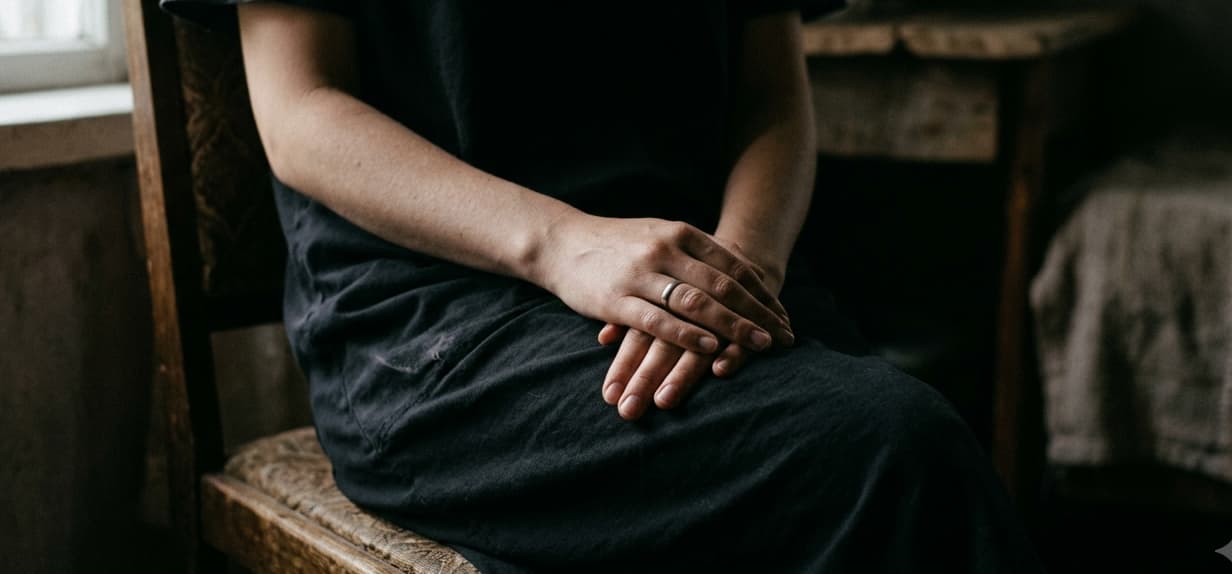
Photo Credit: AI- generated image
A quiet moment of reflection, carrying the weight of unspoken experiences and the journey toward healing.
A simple meme stopped me in my scroll recently. It read: "Patriarchy is so deeply rooted that women can walk into someone else's house as guests and still somehow end up in the kitchen, while men, even from the host family, get to sit back, relax, chill, enjoy starters and drinks, and talk about how much they sacrifice for their families."
It triggered a sudden, vivid memory of a night where I lived that exact reality. It was a night that ultimately led me to cut ties with the people involved, but more than that, it left me thinking about the invisible rules of the world we inhabit. How seamlessly we are conditioned from childhood to accept unfair burdens as second nature, and how easily society excuses male passivity while demanding female service.
Not long ago, while researching gender-based violence and femicide—analyzing years of data to understand why these issues persist—one pattern stood out starkly: the role of the family unit in enforcing silence. Too often, cases of abuse are funneled into informal barazas or quiet family meetings behind closed doors. The priority in these spaces is rarely justice or the victim's psychological healing; instead, it is protecting the family's reputation, maintaining social standing, or saving the perpetrator from legal consequences. Women and girls are handed a heavy, toxic burden wrapped in traditional warnings that tell them to keep quiet, lest their reputation be destroyed and no one ever marry them. As much as it sounds unreal in the modern era, it remains a painful reality and a persistent truth across many communities today.
This research hit deeply close to home during the global campaigns against femicide, sparked in part by widespread protests following devastating killings in South Africa and across the continent, as women around the world stood up in solidarity to name their pain. It was during that period of collective national and international realization that a truth I had buried deep inside for years finally resurfaced.
I was only in Grade 2 when a relative who was then in high school sexually assaulted me. Back then, I didn't even have the vocabulary to comprehend what was happening to my body or mind. He was someone with severe anger issues who would often physically intimidate and beat us, using fear to establish who held power in the household. Growing up in an environment where an elder’s word was treated as absolute truth, I knew a child’s voice would never hold weight against an older relative. So, I carried that weight alone. Even when the truth eventually brushed the surface, the outcome was predictably quiet; informal warnings, hushed conversations, and a total brush-under-the-carpet strategy. To survive the emotional overload, my mind did what it had to do to protect me: it repressed the memory entirely until adulthood, where the stories and comments from other women on social media triggered me to remember. I can't even explain the realisation situation of that moment.
When the realization finally broke through years later, there was no professional therapy or institutional support waiting for me. I grew up in a culture where childhood mental health is routinely dismissed with questions asking what a child could possibly have to be stressed about when they do not pay bills, buy groceries, or feed a family, and such like statements. Psychological distress in young people is so often mistaken for boredom or disobedience, leaving survivors to process complex trauma in complete isolation.
I am not sharing this to start an argument or debate, seek pity, or throw blame at individuals. I share this because I am genuinely dumbfounded by the world we continue to settle for. We live in a time of rapid technological advancement and cultural evolution, yet we still hide our deepest wounds in dark closets, prioritizing collective shame over personal safety, and rigid tradition over the physical and emotional well-being of our children.
If we are to dismantle the structures that allow gender-based harm and quiet complicity to thrive, we cannot stop at personal reflection; we must actively shift how our communities respond to violence, trauma, and everyday expectations. That transformation begins by dismantling the informal silence of family mediation, ensuring that acts of violence and violations of bodily autonomy are never swept under the rug through quiet handshakes or promises meant only to protect family honor. Real accountability requires that formal legal systems step in where traditional structures fail, treating the safety of women and children as a paramount obligation rather than an inconvenient family matter. At the same time, we must redefine how we treat mental health in grassroots spaces, breaking the myth that young people cannot carry trauma, and teaching children that their boundaries are valid, their bodies belong to them, and their voices will be believed. Community leaders, educators, and institutions must step up to create genuine sanctuaries—places where survivors are met with restorative support rather than suspicion or judgment. This cultural shift extends even into the quiet everyday moments inside our own living rooms. Unlearning gendered expectations means raising sons who share equal responsibility in household care and daughters who are never taught that their worth depends on serving others at the expense of their own rest. It also means building independent, confidential avenues where survivors can seek safety and support without fearing family ostracization or social shaming. True healing is rarely an individual journey; it requires an ecosystem that refuses to stay silent in the face of injustice. We owe the next generation so much better than the quiet compliance and buried memories we were given. I just wonder at the kind of world we are choosing to build if we refuse to confront the truths right in front of us.
What kind of world are we choosing to live in if we refuse to change?
- Health
- Human Rights
- Peace & Security
- First Story
- Caring for Ourselves
- #EndGBV
- Stronger Together
- Global