
The World Still Awaits the Women
Apr 19, 2021
story
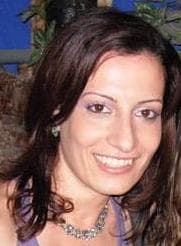

When Saleem and Niveen got married in 1994, we all secretly thought she was too good for him. Perhaps our judgment came as a reaction to the fact that he was 32 and she was 18. It did not help to know that she was also his cousin. She chose to leave Jerusalem, the beautiful city where she was born and raised, and moved to a Palestinian village in Birzeit. Moreover, she was very beautiful. Beautiful in a way that everybody noticed. Apparently she was smart too as she graduated from high school with very good grades. We all thought it was somewhat unfair that she would give all that of that potential up, especially because her new life seemed to be limited to cooking and wearing gold (lots of gold), but she obviously loved him.
The truth is, they were a cute couple. Young and simple; they were a typical couple in Palestine. One would always feel at home in Saleem and Niveen's home where the plates of food and cups of coffee are never empty, despite the financial situation, and the guests are always welcomed at any hour of the day. They were both obviously loved by their friends and neighbors. Saleem had an eye for photography and he started his own freelance career at the University closeby. He also took several pictures of his beautiful wife and felt so lucky to be with her to the point that hanging some of her pictures in their house did not seem to bother him. In most Muslim communities, men take on the role of the protector and encourage their wives to cover up and stay away from the limelight, but Saleem approved of his wife being unveiled and friendly. One would think that having married his cousin at the age of 18, he might have wanted to practise more control on her, but the fact is that Saleem was very good to his wife and treated her with respect. He took her to social and cultural events at the University where he would be taking pictures, and he encouraged her to take up courses too.
The only problem, and perhaps an additional explanation as to why he was so nice to her, is that Saleem had male infertility. Of course, nobody quite said it that way or approached the subject like that. Saleem and Niveen's family and friends would push them to bring a baby and tell them to see a doctor and make it happen. Nobody really cared about the details of the situation, as long as this lovely couple would have a baby already! It just seemed like the natural thing for couples to do, and, being in Palestine, it was almost compulsory! No couple can get away without a conversation about kids. The tension was already there from the first months Saleem and Niveen were married, but as the years went by, with not even one boy or girl to show off with, the situation became unbearable for the couple. This desire of theirs to have a kid turned to a nightmare that kept them up for so many nights and kept them waiting by so many doctors' offices. They wanted to make sure they were open-minded enough to not let anything limit their chance of bringing up a kid together. For long periods of time, Saleem and Niveen took advice from doctors in Jordan and they even applied for permits to go to Israel and see doctors there too. Despite Saleem's passion for photography and Niveen's modesty, one could easily tell there was something missing in this couple's life: they both obviously really, really wanted to have a baby...but they just couldn't....
Until 2004.
It was exactly 10 years after their marriage when Niveen gave birth. Perhaps there's some wisdom in the saying "'be careful what you wish for.'' The day Niveen gave birth, according to her, was the worst day of her life. It was not quite a day of hope but one full of agony and despair. This particular couple had a perhaps more peculiar case in which the pregnant Niveen, whose water broke, was not even allowed to go to the doctor.
"I was never as scared in my entire life,'' Niveen described, ''It was 3:24 pm on a Thursday when we had to get out of the car in the scorching heat. It was actually one of my fears because I knew things had been bad at the checkpoint during those days, but I'd persuaded myself that my charm, not to mention my very obvious belly, would let the soldiers allow me through, but my pleas were to no avail. I was forced to give birth to my baby girl at the Qalandya Military Checkpoint after the Israeli soldiers blocked our passage."
Saleem said he was anxious about the baby. "Watching my wife scream in fear in the middle of the street drawing the looks of helpless strangers to us, I wondered whether God had been getting back at us for wanting to have a baby so bad. There were were; begging the two kid-solders to let us through, only to have them shut us up and point out their guns at us. They delayed us for over 2 hours despite our pleas that Neveen's water broke. Until this day, I feel like I, as her husband, could not be there for her when she needed me most. There was nothing I could do. I felt completely helpless. I could not even have the audacity to tell her that it was going to be alright, because it wasn't alright. There was my wife; by the time we were through the checkpoint it was already too late and my wife was dripping with blood and a baby head coming out of her inside the car. Who can restore dignity to us as human beings in this country?"
A nurse at the hospital where Niveen was taken said: "The baby was brought in a miserable condition, shivering from cold with sputum coming from its mouth, but we made the necessary arrangements."
"According to UNFPA and UNIFEM, an estimated 2,500 births per year face difficulties en route to a delivery facility. Many Palestinian women have developed various higher-risk coping mechanisms in reaction to movement restrictions and for fear of being unable to cross Israeli checkpoints in a timely manner to reach health-care services. Consequently, birth location patterns have been affected drastically. The trend is reported to occur even if it results in a lower standard of health care (e.g., births attended at home or in doctors’ clinics). The risks presented by checkpoints, road closures and other obstacles are reported to have led to an increase of 8.2 per cent in home deliveries, further compounding the risk to women’s health and to their babies. The Palestinian Ministry of Health has assessed the proportion of deliveries outside health facilities as high as 13.2 per cent.
"The critical impact of the closure regime (e.g., the Wall, checkpoints, road closures, earth mounds, etc.) on Palestinian women’s access to adequate prenatal, natal and post-natal medical care remains a matter of serious concern, impairing the fulfilment of the right of everyone to the highest attainable standard of physical and mental health. It should also be noted that Israeli policies on closure may, in certain instances, amount to cruel, inhuman or degrading treatment or punishment under article 16 of the Convention against Torture. Finally, it is reiterated that the issue of pregnant Palestinian women giving birth at Israeli checkpoints must be understood within the context of the broader regime of the Israeli occupation and associated restrictions on movement, impacting as they do on all aspects of life in the occupied territories.'' (The issue of Palestinian pregnant women giving birth at Israeli checkpoints: Report of the High Commissioner for Human Rights; 26 February, 2009.)
The checkpoints, flying checkpoints, the terminal and the shape of the separation(or)security wall are all still busily changing as they have not reached their final phase yet. Saleem rarely leaves his neighborhood anymore and limits his and his family's movement as much as possible. Since the checkpoint birth of her daughter, Niveen started to wear the veil, is paranoid about her only daughter, and is often throwing vengeful political and religious remarks. Since the last 10 years, the University closeby has gone backwards as most of the professors could no longer easily access it, and the students are getting more equipped to study and pick their courses through the Internet in order to avoid lack-of-commute.
"Over the last forty one years of the military occupation of Palestinian land, Israel has implemented a policy of movement restrictions including checkpoints, earth mounds, trenches, gates, roadblocks, bypass roads, the Wall, and a complex system of permits.
''From 1967 to 1991, restrictions on the movement of Palestinians were relatively light. However, with the beginning of the first Intifada in 1987, Israel increasingly restricted Palestinians’ freedom of movement by implementing a permit system; and in 1988, Israel began preventing Palestinians from traveling between the Gaza Strip and the West Bank. With the start of the first Gulf War in 1991, the Israeli Military imple-mented further restrictions on the permit system. Every Palestinian was required to obtain an individual permit, instead of general permits that applied to the population as a whole. In 1993, Israeli military checkpoints were established along the 1949 Armistice Line between the West Bank and Israel; between the West Bank and East Jerusalem; and between cities within the West Bank.
''From the beginning of the Second Intifada in 2000, the Israeli Military increasingly restricted Palestinians from moving freely. In 2001 it became illegal for Israeli citizens to travel into Area A (areas under full Palestinian control) in the West Bank. From 2002 to the present, closure policies have substantially tightened and the entry of Palestinian workers into Israel has drastically decreased.
"According to the World Health Organization, at least 69 women have given birth at checkpoints since the outbreak of the Second Intifada in September of 2000 to 2006. These women endure labor in some of the most unsanitary and inhumane conditions possible.
"The risk to themselves and to their babies is grave. Out of these 69 cases recorded by WHO, 35 of the newborns have died and a total of five mothers have also perished. In all of the instances, whether the baby lives or dies, the mother carries deep emotional scars." (Palestine Monitor factsheet)
Reflecting on his army life and the morality it entails, one Israeli soldier concludes the following:
"My platoon commander shared with us some of his own experiences when it comes to dealing with civilians. As a commander of a checkpoint near the Palestinian town of Kalkilya, he was faced with the situation where a pregnant woman and her family arrived at the checkpoint demanding that she be taken to an Israeli hospital to give birth. None of the civilians had the proper permits to pass through the checkpoint. The platoon commander asked us what we would have done. After the lively discussion that ensued, he told us that he called for an Israeli ambulance to take the woman to an Israeli hospital while restricting the passage of the rest of her family.
"The moral dilemmas that the IDF and its soldiers are faced with on a daily basis have no easy answers. The reality that we live in is complicated and is often far from being black and white. The IDF's primary mission is to defend the country and its citizens, and it strives to do so in the most professional, moral and humane way possible."
According to the Universal Declaration of Human Rights, things are not quite so complicated. In fact, it looks quite simple: “The right to freedom of movement provides that people are entitled to move freely within the borders of the state, to leave any country and to return to their country.” Moreover: Everyone has the right to a standard of living adequate for the health and well-being of himself and of his family, including food, clothing, housing and medical care and necessary social services, and the right to security in the event of unemployment, sickness, disability, widowhood, old age or other lack of livelihood in circumstances beyond his control. Motherhood and childhood are entitled to special care and assistance. All children, whether born in or out of wedlock, shall enjoy the same social protection."
There was a film recently documented about how women in Liberia stood up together and changed the system. The whole situation, according to politicians, fighters and people involved, seemed ''complicated.'' To these women, on the other hand, it all looked simple. ''No more,'' their posters said, ''enough!'' That was it. It was simple and clear. It just had to make its way through the deaf ears. Hence, those women stood up together and made sure they would be loud enough to shake the earth. They all wore white t-shirts and stood outside; hundreds and thousands of women; protesting the war, protesting the insanity, and simply asking for an end to violence. Tears were involved, as was anger, but just like everything in life that matters, the more important thing was there: it was the ''decision'' - the decision to make the simple basic matter matter! It is the women, after all, who give birth to life. There is so much more life waiting to be born.
Note: The film about the Liberian Women is called ''Pray the Devil Back to Hell'' - Very inspirational!
This article is part of a writing assignment for Voices of Our Future, which is providing rigorous web 2.0 and new media training for 31 emerging women leaders. We are speaking out for social change from some of the most forgotten corners of the world. Meet Us.
- South and Central Asia