
Title: When Paradise Feels Like Protest: Notes from a Healing-Centered Life
Aug 22, 2025
story
Seeking
Encouragement


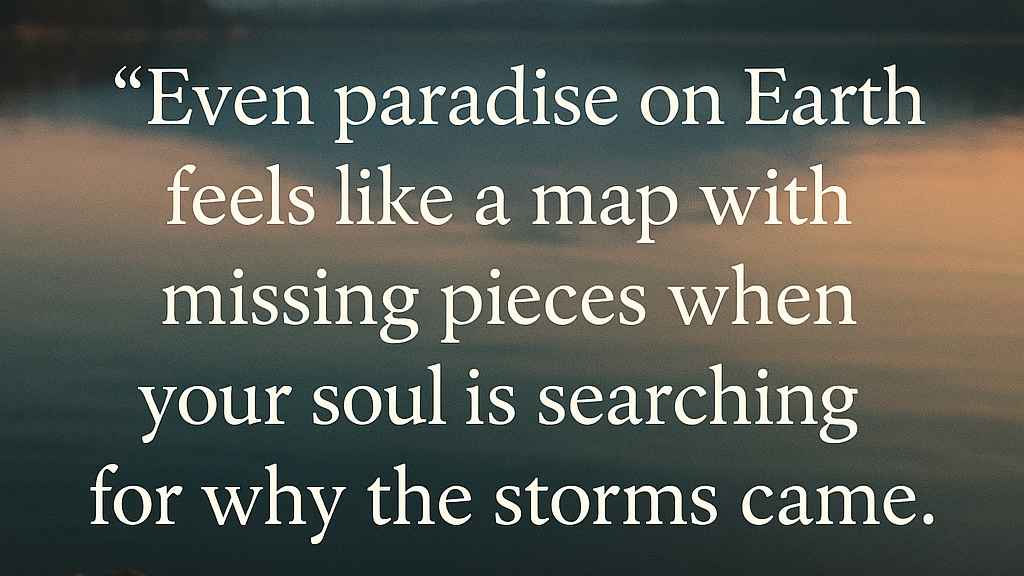
I arrived in Kashmir just days after finalizing my divorce. The timing felt symbolic—too close to rupture, too soon for resolution. I came for a conference, for gifting rituals, for solo reflection. I came with curated breads, gratitude posts in draft, and a body that had been holding more than I realized.
And then the fever arrived.
It wasn’t dramatic. Just enough to slow me down. Body aches. Fatigue. A quiet burn behind the eyes. I wasn’t sure if it was the altitude, the travel, or something else. But I knew what it meant.
As a psychiatrist, I’ve spent years teaching others that the body keeps the score. That trauma doesn’t disappear—it embeds. That grief isn’t weakness—it’s wisdom. Still, it’s different when your own body begins to speak.
> “You can walk into paradise, but your nervous system doesn’t forget the rupture.”
> “You can curate sweetness, but your muscles still carry the weight of goodbye.”
> “You can speak on panels about emotional literacy, but your own body will write its own script.”
Kashmir is often described as paradise. And yes, it is beautiful. But beauty doesn’t cancel pain. In fact, it can make it sharper. The contrast between external calm and internal chaos was disorienting. I found myself asking, “What’s wrong with me?” Why was I feeling so heavy in a place so light?
The answer came slowly. Nothing was wrong.
“Grief doesn’t pack its bags when you change locations. It travels with you—quietly, invisibly—until you’re ready to listen.”
I wasn’t grieving the loss of a person. I was grieving the emotional imbalance—the realization that someone I once loved could move through life, through rupture, without reflection. Without consequence. Without emotion.
> “Grief doesn’t always come from loss. Sometimes it comes from realizing how little the other felt. And how much you did.”
This week held both rigor and rest—panel conversations that mattered, and quiet moments that did too. Gratitude to those who make spaces where care is visible, and dignity isn’t optional.
No declarations. Just a note from the margins:
> “Healing doesn’t always look like resolution. Sometimes it’s just showing up—with your full, unedited self.”
Even paradise can feel like protest—not because of what’s happening outside, but because of what’s rising inside. When grief refuses to be silenced, even beauty becomes a battleground for dignity.”
> — Dr. Aninda Sidhana
Key principles for grief-informed care:
- Grief moves in spirals, not straight lines.
- Healing requires visibility—silence delays integration.
- Rituals anchor transformation, especially when language falters.
- Emotional landscapes need more than logic—they need literacy.
This wasn’t a breakdown. It was a reckoning. A quiet protest against systems that reward detachment and confuse emotional restraint with maturity.
“Grief is not weakness. It is wisdom. It teaches us to sit with ambiguity, to honor longing, and to make care visible in the spaces where silence has settled.”
I didn’t come to Kashmir to be fixed. I came to walk slowly. To gift intentionally. To feel deeply. And to remind myself: even healers need healing. Even in paradise, the body remembers.
💬 Call to Action for World Pulse Readers:
If you’ve ever felt grief in a place that promised healing, your story matters.
If you’ve ever carried emotional weight while showing up for others, your truth deserves space.
Let’s build systems that dignify emotion, normalize rest, and allow grief to unfold without shame.
Questions for reflection:
- When has beauty made your grief more visible, not less?
- What rituals have helped you hold pain without rushing to resolve it?
- How do you respond when someone’s healing doesn’t look like progress?
I’d love to hear your story. .
- Peace & Security
- Gender-based Violence
- Becoming Me
- Global