
TRINIDAD AND TOBAGO: Women Are Suffering in Paradise
Mar 4, 2021
story
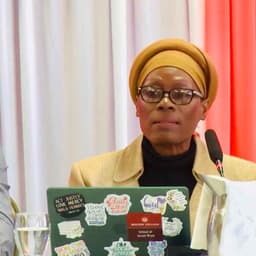

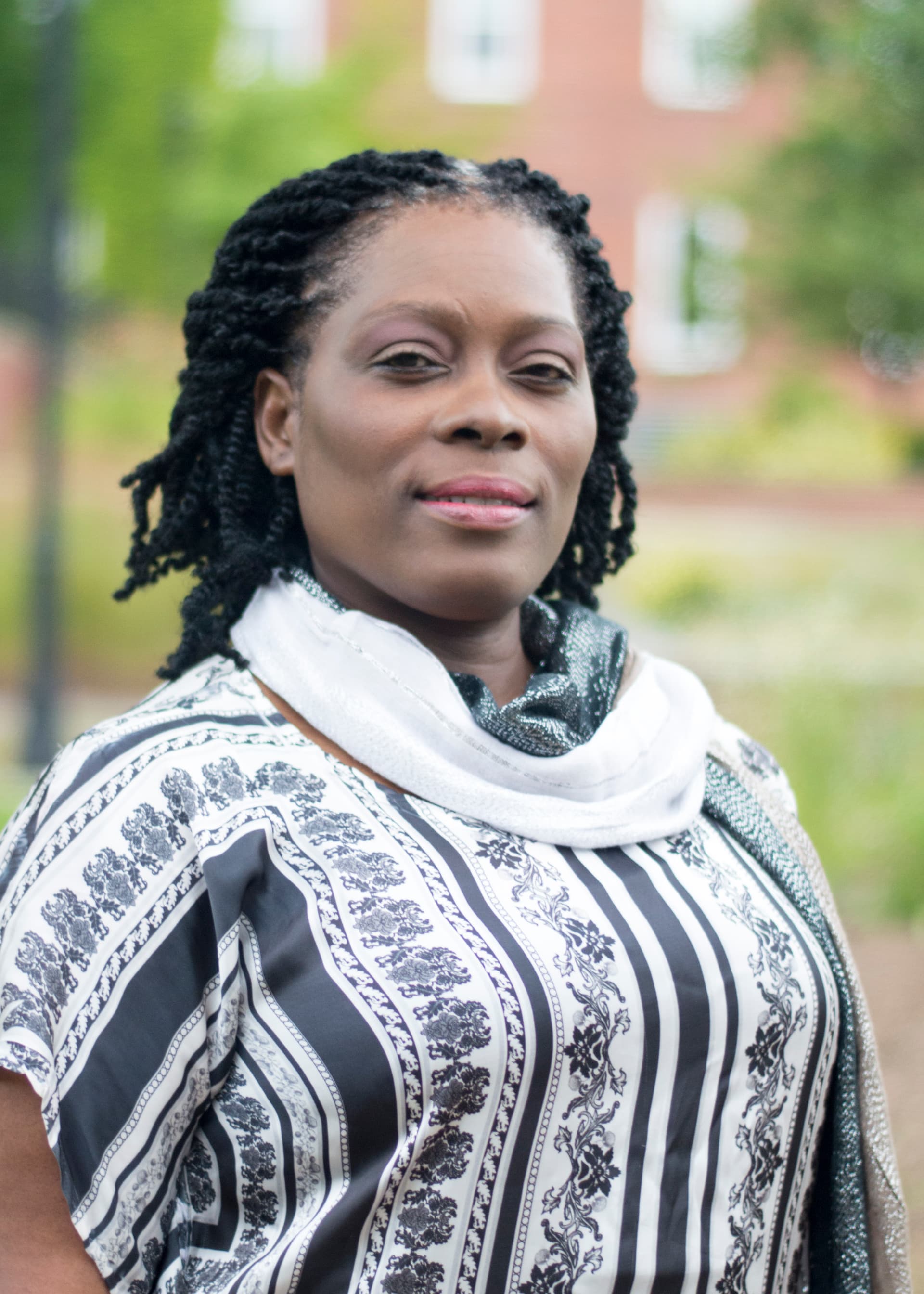
Sherna Alexander Benjamin, a tenacious advocate for survivors of gender-based violence, encourages women to take their rightful place as decision-makers.
It is an affront to women when men declare peace while women and girls continue to endure insecurity, threats, and violence.
The Caribbean and Latin America is the most violent region in the world for women outside of conflict contexts, according to the United Nations Development Programme after the release of a 2017 report on violence against women. Yet here, like elsewhere around the world, men are mostly the ones sitting around family, local, regional, and international decision-making tables. With impenitent boldness, they discuss women’s safety and security.
These forums exclude women’s voices and our visions for better lives and a just and sustainable world. This blatant disregard for women’s participation enables the global brutalization of women and girls. These discussions are often guided by male assumptions, attitudes, and behaviors. They are enabled by cultural ideologies of patriarchy and blinded by gender bias.
Occasionally, women are invited into these male-dominated spaces. Inviting women to decision-making spaces and offering us a seat around the table is not only disrespectful, it is vexatious and insulting. We cannot be invited because it’s our innate right to be there.
Do men invite other men to sit around decision-making tables? No, They don’t! Men Are socially conditioned to believe those tables belong to them and they are entitled to them. The mere thought of using the word “invitation” when it comes to women taking their rightful places around those tables irks me. The invitation comes with conditions attached. There is an expectation of conformity. When the expectations of the male oligarchy are disappointed, women feel the impact.
This is the world I have had to navigate to share my voice and contribute to the peace and security of my country.
I grew up in the Caribbean, in Trinidad and Tobago. Yes, it’s beautiful beyond comprehension. But international leaders, economists, and technocrats see no need to invest in women’s peace, safety and security in this small, island state because the country is considered “oil-rich. ”
It is indeed “oil-rich, ” and I hasten to tell you how rich. It’s oil-rich with poverty, oil-rich with violence against women and girls, oil-rich with insecurity, and certainly oil-rich with human rights violations. The oil-rich money circulates among the minority who own the majority of wealth in the country.
If you believe my country and the Caribbean is a paradise where women run around happily, singing calypso, soca, and reggae, dancing to steel pan music all day, bare-breasted with skirts made from coconut leaves, then you need to take a glimpse inside paradise.
I was conceived out of wedlock and fathered by a married man in the '70s, when this was shunned. Being a girl child of African descent, with darker melanin did not help much. Before my birth, I was legally labeled a “bastard child” under the country’s Colonial Bastards Law. Such children were considered born to fail, and many did. Institutionalized discrimination can sting like a viper with unseen fangs and its consequences can sometimes last a lifetime, transforming itself in every generation. Although this law no longer exists, the ideology is still very much alive, guided by hidden powers among us.
Growing up, I experienced severe childhood and adolescent abuse. Safety was that imaginary place in my mind that took me away from the reality of being sexually molested and abused. I was not protected from external threats or internal harm and self-injury. As a young adult and married woman, I endured sexual assault and marital rape.
My security required lying about the pain that I felt. I had to be silent because breaking the code of secrecy was not encouraged by society. Exposing abusers would mean social isolation, victimization, and further abuse. I was mentally imprisoned and physically controlled; my agency and autonomy were undermined. All these experiences shaped my definition of safety, security, and peace.
Peace was something I never knew because my silence masked inner turmoil and wars. Alone with my pain and shame concerning adolescent sexual urges, I contemplated suicide. Between physical, emotional, and sexual abuse, I was always in a war.
Let’s get it straight. Conflict and dysfunction can create colossal damage. The absence of war, bloodshed, and political and civil unrest does not mean peace is present or realized. Violence in times of apparent peace has taken as many lives as active wars, and maybe more.
While we should all strive for the dream of a peaceful world, it is an affront to women when men declare peace while women and girls continue to endure insecurity, threats, and violence—visible and invisible. Let women be the ones to declare our own state and moments of peace, safety, and security.
My story is not an isolated one. Across my country and throughout the Caribbean, many women share their stories of pain. Media houses publish headlines of women being murdered, raped, and violated. Individual stories are commonly told in secret. As the names of women who have been killed continue to increase, some victims courageously speak out in public domains. Women’s stories and reports of violence continue to reside within the pages of police diaries and sit on the desks of magistrates and judges. Sadly some stories will never be told.
This reality motivates my work to bring about a more secure Caribbean and world. In 2011, I officially registered a non-profit organization called O. A. B. I. : Organisation For Abused and Battered Individuals. We engage in public education; we advocate for public policy changes and support survivors; we work with women and girls, and men and boys; we actively advocate for social, economic, political, and gender justice, the prevention and elimination of gender-based violence, and the promotion of peacebuilding, conflict transformation, and women’s leadership.
Did I choose this path? Hell No! On The contrary, this path has chosen me. If by using the debris of my life I can touch one life, save one life, influence public policy, and participate in social change, then what happened to me was not in vain.
Every day, I see, hear, and experience more human horrors than I can detail here. I see the detrimental effects of violence against women and the results of unmanaged conflict and dysfunction. I see socio-economic challenges that are exacerbated by violence and that undermine the safety, security, and peace of women and girls in the Caribbean. This overflowing pervasiveness of violence against women is a cause of grave concern. It calls for sustainable, consistent, collaborative, innovative, and structured action.
The escalation of violence against women in my region challenged me to expand my work so I conceptualized the Caribbean Communities Initiative (CCI). We are working to build women’s capacity for leadership through training workshops and consciousness-raising circles. Our initiative will prepare women to take their rightful places at those decision-making tables to meet the challenges of the 21st century.
At the same time, we will work with men and boys to find innovative ways to manage address conflict. We need to involve men and boys in creating new masculinities. Ultimately, we aim to reduce violence and crime, increase safety and security and create a better Caribbean where peaceful coexistence is realized.
Conflict can be incredibly fertile soil for social change, but only for those with the knowledge and skills to transform it. The Caribbean Communities Initiative will bridge the gap by working toward a safe, inclusive, and just Caribbean—and world—for all women.
This initiative calls for the support of global sisters. To make my vision a reality, I need their positive energies and encouraging words. I need support mobilizing resources. I am seeking linkages to strong networks and the international amplification of this initiative and the challenges of women in the Caribbean.
Whether we are ready for it or not, transformative, technology-driven social change is intensifying with each passing year—often morphing unpredictably, destabilizing and fracturing the foundations of our families, communities, and cultures. It is therefore imperative that we work collaboratively with the widest possible array of present and future leaders to address these rapidly evolving challenges. Women’s lives are at stake.
My own experience and the experiences of the women who come through my organization have taught me that personal safety, security, and freedom are elusive dreams for many women—regardless of how free their country may be. In the Caribbean, many women experience severe difficulties in finding and expressing their voice, agency, autonomy, and identity. The intersection of conflicts in families, communities, and organizations undermine the safety of women—especially marginalized women. Violence is far too commonplace, creating barriers to sustainable development and social, economic, political, and gender justice.
We live in a world where institutions are governed by men and these systems enable systemic gender inequality, the violation of human rights, and the discrimination and oppression of women in every aspect of our lives. We must work to dismantle these systems, to reorganize and create new systems.
I encourage women all over the world to join me in expressing our views on peace and security in our communities. Whenever you are extended egotistical and conditional invitations to participate in decision-making, I encourage you to accept! Accept Them with strategic purposes and goals in mind. Use what influence and authority you have in those spaces to perform exceptionally well. Begin conversations that lead to actions for greater parity. Create entry points for other women and work with men to create new masculinities and change their views of women. Fight for women’s rights, support women’s voices and advancement, and push for progress—leaving no woman behind.
Do this with the knowledge that with every seat you have, every decision-making table you sit around, every forum you speak at, every leadership position you hold, it’s your innate right.
STORY AWARDS
This story was published as part of the Future of Security Is Women digital event and is sponsored by our partner Our Secure Future. World Pulse runs Story Awards year round—share your story with us, and you could be our next Featured Storyteller! Learn more.
- Leadership
- Peace & Security
- Gender-based Violence
- Future of Security Is Women
- Latin America and the Caribbean