
Visions and Histories: “Isn’t the whole point to have a voice?” (Marnia Lazreg)
Jan 21, 2015
story
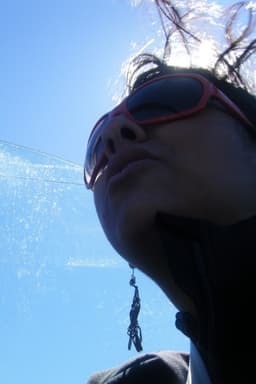
My vision is a world in which communities are collectively maintained. In my vision, the most passionate debates are what to paint on the walls to make them more beautiful, it is a place where we have lost knowledge and understanding of words like genocide and rape, because they have become extinct. Is it too much of a dream? How do we work towards this vision? We must work to eradicate the violence among and between ourselves to heal our families, and thus our communities and nations. I believe this can be done through knowledge and education, slowly, but surely. We must communicate and teach across barriers from young to old.
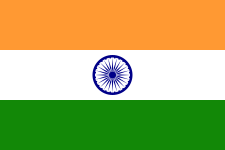
My own journey, like all others, begins with the stories of my parents. They met at an Ashram, outside the town of Ooty in the hills of the Nilgiris in Tamil Nadu, India. From there, they moved to the United States and I grew up in HUD (government subsidized housing) in Palo Alto, California, a wealthy community in the United States. From Kindergarten to Eighth grade, I was taught to be curious and creative at an alternative school with room to run and no grades. From there, I went to public high school, where I abided by the standard and finally to Pitzer College where I learned to put words to ideas and I was given gifts of great teachers.
After living in Botswana, England, Germany and India (as well as various places within the US) I have committed myself to social justice through work and my way of life. As Lila Watson said, “if you have come to help me, you are wasting your time, but if you have come because your liberation is bound with mine, then let us work together,” I go and come with the understanding that my own liberation is bound to strangers, and only when we work together, will we be successful and able to realize the visions we imagine.
After sharing some of my work, poetry and articles with smaller groups of friends and family, I have been inspired by positive feedback and the hope that my words might have power.
I wonder if my own background has been too privileged? Having health and family, do I deserve to be among women who have fought their way through more than I can even imagine?
My own awareness and understanding of the struggles women face on a daily basis, from water and food to confidence and a sense of self, have left me with a fierce desire to be the change I wish to see in the world, and doing so using this bridge called my back (to reference Gloria Anzaldua) in order to bridge the gaps I face in my own head and heart of being Indian, and American as well as both and neither.
- South and Central Asia