
Voices in the Wilderness: How Displacement Leaves Batwa Women and Girls Silenced, Exposed
Oct 11, 2025
story
Seeking
Action
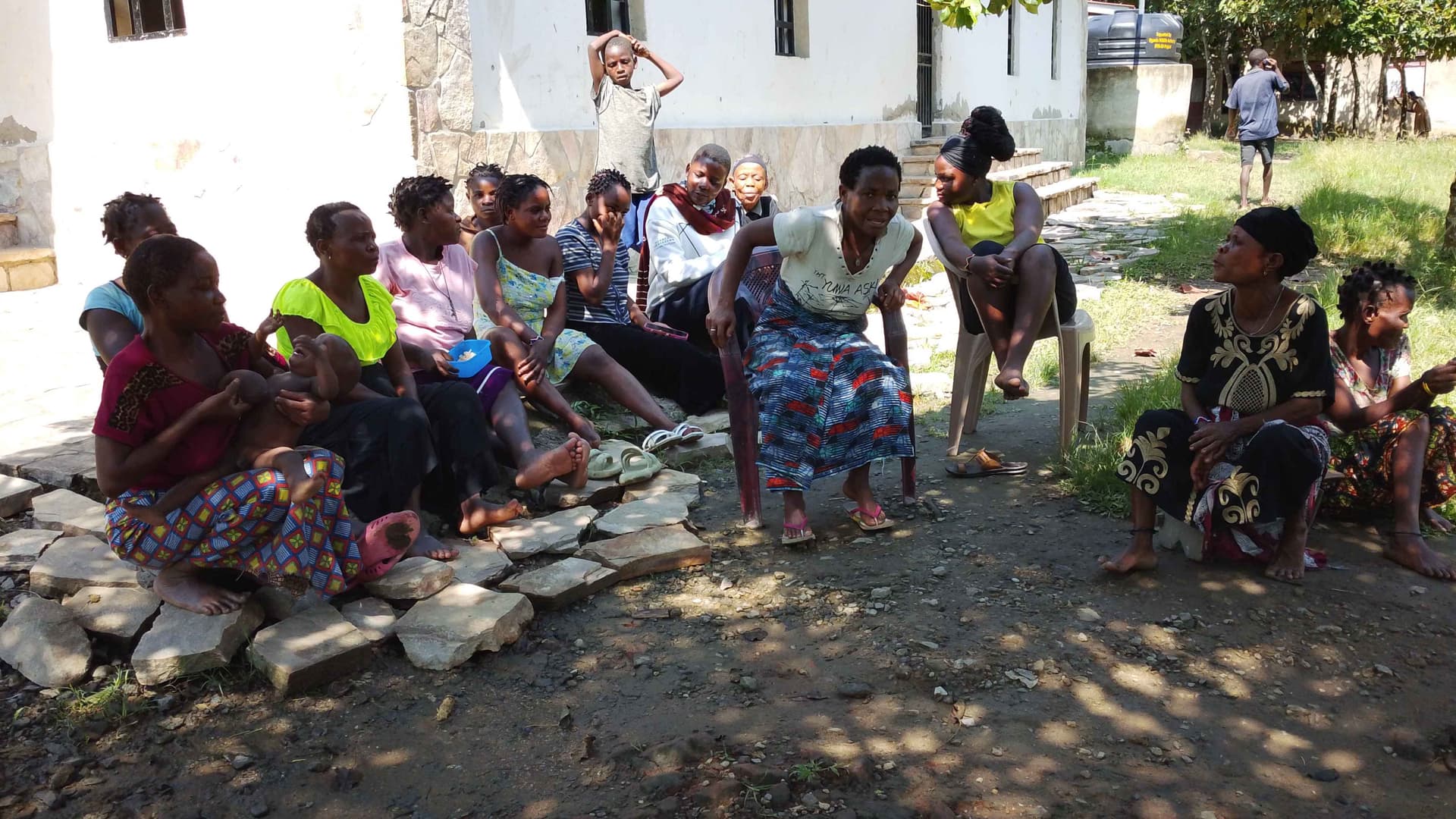
Photo Credit: The photo shows batwa women and girls in their camp, Bundimasoli camp Bundibugyo district, western Uganda
Batwa women and girls in their camp. Bundimasoli camp, Ntandi town council, Bundibugyo district, western Uganda
Voices in the Wilderness: How Displacement Leaves Batwa Women and Girls Silenced, Exposed and Forgotten
By Kajumba Gorret
11th October 2025
The Batwa in Bundibugyo District, western Uganda, were evicted in 1993 when the Ugandan government gazetted Semuliki National Park.
The park’s creation led to their forced removal from ancestral forest lands without compensation or resettlement.
That displacement shattered their livelihoods, culture, and access to basic services — leaving lasting scars on generations.
Today, 168 Batwa live in two small camps in Bundibugyo District — 15 families in Bundimasoli Camp, Ntandi Town Council, and 12 families in Karambi Community Hub — a total of just 27 families struggling to survive.
“We Were Dumped Here with Nothing” Cida Oliver recalls bitterly:
“Government evicted us from our ancestral land, dumped us here without shelter, food or land. We are not benefiting from any government program like the Parish Development Model — we do not even know about it.”
For many Batwa women, displacement meant more than losing a home — it meant losing dignity, safety, and control over their lives.
Tabitah Janet, married for 20 years with four children, laments:
“In the forest, there was peace and no diseases. Here, our men have affairs with other community members, spreading HIV/AIDS. Some of our sisters and brothers have died.”
She adds, “When we report domestic violence, police ask for money we do not have. Men beat us every day — we are dying silently.”
Mbunjeyi Rose, another mother, shares her pain:
"We Batwa women are suffering. Since we came here, our husbands have other women. When we talk, they beat us like chicks.”
She struggles alone with six children: “My husband married another woman and brought her in my own house I built for myself. I took him to police but they did not help me — he bribed them with more money 30,000 I had given them to arrest him.
Her story echoes a national crisis. According to Afrobarometer research (2005–2022), public mistrust of Uganda’s police rose from 10% to 37%, with corruption concerns increasing from 67% to 75%.
Annet Bamberenji describes the daily struggle:
“Other women run businesses, but we Batwa just sit in the camp doing nothing. We go to the forest for firewood, sell it for 1,000 or 2,000 shillings to buy food. If we got capital to start small businesses, we’d educate our children.”
Whenever Batwa women try to join government programs, they are insulted.
“They call us drunkards and refuse to give us support,” she says. “But there are responsible Batwa women who love development.”
Muhiira Florence, a widow, pleads for inclusion:
“I suffer to look after my children. We face discrimination and have never benefited from government programs. We need economic empowerment so our children can get education and a better future.”
The Minority Rights Group, in its September 3, 2021 report, welcomed a court ruling directing compensation for Batwa communities evicted from Mgahinga, Bwindi, and Echuya forests.
However, Batwa in Bundibugyo were excluded — deepening their suffering.
Masika Harriet says: “We married women face violence. Men drink, gamble, and fight. Police ignore our cases — they ask for money, so we stay silent.”
Lillian Masika, a young mother:
“We have looked for jobs but can not find any. Men got us pregnant and ran away. We are here suffering with our kids.
We need support and training in handwork skills like hairdressing and tailoring to take care of our children and educate them.”
Kabghu Gorret, 19-year-old mother:
“We also need to be skilled in tailoring, hairdressing, and other trades.”
Edireda Ndingoli, founder of the Batwa Women Community Initiative, has been advocating tirelessly:
“We have talked, travelled, and seen how other Batwa are treated elsewhere, but here, we are treated like we are not human.
Our girls are raped, defiled, infected with HIV, and our children uneducated. We are discriminated against in every government office.”
She says NGOs and foreigners have been their only source of help:
Nziito Geoffrey, the Batwa King:
“We used to live in Mathoro Forest in the DRC, then moved to Semulki Forest where there was food and many wild animals. We stayed there until the NRA war chased us closer to the community — then we were completely pushed out.
We were never compensated or resettled; NGOs built the shelters we live in. I appreciate the Ugandan government for allowing a foreigner to help us.
Government should support my women with start-up capital for businesses and ensure our children access quality education. As a traditional leader, I should also be recognized like other kings and put on the government payroll.
The park should also give us our percentage of the forest revenue. We have to sign in their books to access our own ancestral forest.”
According to Balyegera Julius, Batwa community spokesperson:
“Community people impregnate our children and abandon them. Teenage pregnancies are high, hunger is killing us, and police do not help.”
He adds: “We cannot contest for leadership positions. We have no land for farming, toilets are full worried of our lives as there might be outbreak of diseases.”
Hilda Charity, town agent for Bundimasoli Ward, says:
“The Batwa are aggressive, drunk, and refuse to go to school. We have given three of them PDM money, and still monitoring them how they are investing that money."
Peter Gayire Justuce, senior education officer, admits education among Batwa children is dire:
“The best educated Mutwa is a Senior Three dropout. Violence at home, alcoholism, and begging are destroying their future.”
AIP Kabafumu Faith, officer in charge of the Family and Child Protection Unit, Bundibugyo District, says:
“We have never received any cases from Batwa — maybe they report to cultural leaders. Police does not charge for reports, and anyone asking for money should be reported.”
Kajobe Harriet Rwakabbira, Principal Human Rights Officer, Rwenzori Region, Uganda Human Rights Commission, emphasizes:
“Batwa are human beings entitled to all rights. They face limited access to justice, education, and healthcare. We have engaged ministries to include them in national planning — leaving no one behind.”
Bashir Hangi, Assistant Commissioner for Public Relations at the Uganda Wildlife Authority (UWA), explains:
“When Semuliki National Park was gazetted in 1993, some people had to vacate for conservation. Government looks at the greater good — biodiversity protection.”
He adds that UWA operates under Uganda Wildlife Act Cap 315 and allows regulated access to resources:
“The Batwa have memorandums of understanding to collect fruits, firewood, and herbs on specific days.”
Hangi notes:
“UWA gives 20% of tourism revenue to neighboring communities — building schools, roads, health centers, and clean water sources.
We want the Batwa to integrate, not remain isolated. They are Ugandans who must participate in national development.”
On 23rd March 2023, the Minority Rights Group again called on the Ugandan government to formally recognize all ethnic minorities and indigenous peoples in the constitution, warning that lack of recognition has caused statelessness, loss of culture, and denial of rights.
Legal recognition, they said, would enable access to education, healthcare, employment, and social protection.
The Ministry of Gender, Labour and Social Development oversees protection of vulnerable groups — including the Batwa — promoting equality, empowerment, and social inclusion.
Yet, for Bundibugyo’s Batwa women, that promise remains distant.
After decades of displacement, the Batwa of Bundibugyo remain outsiders in their own land.
Women suffer violence, children drop out of school, and families live in poverty while the forest that once fed them is fenced off in the name of conservation.
Their stories echo across Uganda — a plea for recognition, justice, and dignity.
“We are not asking for much — only to live, work, and be treated like other Ugandans.”
This is a call to government, to civil society, to Uganda Wildlife Authority, and to every citizen:
Listen to the voices in the wilderness.
Restore hope.
Recognize the Batwa.
Rebuild their future.
- Economic Power
- Human Rights
- Education
- Gender-based Violence
- HIV/AIDS
- Indigenous Rights
- Global