
Waste to Gold
Jul 10, 2025
first-story
Seeking
Collaboration

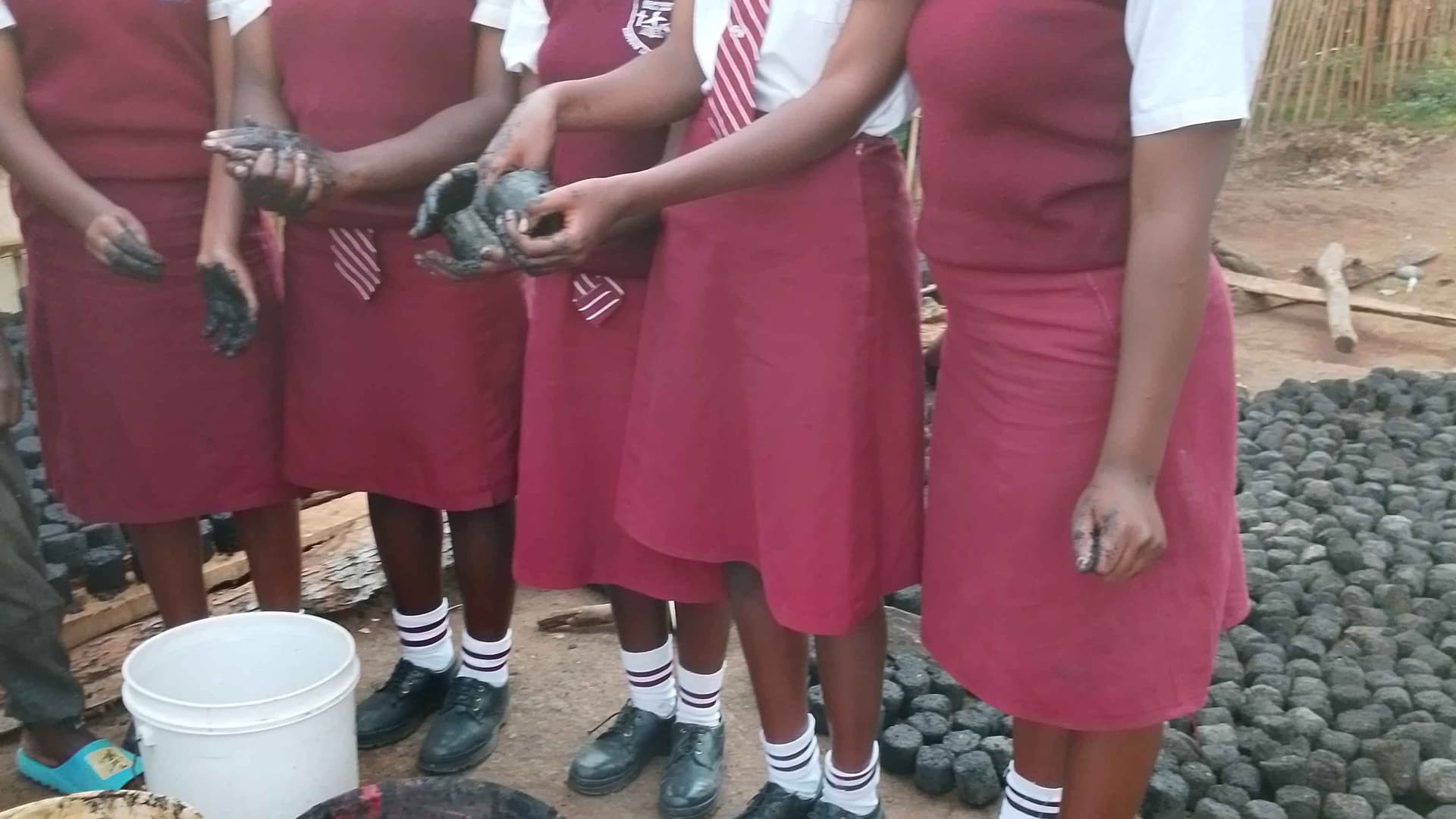
Students training women in groups on briquettes making.
In the heart of Kakamega, where the verdant canopy of the ancient forest meets the vibrant hum of daily life, a quiet revolution, fueled by youthful innovation, was unfolding. It was a sun-drenched Tuesday afternoon, and the air, usually carrying the acrid scent of traditional woodsmoke, was now subtly tinged with the earthy aroma of progress and purpose. My students, my brilliant and determined young minds here in Kenya, were diligently at the forefront of this transformation, demonstrating their truly ingenious bio-briquette project.
As their teacher, I watched with immense pride, a deep satisfaction swelling within me. We had forged a powerful, collaborative partnership with the resilient women of the local community, meticulously turning what was once considered mere agricultural refuse into a beacon of hope for countless families. Piles of discarded maize cobs after harvest, the fibrous remains of sugarcane bagasse, and the dark, humble husks of coffee beans were all being systematically transformed into clean-burning, efficient cooking fuel. "This isn't just fuel," explained Sarah, one of my most confident and articulate students, her voice ringing with unwavering conviction as she held up a dense, charcoal-like briquette for all to see. "It's empowerment." Her powerful words resonated deeply with the women gathered around, their faces a captivating mix of initial curiosity and burgeoning, undeniable hope for a better tomorrow. For generations, these women had shouldered the incredibly heavy, relentless burden of collecting firewood from increasingly distant locations, a laborious and time-consuming task that consumed precious hours each day and tragically exposed them to the harmful effects of indoor air pollution. Respiratory illnesses were tragically common in their homes, and the ever-dwindling supply of wood meant venturing further and further into the forest, thereby increasing their vulnerability and daily struggles.
But now, thanks to the readily available bio-briquettes my dedicated students and I had tirelessly helped them produce, they finally had an affordable, truly sustainable alternative right at their fingertips. The transformation in their lives was immediate and palpable. Kitchens that were once choked with thick, acrid smoke were now clear and inviting spaces, the air breathable and fresh. The health of entire families improved dramatically, and the invaluable time saved from the arduous wood collection could now be joyfully reallocated to other income-generating activities or, quite simply, to much-needed rest and time with loved ones. This innovative approach not only significantly reduced carbon emissions, a vital and impactful step in combating the pervasive threat of climate change, but also profoundly eased the immense strain on the magnificent, ancient Kakamega forest.Its ancient trees, once silently bearing the brunt of relentless and unsustainable deforestation, now seemed to sigh in collective relief, their towering branches swaying gently in the clean air.
As I addressed the gathering of my students and the proud women, I distinctly felt the enduring spirit of my revered mentor, Professor Wangari Maathai, guiding my very words. profound wisdom and unwavering commitment to the environment were the very bedrock of the principles I meticulously instilled in my students, deeply influencing my own journey.
“What you are doing here is a living testament to her extraordinary vision,” I began, my voice clear and strong, filled with purpose. “She always believed with every fiber of her being that true peace and sustainable development could only ever be achieved through the diligent preservation of our precious natural resources. She would often say, and her words resonate today more powerfully than ever, ‘The trees are our lungs, the rivers our bloodstream, and the land our very being. If we destroy them, we destroy ourselves.’ You are embodying this fundamental truth right here, right now.”
A respectful hush fell over the entire crowd as I continued, my gaze sweeping across the hopeful faces before me. “Professor Maathai profoundly understood that the burden of environmental degradation often falls disproportionately on women. It is women who frequently walk countless miles to fetch water and fuel, women who are most acutely affected by the dire lack of clean energy solutions. By empowering these remarkable women with sustainable solutions like these bio-briquettes, my students and I are not just providing them with essential fuel; we are giving them back their dignity, restoring their health, and amplifying their voices within their communities. We are demonstrating unequivocally that grassroots action, no matter how small it seems initially, can indeed lead to monumental global impact.” I then spoke of Professor Maathai’s enduring, hopeful message, a message that deeply informed and inspired the spirit of our transformative bio-briquette project. “Professor Maathai always emphasized the profound power of individual action. She urged us all to ‘be the change we wish to see in the world.’ Each briquette you make, each family you provide with clean energy, sets off a powerful ripple effect. It’s a tangible step towards a healthier environment, a stronger, more resilient community, and ultimately, a more just world for everyone. She taught us that ‘it’s the little things that citizens do. That’s what will make the difference.’ And indeed, my dear friends, you are making that critical difference, one briquette at a time.”
I then turned my attention specifically to my students, their bright eyes reflecting their dedication and growing understanding. “To you, the young minds who conceptualized and tirelessly brought this vital project to fruition, you are the undeniable future. You have demonstrated with remarkable clarity that innovation, coupled with genuine compassion and a strong sense of purpose, can effectively solve some of the world’s most pressing challenges. Professor Maathai’s life was passionately dedicated to showing that environmental conservation is not just about trees, but fundamentally about people. She firmly believed that ‘you cannot protect the environment unless you empower people, you inform them, and you help them understand that these resources are their own, and they must protect them.’
The women, now beaming with uncontainable pride and gratitude, eagerly shared their personal stories of transformation. Mama Zawadi beamed, her face alight with joy, "My kitchen is so beautifully clean now, and my children no longer cough all night! Their breathing is clear, and they sleep soundly." Another woman, her voice filled with immense relief, added, "I used to suffer so much from debilitating bronchitis because of the constant smoke from the firewood, but not anymore. It's truly life-changing, a blessing I never thought possible." And Mama Nekesa, holding up a small, neatly packed pouch of freshly made briquettes, exclaimed with infectious enthusiasm, "I'm even selling these at the market! This isn't just fuel for my cooking; it's a new way for us to earn an income and provide more abundantly for our families."
The setting sun cast long, golden shadows over the bustling, vibrant scene, illuminating not just my dedicated students and the beautifully empowered women, but also the towering, majestic trees of the Kakamega Forest, standing tall and proud, silent sentinels of a healthier, more hopeful tomorrow .
- Girl Power
- Education
- Health
- Leadership
- Environment
- Gender-based Violence
- First Story
- Global