
Waziristan Bleeds in Silence: Civilian Lives Caught in the Crossfire
May 28, 2025
story
Seeking
Action


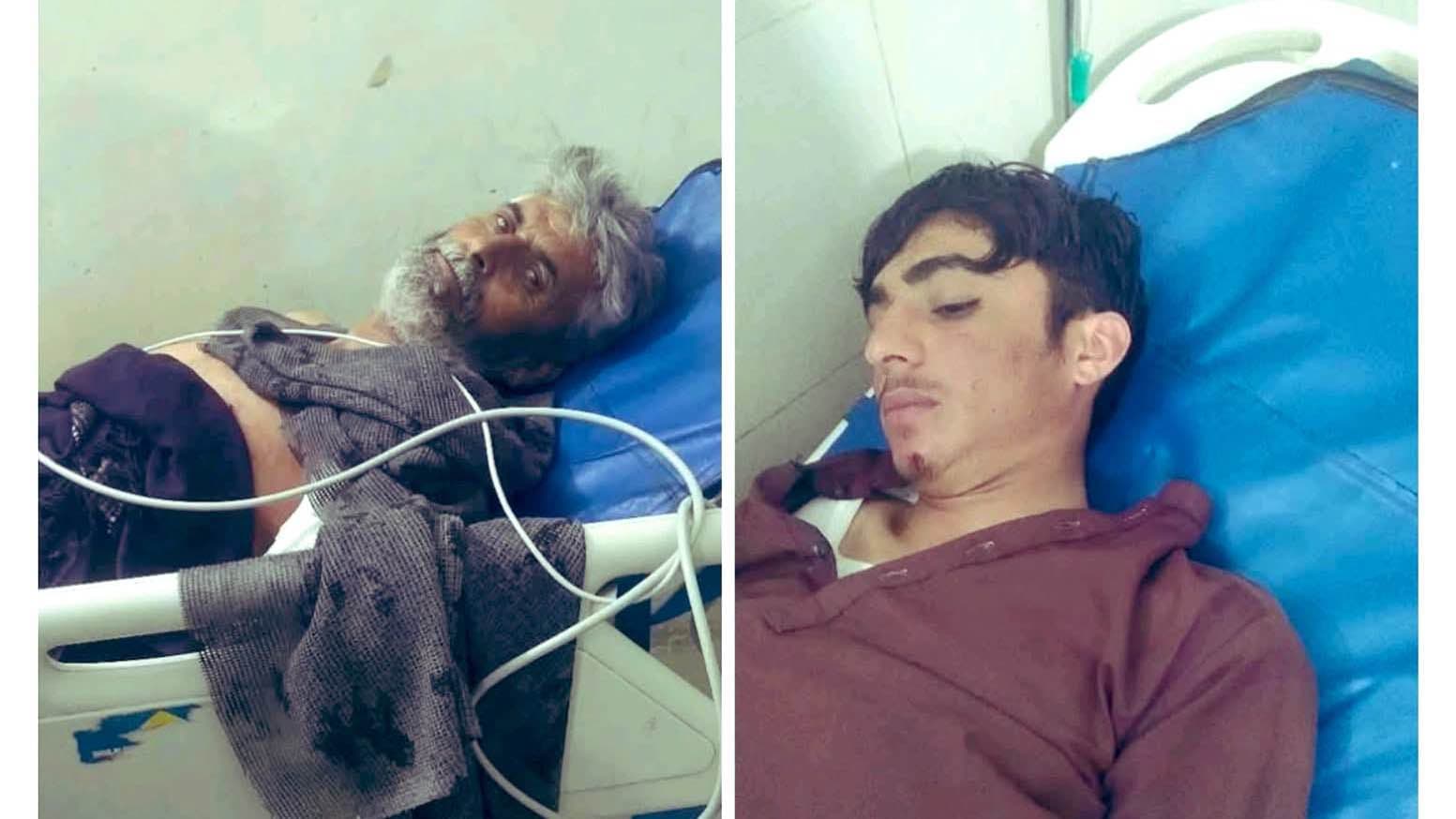
Picture of injured civilians at today’s drone attack at Azam Warsak region of south waziristan
Just a day after the Pakistani authorities claimed there would be no more drone strikes in #NorthWaziristan region of Pakistan, tragedy struck again — this time in #SouthWaziristan’s Azam Warsak region. During a local volleyball match at Karamzi Stop, a quadcopter dropped an explosive device, injuring at least 22 people, most of them teenagers.
Waziristan, already a region deeply affected by decades of militarization, displacement, and conflict, continues to face violence with little to no global acknowledgment. Drone strikes in this part of Pakistan have often been justified in the name of counterterrorism, but the ground reality tells a far more devastating story: it is civilians who bear the brunt.
This is the seventh drone attack this month alone. So far, these strikes have claimed 10 lives and left 52 injured — the majority being women and children.
Political and human rights organizations have strongly condemned the attack, calling it a clear violation of human rightsand demanding immediate justice. Several of the injured remain in critical condition.
Yet, despite the growing number of civilian casualties, the mainstream media continues to remain eerily silent. Is this silence a form of negligence — or something more deliberate?
In an age where news travels faster than ever, this silence is loud. Media outlets that extensively cover conflicts in other regions, that show empathy for victims of violence elsewhere, appear shockingly indifferent to the plight of Waziristan. Is it because the victims don’t speak English? Or because they are from a tribal region long stigmatized and misunderstood?
As someone from the Pashtun community, this isn’t just another news update. It’s personal. It’s painful. Our people have endured forced displacements, targeted operations, and now — modern warfare tactics like drone bombings — all while being ignored by those who claim to stand for justice and human rights.
Waziristan is not just a battlefield. It’s home to poets, shepherds, schoolchildren, farmers, and mothers. It’s a land of resilience and strength, but no community can endlessly endure trauma in silence.
Drone warfare dehumanizes people. It reduces entire populations to "collateral damage" on military spreadsheets. And when the world refuses to listen, refuses to report, or refuses to even acknowledge the victims — that’s not just negligence. That is complicity.
We need a shift in narrative. We need platforms like World Pulse to amplify these stories because mainstream media won’t. We need global allies to stand in solidarity with the people of Waziristan and demand answers.
If this happened in a Western country — if a drone had dropped an explosive during a children's volleyball match — the world would stop. There would be headlines, debates, accountability. Why is it any different when it happens here?
I write this not just to report what happened but to urge all those reading to see the humanity in us, to break the silence, and to help raise awareness. Because silence, in times of injustice, is not neutrality. It is siding with the oppressor.
This is a report issued by the District Headquarters Hospital (DHQ) in Wana, mentioning the 'drone attack' at 8 pm, said that 22 people aged between 13 and 60 were injured. 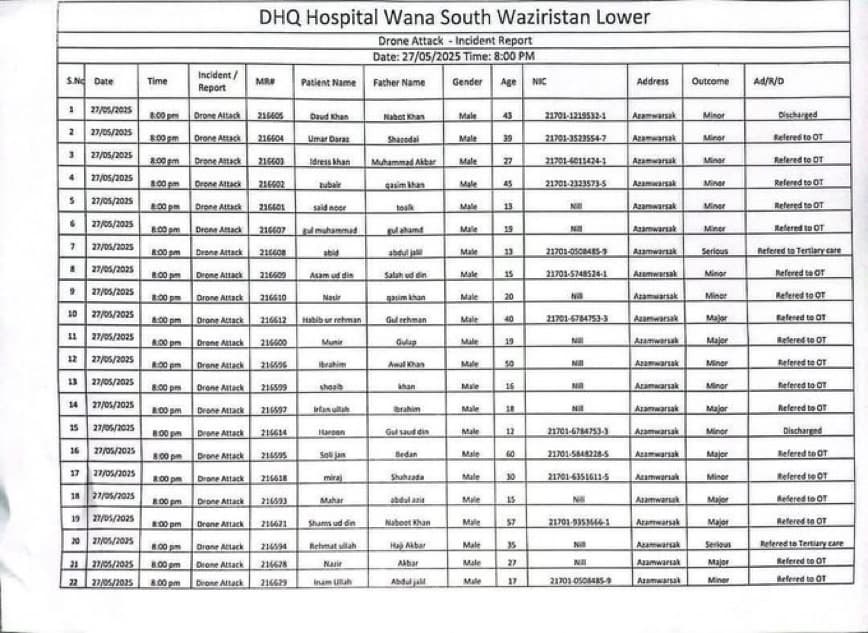
#WaziristanUnderAttack
#CivilianCasualties
#MediaSilence
#EndTheViolence
- Education
- Peace & Security
- Human Rights
- Behind the Headlines
- Indigenous Rights
- Revolutionary Solidarity
- Global