
What I Wish I Knew About College Beforehand--and How Empowerment is Shared Across Thousands of Miles
Dec 29, 2020
first-story
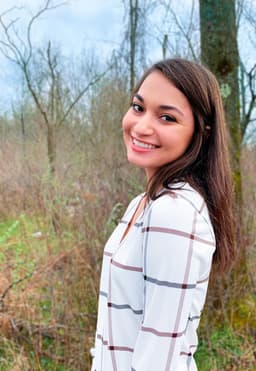

When my parents dropped me off at college for the first time last fall, it was difficult to hide my growing uncertainties. Was I in too far over my head? Would I be able to keep up with my classmates? How would I fare on my own, now hundreds of miles away from my family? This past year has forced me to navigate these questions about myself and my abilities--but has ultimately led me to a new opportunity to learn how I am not alone in these concerns. I’ve been relieved to realize that many young women around the world are also confronting these same questions in pursuit of their education--and that these challenges and worries can be incredibly beneficial.
This summer, I am excited to be working with Girls Education Collaborative (GEC)--a nonprofit based out of my hometown of Buffalo, New York, that works to combat gender inequality with quality education in developing countries. Through its partnership with the Immaculate Heart Sisters of Africa, it has been able to fulfill this mission by supporting the Sisters’ Kitenga Secondary School for Girls in rural Tanzania. Educating “the whole girl” is a phrase that GEC frequently uses to describe its work--and through my work with them and my own reflections on college, I am now understanding the importance of this approach.
When students arrive at the Kitenga School, they are also very far from home and their families, are experiencing a new and different environment, and are tackling a wide variety of academic, social, and community responsibilities alongside their classmates. To these students, education is the way to improve their future, their “golden ticket,” so to speak (which also subsequently implies a lot of pressure to make this opportunity work).
I quickly found that the transition to my “golden ticket” opportunity at Harvard University, despite my perhaps naive expectations of easy academic success, would be incredibly stressful on personal and academic levels. Many of my classmates were social butterflies with impressive resumes, extracurriculars, and backgrounds who also managed to somehow work day and night (or, more frustratingly, not at all). It was incredibly nerve-wracking to acknowledge that I was struggling even in my easier classes, that constant socializing was becoming emotionally draining, and that unlike me, my classmates seemed to have seamlessly transitioned into the Harvard rat-race. Maybe I was in too far over my head.
Despite these frequent worries, learning about the students of Kitenga has helped me to put things into perspective, and all students (girls especially) can learn something from the shared experiences I’ve found. A high quality education isn’t meant to hinder our futures or to shy us away from our goals. Rather, it can give us the confidence to unwaveringly pursue our dreams--while simultaneously providing learning experiences that are not limited to the classroom.
While GEC’s and the Sisters’ work in rural Tanzania is ultimately focused on providing an academic education, the very act of being in school opens an incredible amount of doors for Kitenga’s students. Every year that these young women stay in school is another year that their families do not barter them into child marriage in exchange for cattle (a staggeringly prevalent practice in rural Tanzania), or that they are forced to work full-time as child laborers. Additionally, education can lessen early pregnancy rates, and provide young women with the confidence to pursue more equal relationships. At school, girls can focus instead on building friendships with other girls who have big dreams for their futures, working with teachers who can give them the tools to find their passions, and navigating the challenges of adolescence in a supportive environment that sees their value past being simply a wife to be bartered for, or a mother to take care of a household.
This is the “whole girl” experience that is at the core of GEC’s mission, and I realize now why this is such an important focus. My first year of college taught me as much about myself as it did about my academic interests, and the independence I gained, connections I made, and community I found were invaluable. Having the resources and peers around me this last year that forced me to proactively pursue my goals rather than simply dream about them has made a world of difference in my life, and this is not unique to my own experiences. If young women like me can learn this much about ourselves and about life in one school year, what more could we learn in two years? Three? Furthermore, if the students of Kitenga continue to have these experiences, could they become the next leaders, entrepreneurs, and role models for their communities? Could educating this generation of girls turn the tides of education towards a more equitable landscape for female empowerment?
With the new curveball thrown towards girls education efforts in light of the COVID-19 pandemic, now more than ever, we must focus on educating the “whole girl.” We cannot let the pandemic prevent millions of girls from returning to school or present a setback to the movement for gender equity education. Instead, global actors must be deliberate in their attempts to support girls in every aspect of their lives. Rather than letting this pandemic set this movement back decades, and letting this disruption in in-person schooling lead to thousands of girls dropping out altogether, global actors need to make a deliberate attempt to support girls in every aspect of their lives. By focusing on enriching girls’ entire educational experience, both inside and outside the classroom, the young women of Kitenga and the developing world as a whole can come out of this crisis not only committed to their education, but as stronger individuals.
- Leadership
- Girl Power
- Education
- Human Rights
- First Story
- Northern America