
What the world really needs is Musa al-Sadr
Aug 30, 2025
story
Seeking
Action
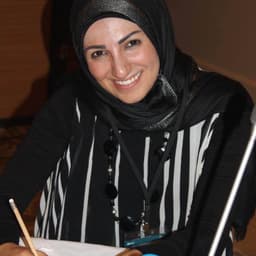

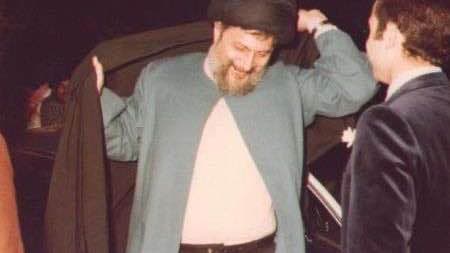
The Lebanese cleric, who vanished mysteriously in 1978, showed that peace and resistance can walk hand in hand. His vision is a roadmap for our fractured world – and his fate still demands answers.
There are some leaders whose absence feels louder than their presence. In Lebanon, where crises have become almost a way of life, people still remember one such figure: Imam Musa al-Sadr. More than four decades after his disappearance in Libya in 1978, his voice, his wisdom, and his courage remain painfully relevant.
Al-Sadr was a religious man, yes, but reducing him to that title alone misses the point. He was a reformer, a builder, and—above all—a bridge. He spoke to farmers in the neglected villages of the South, to students and intellectuals in Beirut, and to Christian leaders with the same respect he showed Muslim ones. His language was always the same: dignity, justice, and humanity.
He worked for peace, but not a peace of silence or submission. His peace was active, grounded in social justice. He built schools, vocational centres, and healthcare facilities because he believed faith must serve real people in real life. At the same time, he warned against tyranny—whether political, social, or military—and reminded his community that no nation could stand on its feet if its poor remained crushed.
Al-Sadr’s foresight was sharpest when it came to Israel’s occupation of Palestine and parts of Lebanon. He saw clearly, long before the rest of the world cared to admit it, that such dispossession and aggression would destabilise the whole region for generations. His awareness was not a matter of hostility for its own sake. It was a moral clarity: you cannot dispossess people of their land and expect peace to blossom. Justice, he insisted, is the only soil in which peace can grow.
What is striking is how he held two seemingly opposite truths together. He could call for resistance against oppression and, in the same breath, sit with Christian patriarchs or secular thinkers to discuss dialogue and coexistence. For him, resistance and peace were not contradictions. They were twins. To work for peace was to resist tyranny; to resist tyranny was to open the possibility of peace.
As a Lebanese woman today, I often wonder what difference his presence might have made to my generation. We have grown up surrounded by instability, by wars that return like seasons, and by leaders who rarely speak with the moral courage that people hunger for. In our homes, our schools, even in our children’s futures, the absence of figures like Musa al-Sadr is not abstract—it is lived.
For many Lebanese, his disappearance is still an open wound. Every anniversary that passes without answers is a reminder not only of what was lost, but also of how unfinished his mission feels. The South of Lebanon, once his focus, remains vulnerable. The Palestinian people still live under occupation. The wider Middle East continues to burn in cycles of war. The lessons he offered remain not only relevant, but urgent.
Beyond Lebanon, the world, too, is desperate for leaders of his kind. In an era when politics is often about power and ego, when faith is too often used to divide instead of heal, his example reminds us that leadership can mean something else entirely: service, courage, and a willingness to put human dignity first.
Perhaps the most haunting truth about Musa al-Sadr is that his story has no ending. We still do not know his fate. His mystery remains unsolved, his destiny unrevealed. For his followers, for Lebanon, and for all who believe in justice, the hope remains that the truth will one day come to light.
Until then, his life continues to speak louder than the silence that followed it. And maybe that is the final lesson: that true leadership leaves an echo too deep to be silenced, even by disappearance
- Leadership
- Human Rights
- Stronger Together
- Our Impact
- Peace Building
- Global