
When Art Talks Back: Unexpected Every Peoples' - and Artists' - Climate Story Telling
Sep 29, 2025
update
Seeking
Visibility
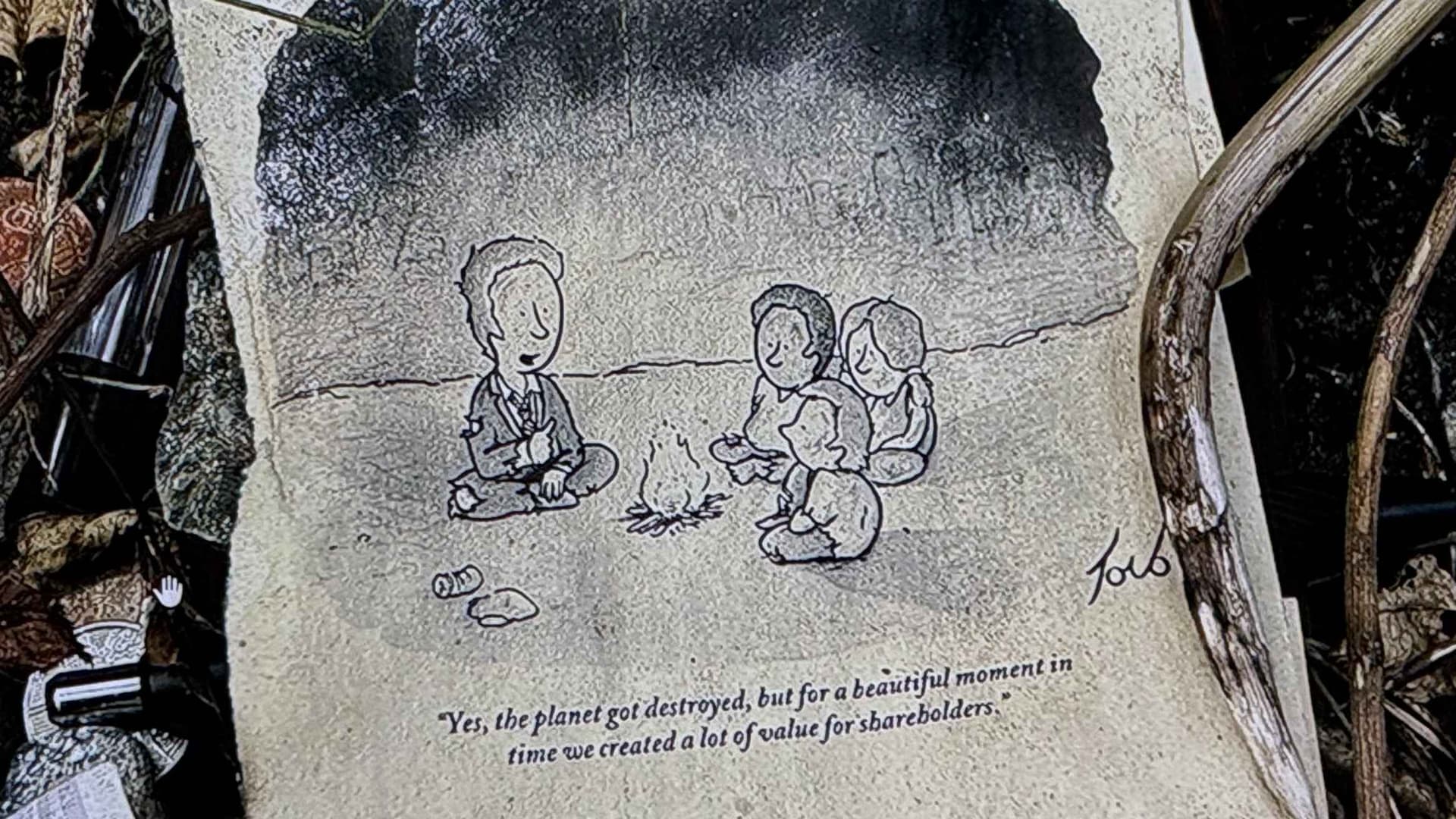
Taking a driving break from being Plugged IN and Charged UP, I parked Rouge in a friend's garage in New Jersey and ventured into the big city. I Xpanded my understanding, connections, and memories during Climate Week NYC 2025. Remember that Tom Toro cartoon where a father tells his kids, "Yes, the planet got destroyed. But for a beautiful moment in time we created a lot of value for shareholders"? It's darkly hilarious because it captures our collective absurdity so perfectly. But here's the plot twist nobody saw coming: artists are weaponizing that same absurdity to save us from ourselves. Welcome to the era where climate action wears a high heals, plays the gong, and occasionally covers itself in blue chalk.
I experienced firsthand at Climate Week NYC 2025 how Gotham City became a giant canvas for climate imagination. In Times Square, massive letters blazed "new not old"—a brilliantly simple rallying cry against oil, gas, and coal, championing renewable energy where millions of tourists couldn't possibly miss it.
Down at Collect Pond Park, artists wielded blue chalk to trace ghostly designs of the water system that once naturally filtered and sustained Manhattan, now paved over so stormwater rushes into sewers and pollutes the bay instead of being processed by nature. Watching people crouch down to follow those blue lines, you could see them literally connecting to the invisible hydrology beneath their feet. They asked provocative questions in story circles like: "What would happen if we imagined the waters returning? If we let the underground water rekindle our connection with the land as an active participant? What halls of justice exist in the preservation of our ecosystems? What can we learn from our histories in how they echo our possible futures?" Indigenous remind us Mni Wiconi: Life is water.
The Climate Film Festival screened over 50 films that proved environmental storytelling doesn't have to be doom-scrolling in cinema form.
Mothers Out Front brought comedy (yes, comedy!) that made climate action feel accessible instead of alienating.
SUN-DAY Third Act was celebrating with climate activist Bill McKibben during a day of 500 climate protests turning activism into absurdist performance art with their rousing performance of The Stop Shopping Choir and Reverend Billy, joining in straight from their tour opening for Neil Young.
And everywhere—the Eco Arts Festival on Governors Island, galleries across the city—visual artists were translating humanity's relationship with nature's elements into something you could feel in your chest.
But the real genius? Art bypasses the part of our brain that's exhausted by statistics. Tell someone about parts per million and watch their eyes glaze over. Show them a sculpture made from ocean plastic that looks like their childhood toy or a practical tool, and suddenly they're feeling things. Art is the Trojan horse of climate communication, sneaking past our defenses while we're distracted by beauty, humor, or sheer weirdness.
At the Marketplace of the Future in the Climate Optimism session sponsored by Pinterest—with their Chief Sustainability Officer on the panel—I asked the question nobody seemed to be asking: had any of them made the connection between taking care of the planet and nuclear war? Because every day, right here, right now, we're living in the most dangerous moment ever for humans on Earth. I don't subscribe to hopium. I take little daily actions to build actual hope in my worlds.
The climate art movement is exploding with creativity that would make traditional activists jealous. There are musicians composing symphonies from the "songs" of dying coral reefs. Dancers choreographing pieces based on migration patterns of climate refugees. Muralists transforming city walls into giant air purifiers. One artist is literally knitting the temperature data of warming oceans into blankets—cozy evidence of our unraveling planet.
And yes, it's working. Studies show that people who engage with climate art are more likely to take action than those who just read scientific reports. Why? Because art makes the future feel possible instead of paralyzing. A painting of a rewilded city doesn't just show what we'll lose—it shows what we could gain. Solar panels glinting like Danish jewels. Vertical gardens cascading down Singapore skyscrapers. Communities gathering in car-free Barcelonan streets that pulse with life instead of traffic.
The beautiful irony is that while we were busy creating shareholder value (thanks again, cartoonist Tom Toro), artists were quietly building the most powerful climate communication tool we have. They're making the invisible visible, the overwhelming manageable, and the terrifying strangely hopeful.
Here's what artists know that spreadsheets don't: humans don't change because of fear. We change because we fall in love with a different version of the future. We need to see it, feel it, taste it before we'll stand up and speak up for it.
So the next time someone dismisses climate art as frivolous, remember: artists are not decorating the apocalypse. We're imagining our way out of it, one brushstroke, one performance, one story, one absurd and hopeful gesture at a time.
And honestly? If we're going to save our species for the planet, we might as well make it weird, wild, and wonderful all at once.
- Leadership
- Peace & Security
- Earth Emergency
- Indigenous Rights
- Peace Building
- Climate Change
- Global