
When Listening Becomes a Roadmap to Peace
Jul 18, 2025
story
Seeking
Action

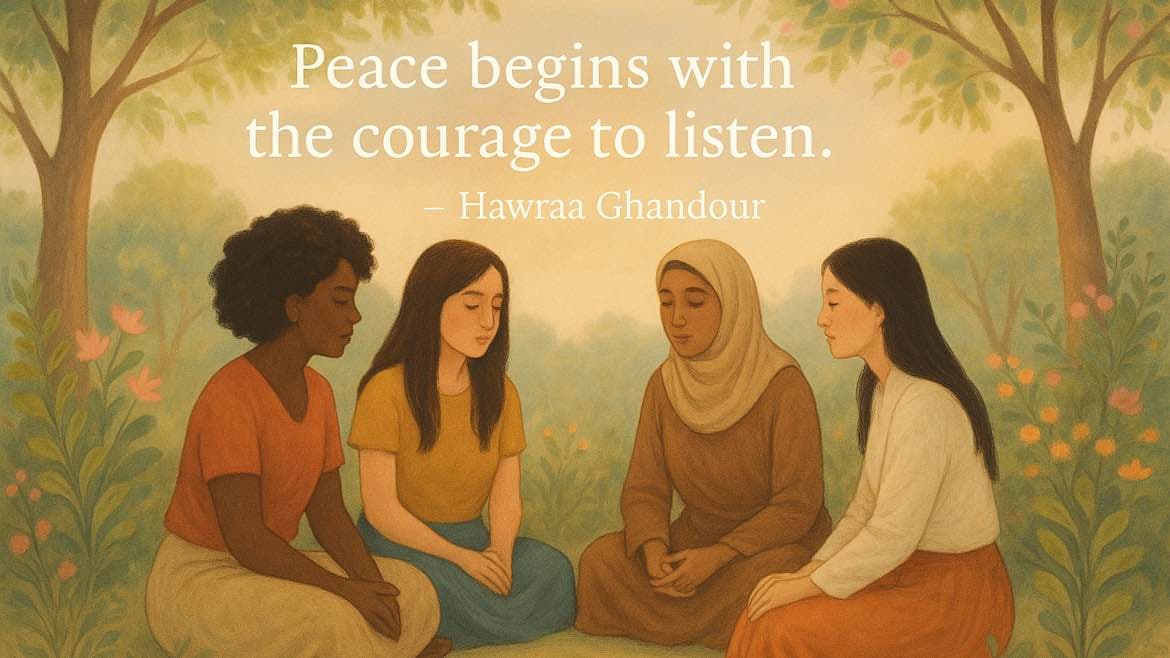
When Listening Becomes a Roadmap to Peace
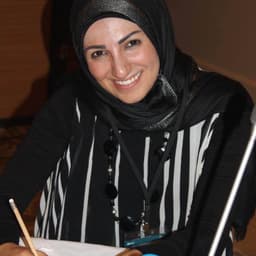
By Hawraa Ghandour
The Middle East is loud with war.
The sounds are everywhere — gunfire, airstrikes, sirens, and the aching silence that follows. In between those sounds is something else we often miss: the quiet, fragile voice of someone wondering if peace is still possible.
Not political peace.
Not foreign-negotiated peace.
But the kind that sits quietly between two people who truly hear one another.
As a teacher in Lebanon, I work with students who carry the weight of displacement, trauma, and inherited fears. But one moment made me realize that listening — not talking — might be the most powerful tool we have for healing.
The Girl Who Asked the Hard Question
She waited until the class had emptied. Her notebook was pressed tightly to her chest. I had taught her for months — a bright, thoughtful Syrian girl who rarely spoke unless asked.
That afternoon, she looked up at me and asked, in a whisper:
“Miss… do you think I will be allowed to become a teacher? Or will I have to marry my cousin next year?”
My throat tightened.
She wasn’t asking for a speech. She didn’t want promises. She wasn’t even asking to be saved.
She just wanted someone to listen — really listen — to the question she barely dared to ask out loud.
In that moment, I realized: deep listening is how we give dignity back.
Beyond Agreements, Beyond Speeches
We speak endlessly of ceasefires and roadmaps, but we rarely speak of the silent wars — the ones happening in hearts and homes.
We talk about rebuilding nations, but we don’t ask girls like her what kind of life they’re allowed to imagine.
Peace cannot be imposed.
It must be heard into existence.
This region doesn’t need grand slogans or foreign frameworks. What we need is to listen deeply to one another’s wounds, dreams, and questions.
Because sometimes, what breaks a person is not what they live through — but how invisible their pain becomes.
The Courage to Hear
I’ve made mistakes. I grew up with assumptions, opinions, even quiet prejudices passed down by history and community. I judged people I’d never met. I thought I understood things I had never listened to.
But sitting with my students — girls who wonder if they’ll ever study again, boys who carry more grief than any child should — I began to change.
I stopped teaching and started listening.
Not correcting. Not fixing.
Just listening.
And it was in that silence that I began to hear something unexpected:
Not despair — but a hunger for peace.
Not peace as a negotiation, but as recognition. As the right to be heard.
Hearing Is Healing
I now believe: hearing is healing.
We heal when someone allows us to voice the questions we’ve buried.
We heal when someone holds our story without judgment.
We heal when someone doesn’t try to erase our pain with easy answers.
In a region exhausted by speeches, listening is not weakness — it is strength.
Because the only roadmap to peace that truly works is the one drawn through empathy. Through eye contact. Through words not told.
What We Can All Do
Wherever you live — in Beirut or Berlin, Baghdad or Birmingham — you can begin today:
• Ask someone what they’re afraid to say out loud. Stay long enough to really hear it.
• Don’t offer solutions right away. Just presence.
• Listen not only to people, but to your surroundings. The silence in a refugee classroom. The tension in a family dinner. The wind outside after a hard day. Even nature teaches us how to listen.
Peace does not come when the world is quiet.
It comes when we choose to quiet down and listen.
Because beneath every war, there is a child wondering if anyone sees her.
And beneath every silence, there is a story longing to be heard.
If we want peace in the Middle East — or anywhere —
We must stop speaking at each other…
And start listening, deeply.
- Arts & Culture
- Leadership
- Peace & Security
- Girl Power
- Education
- Human Rights
- South and Central Asia