
When My Body Whispered, Then Screamed...
Aug 28, 2025
story
Seeking
Encouragement
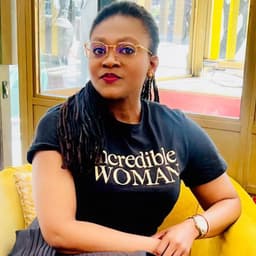

I almost died, and I didn’t even know I was dying.
It was not dramatic. No flashing lights, no gasping for breath. Just a slow, quiet unravelling. My body had been whispering for years: fatigue that sleep could not fix, pain I rationalised, a heaviness I carried like it was mine to bear. I was showing up for everyone; students, colleagues, family and the illusive failing marriage while my own body was slipping away from me.
The diagnosis came like a slap. My organs were shutting down. My body had been in crisis, and I hadn’t heard it. Or maybe I had, but I’d learned to override it because all my life, all I knew was to be brave, to be stronger, and to keep going. I’d been socialized to endure, to push through, to be the strong one. But strength without rest and mental health care is a slow death.
That moment changed everything.
My GP looked me in the eyes and said, “Ma’am, you are slowly dying”. In my eccentric state, I broke into a smile and said, “Not me. I have survived the worst, I am built for this life, I know ME”. The doctor looked a lot more worried than I thought he should be and asked what was happening in my life. I nonchalantly responded, “I just left my husband… could that be the reason I am ‘dying’? It cannot be, the most destructive storm I endured was the things I was faced with at work, NOT the divorce”.
Dumbfounded by my reaction and response, the doctor put his stethoscope on the table, moved his posture and gaze towards me and said: “Your kind is the one we bury whilst we laughed with just a few minutes ago. You are built in such a way that you know how to pick yourself up from anything without much effort. You keep accepting life's challenges, and the more you conquer, the more you get prepared for life. Psychologists can’t even do much for you because you possess the skills to navigate life”.
He continued, telling me it did not change the fact that I was slowly dying. He asked if I wanted an explanation of whether I would like to one day just die and leave people who love me not understanding how, when I was so bubbly and seemed to have things going on for me, did I just collapse and never got up. My cheerful expression collapsed into curiosity, and I asked the doctor to explain what was killing me when I seemed fine besides the ‘minor’ sharp pain I was feeling in the left palm, making its way all the way to the forearm.
The doctor explained how my strong personality has shielded me, and my ability to recreate my neuropaths has been enabling me to weather the storms I have passed all my life. He then told me the negative result was over time, therefore, the serotonin deficiency my body was experiencing. He then told me that he can prescribe vitamins to rebuild what I had already lost but unfortunately, I had to eat to rebuild my serotonin. He advised me to stay a lot more in the sun, and my brain immediately contested. I don’t like food. I am a homebody and do not like being in the sun because I am allergic to the sun. I was going to be put on medication for six long months and he would evaluate my state to decide if I was responding to treatment.
It was at that point that I realised I had not been eating for two months straight but living on coffee and water. I don’t have a social life, so being outdoors did not make it to the list. I went outdoors when I went to work, and that was enough sun exposure I needed. My good doctor listened patiently as I told him what I needed and did not need and when I finished talking, told me that I was, in fact, depressed. I tilted my head to the left and smiled, and rejected the diagnosis. I described my daily routine. I rehashed how I wake up, pray, play music and dance; feeling happy as I did these. Getting ready for the day and blasting music in my car on the way to work, how I smile, joke and greet the security at work and do my work on a daily basis. I was FINE!!!
My rejection of my depression diagnosis was not based on the stigma but stemmed from my insufficient comprehension of what it meant to be depressed. I was performing well at work, despite the turmoil they had embroiled me in, and my line manager had no complaints about my performance. I maintained my neat appearance, and I was not falling apart; my brain was functioning, and I was making plans for my life that was still becoming. I was not feeling sorry for myself and I was still hopeful about life and looking forward to falling in love. I was still as bubbly and humorous as ever, and people still laughed at my jokes. How was I possibly depressed? It did not make sense. I was at my happiest that I had left the marriage that was eating away at my soul. Why was I depressed? What did being depressed even feel like?
Standing in front of the mirror, I watched my still energetic body, which had become a frail figure, with pale skin and long hair that was beginning to feel heavy. I was staring at myself, hoping I could stare the depression dead in the eye, but still, I could not see it. I was never feeling hungry, and the thought of food made me nauseous. It was at that moment that I realised that my life was no longer the way I used to know it.
I had stopped running. I was no longer buying shoes and clothing items like I used to. The saddest realisation was not having a recollection of the last time I wrote a single line for my thesis and the planning that had ceased for opening my coaching practice. I began asking myself who was the woman staring back at me each time I stood in front of a mirror. What had happened to the direction she had, determination and big dreams she had? For the first time in my life, I began to think I could be depressed. I allowed myself to take the treatment, I began eating, though I battled with myself each time I had to eat, and I took my journaling a lot more seriously.
Self-care stopped being optional. It became sacred. I began listening; not just to my body, but to my spirit. I started saying no. I started building a life where care wasn’t a reward for productivity, but a birthright. I took the treatment for thirty days and forced myself to eat until it became a norm. I learned to rest. I had learned to fill my time with activities that filled the voids to avoid feeling. It was in these moments I reached out to my supervisor to inform him I was not progressing with my study because of the life changes I went through. I admitted I was unable to study but would like to complete the qualification, but needed time to heal.
And I didn’t do it alone.
I rewired my neurological pathways using methods I learned when I became qualified as a Neuro-Linguistic Programming Practitioner. Women in my life held me; I shall forever be grateful to them. I received constant support from a handful of brothers from other mothers I met later in life. Good men still exist. I opened up to my parents about what had become of my life since I got married. I journaled with intent and each entry felt like a well-deserved purpose-serving release. I registered my coaching practice and published a mental wellness journal that is based on the twelve steps of healing for 2025.
I almost died. But now, I live differently. I live listening. I live nourished. I live knowing that my body is not a machine, it’s a sacred site of resistance, of healing, of possibility. I love my life and this is the best I have ever had by far.
- Health
- Moments of Hope
- Survivor Stories
- Becoming Me
- Caring for Ourselves
- Global