
Why The #ThursdaysInBlack Prostests Still Matter
Jun 14, 2022
story
Seeking
Feedback

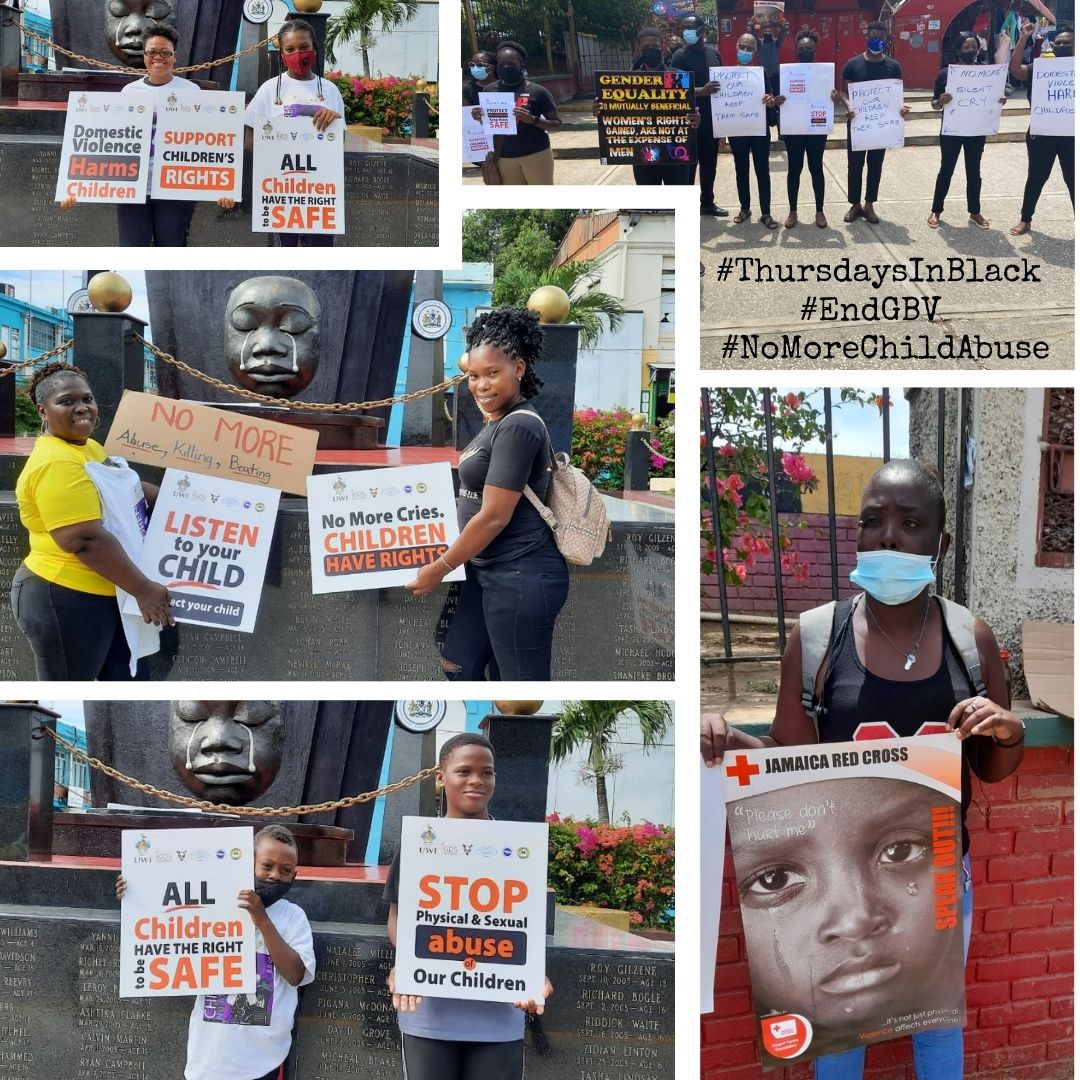
“Don’t you have a husband to go home to? Why are you out here standing in the sun?!”
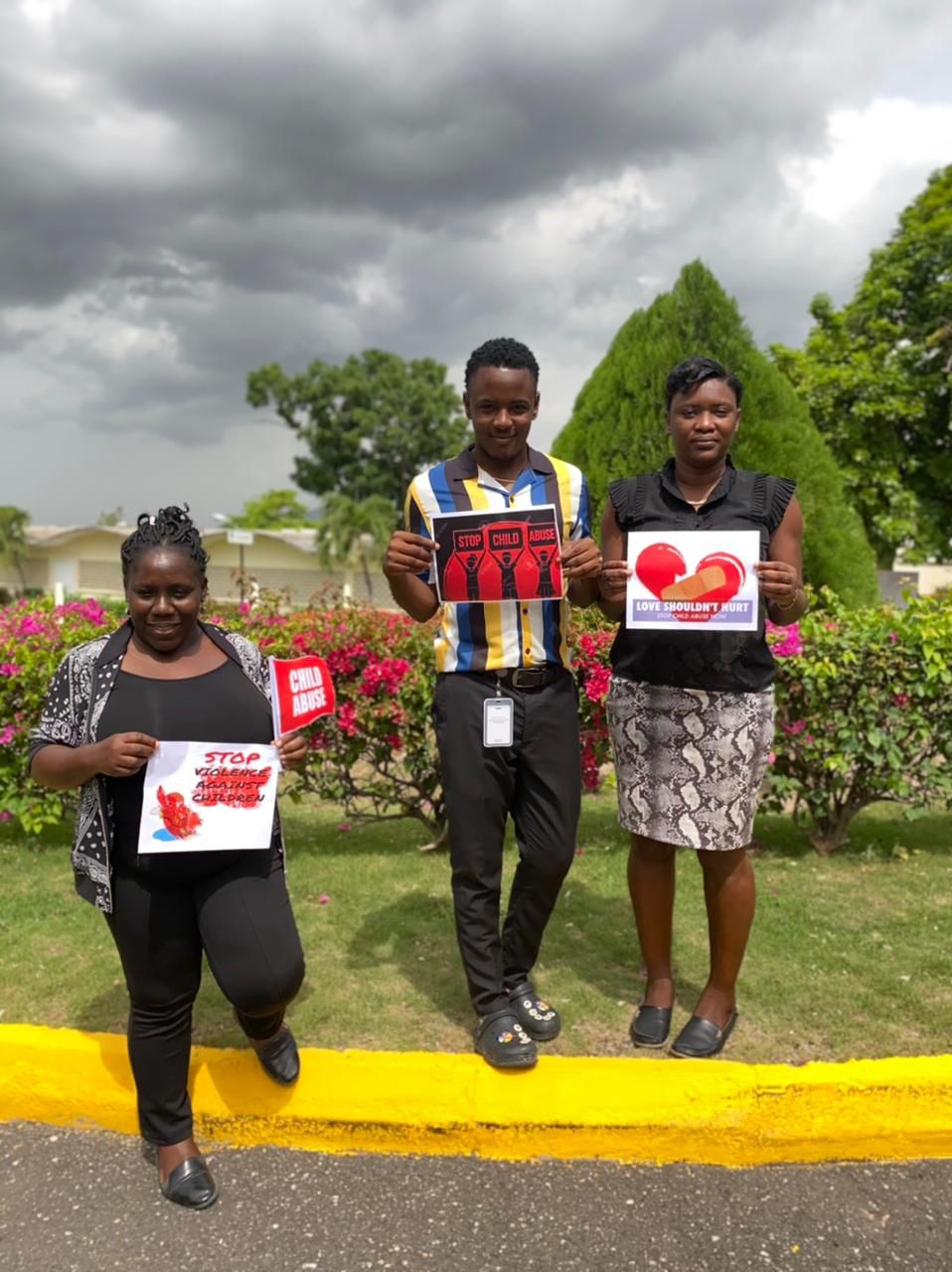
We got many variations of this question at our last #ThursdaysInBlack peaceful protest. Passers-by wanted to know why we were marching on the sidewalks, waving placards and shouting slogans like “No more violence - save our children! No more abuse - save our women!” What was the point of doing this, they asked. Would it reduce GBV and child abuse? Would it save the children and women? They didn’t see the sense in it, and I understand where they’re coming from.
On the surface, advocacy actions like protests, especially small-scale ones, can seem unnecessary and ineffective. In a world where a message can reach thousands by the click of a button, small-scale protests can also seem redundant and outdated. So why continue to do it? For me, the answer is five-fold.
1// It continues to be an effective form of awareness-raising.
It helps start and continue a necessary conversation. The message can never get stale, because the issues are still with us. GBV is on the rise in Jamaica. Statistics from UNICEF indicate that in this country, approximately 190,000 children live in poverty, making them vulnerable; 38,000 children aged 5-17 are engaged in child labour (72% in hazardous conditions); 15% of girls have children before they turn 18; 1 in 4 adolescent girls 15-19 have experienced sexual violence in their lifetime; and 1 out of 4 students aged 13-17 has considered suicide.
These statistics make a solid case for why we still need to have conversations about preventing GBV and child abuse. GBV and abuse are frequently hidden. Victims are often silent, fearing stigma and further violence. Our protests send the message that there is concern, help and support. Part of our advocacy is to educate persons about how they can get help or make a report if they either know of, or are experiencing abuse. It’s important to get this information to those who need it. It could literally save a life.
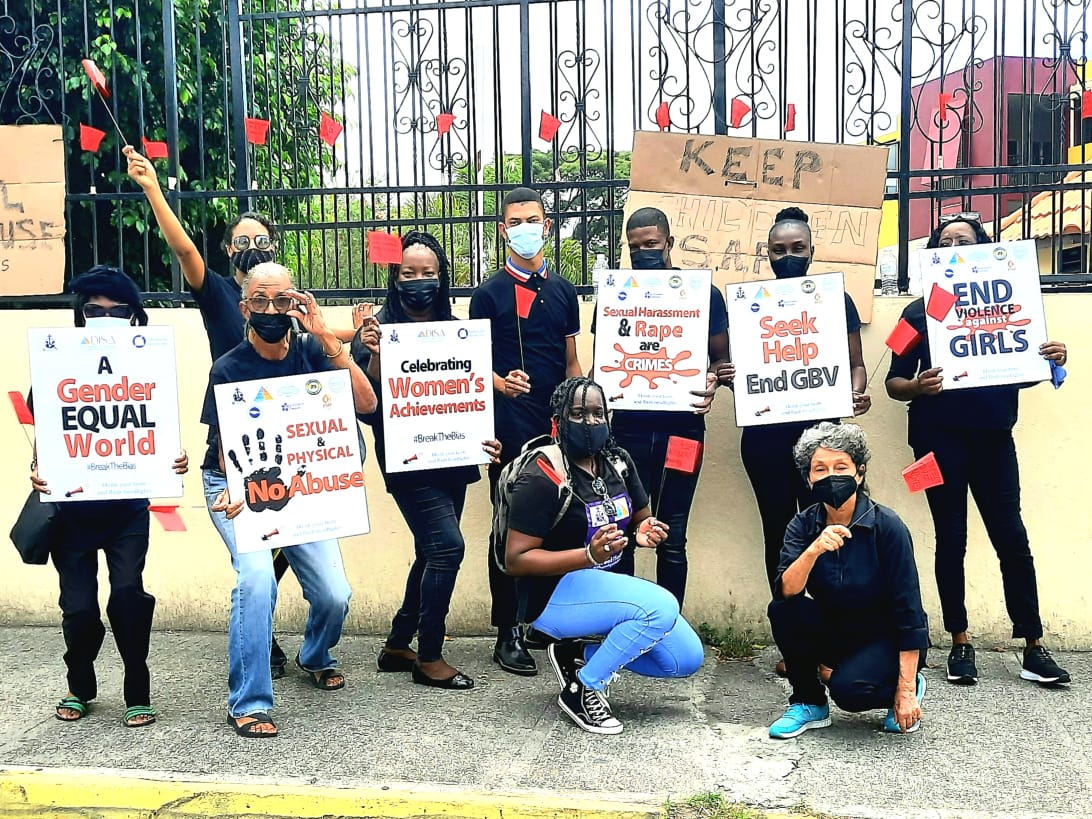
2// Our campaigns give a voice to those who need it, especially the marginalised and victimised.
#ThursdaysInBlack is one of the avenues we use to send a message to government and the wider public that they must take action to prevent GBV and child abuse. We speak for ourselves, and, more importantly, for the victims and survivors who are powerless to speak. We are saying what they want to say; we are showing them how to speak; and we are offering them a community and (if they want it, platform) through which they can get help and be empowered. It sounds simple, but it is important, and the psychological effect that can have on a survivor of GBV and abuse can be profound.
3// Our campaigns (and protests like them) provide an easy, simple entry point into activism.
We keep it simple because we want to keep it unintimidating and doable for everyone. The #ThursdaysInBlack campaign asks persons to wear black on the specified Thursday and take a picture and post with a campaign message to social media; or join one of the peaceful protests at a prominent public space. We couple this with holding placards, doing chants calling for an end to GBV and child abuse, distributing leaflets, and having conversations with others about why we’re protesting and encouraging them to do their part.
It doesn’t require tons of money or connections. It’s an easy way to engage and empower people to be part of the change we’re asking for. And it’s simple enough for anyone to start doing right now.
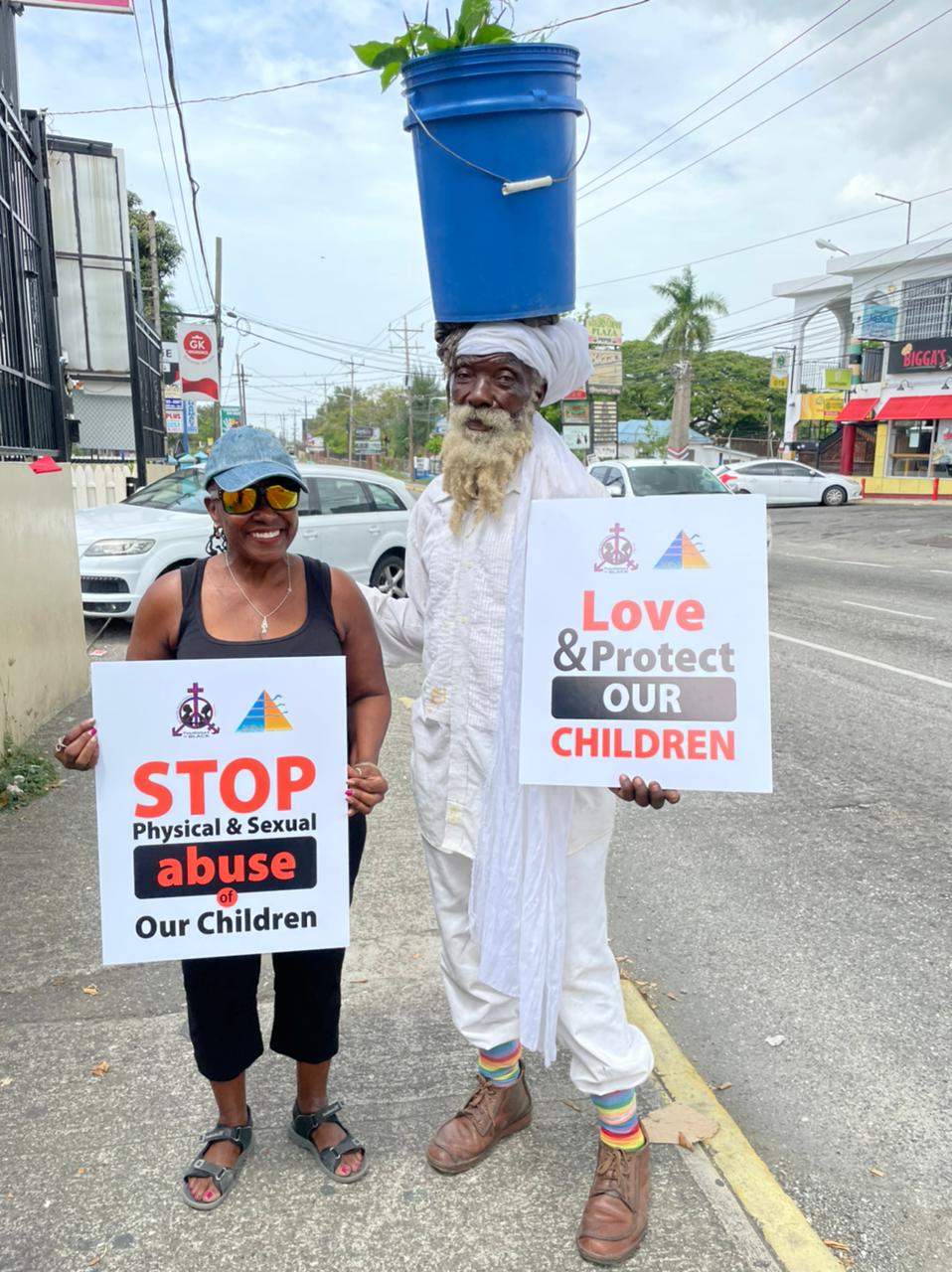
4// Collective advocacy action gets the job done over the long haul.
The #ThursdaysInBlack protest is only one part of a larger gender justice advocacy machinery. Each part is important in garnering support at varying levels of society. Greg Satell and Srdja Popovic, in their article, ‘How Protests Become Successful Movements’, note: “Empires fall not because people oppose them, but because they find their support eroded. To win, you need to convince others to defect.”
To effectively create change, we need many activists and advocates across many spheres of society consistently pushing toward our goal. Each part counts: The work of the advocates who make parliamentary presentations for legislative changes to better protect women and children; the work of those who provide psychosocial support for survivors; the work of those who plan and run public education media campaigns; and the work of those who stand on street corners holding placards and talking to everyday people about the issues … . We’re all working toward the same goal, and while we may not see the results tomorrow, next week, or even next year, we have to keep putting in the work and garnering support for our cause in as many ways as possible.
5// Taking collective action builds community, confidence, and conviction.
Zeynep Tufekci notes that, “Movements, and their protests, are powerful because they change the minds of people, including those who may not even be participating in them, and they change the lives of their participants. … Collective action is a life-changing experience. To be in a sea of people demanding positive social change is empowering and exhilarating.”
This is absolutely true. Collective action and community provide empowerment, build solidarity, and strengthen conviction. Change is not bred in silence. Or silos. People power often starts with just the sheer numbers of bodies gathered in one space sending one message loud and clear. It cannot be ignored. And over time, is difficult to deny. But it always starts with one and a few, then grows over time. I look forward to the days when #ThursdaysInBlack becomes a strongly supported national movement.
We the people have to stand up, speak out, and take action to create the society we want. Our women and girls deserve a world free of GBV and child abuse. And it needs to happen ASAP! Advocacy can't wait. Change can't wait. Our women and girls and children can't wait.
Sources:
UNICEF, Children In Jamaica Overview 2019. Link: https://www.unicef.org/jamaica/media/1441/file/Children-in-Jamaica-Overview-2019.pdf
Greg Satell and Srdja Popovic, Harvard Business Review, ‘How Protests Become Successful Social Movements’. Link: https://hbr.org/2017/01/how-protests-become-successful-social-movements
Zeynep Tufekci, The Atlantic, ‘Do Protests Even Work?’. Link: https://www.theatlantic.com/technology/archive/2020/06/why-protests-work/613420/
- Leadership
- Gender-based Violence
- Human Rights
- Revolutionary Solidarity
- Stronger Together
- Latin America and the Caribbean