
Women First: How the Philippines Is Advancing the SDGs Through Women’s Rights
Jul 15, 2025
story
Seeking
Encouragement

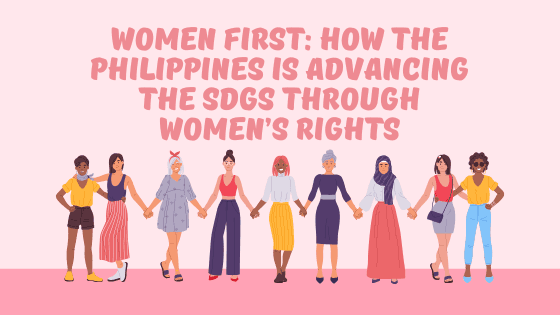
Empowered women, empowered nation: Local leaders, policymakers, and communities in the Philippines join forces to integrate gender equality into every step of sustainable development.
In the heart of the Philippines' commitment to the Sustainable Development Goals (SDGs) is a clear recognition: empowering women is central to achieving sustainable development. From policymaking to grassroots programs, the country has made strides in weaving gender equality into its development plans. But how exactly is the Philippines implementing the SDGs—especially SDG 5 on Gender Equality—through its institutional frameworks and policies? And are Filipino women truly feeling the impact?
Let’s talk about where we are, what’s working, and where we need to go next.
The Bigger Picture: What are the SDGs and Why Focus on Women?
First, a quick refresher. The Sustainable Development Goals are a set of 17 global targets adopted by the United Nations in 2015. They aim to eliminate poverty, protect the planet, and ensure prosperity for all by 2030. SDG 5—Achieve Gender Equality and Empower All Women and Girls—is not just a standalone goal. It’s also a cross-cutting enabler: without advancing women’s rights, the rest of the goals simply cannot be achieved.
The Philippines, known for its relatively high ranking in global gender equality indices compared to its neighbors, has long institutionalized policies promoting women's rights. But translating those into real-world impact, especially in the face of social inequality, disaster vulnerability, and political change, remains a tall order.
The Institutional Framework: Who’s Driving the Change?
At the national level, gender and development (GAD) has been embedded into the country’s policy framework for decades. In fact, the Magna Carta of Women (Republic Act 9710)—passed in 2009—is a landmark law that serves as the Philippine translation of the global CEDAW (Convention on the Elimination of all Forms of Discrimination Against Women).
The Philippine Commission on Women (PCW) is the main national machinery that ensures gender mainstreaming in all government programs. Under the GAD Budget Policy, all government agencies are mandated to allocate at least 5% of their annual budget for gender-responsive programs.
On paper, this is huge. It means that from agriculture to education, every agency is supposed to analyze and address how their programs affect women differently from men—and then act accordingly.
More recently, the Philippine Development Plan (PDP) 2023–2028 and the National Economic and Development Authority (NEDA)’s alignment with the SDGs have integrated gender targets more systematically. The PDP includes specific indicators on women's labor force participation, access to leadership positions, and protection from gender-based violence.
What’s Happening on the Ground?
The integration of SDGs into local governance is a work in progress. Thanks to the Local Government Code and subsequent efforts to localize the SDGs, many cities and municipalities now have their own Gender and Development (GAD) Focal Persons, and some even have functioning GAD Councils. Local government units (LGUs) are required to submit GAD plans and reports. In theory, this means gender concerns are addressed from planning to budgeting to evaluation.
There are success stories: women farmers being trained in climate-smart agriculture; local protection units being set up to handle cases of gender-based violence; female-led cooperatives gaining access to capital through microfinance programs; and more inclusive health services, especially in maternal and reproductive health.
At the same time, implementation is uneven. In some LGUs, the GAD budget is treated as a compliance task or used for tokenistic activities like Women’s Month celebrations, without deeper program integration. Capacity gaps and lack of gender sensitivity among local officials can limit how well policies are executed.
Challenges Along the Way
While there’s been strong progress, a few challenges remain:
Gender Data Gaps
Reliable, disaggregated data is essential to track whether women and girls are truly benefiting from SDG-aligned programs. Unfortunately, local data is often patchy or outdated, making impact measurement difficult.
Patriarchal Culture and Resistance
Despite legal frameworks, cultural norms still reinforce gender roles. Women—especially in rural or indigenous communities—are often sidelined in leadership and decision-making spaces.
Underfunding and Prioritization
The 5% GAD budget is a floor, not a ceiling. But many agencies stick to the bare minimum and do not explore integrating gender in the rest of their programming or budget lines.
Overlapping Crises
The COVID-19 pandemic, frequent natural disasters, and rising food and energy costs have all had a disproportionate impact on women—particularly those in informal sectors and marginalized groups. Recovery efforts need to be both gender-responsive and inclusive.
We often hear that “what gets measured gets done.” The Philippines has already set up the mechanisms to track and push forward women's rights through the SDGs. But real progress happens when policies become lived realities—when women and girls feel safer, heard, supported, and free to shape their own futures.
In the end, sustainable development will only be possible when no Filipino woman is left behind.
Let’s keep pushing, talking, and holding each other accountable.
Because women’s rights aren’t just a goal—they’re the path.
- Girl Power
- Human Rights
- South and Central Asia