
Women in the international division of labour.
Oct 13, 2025
story
Seeking
Action


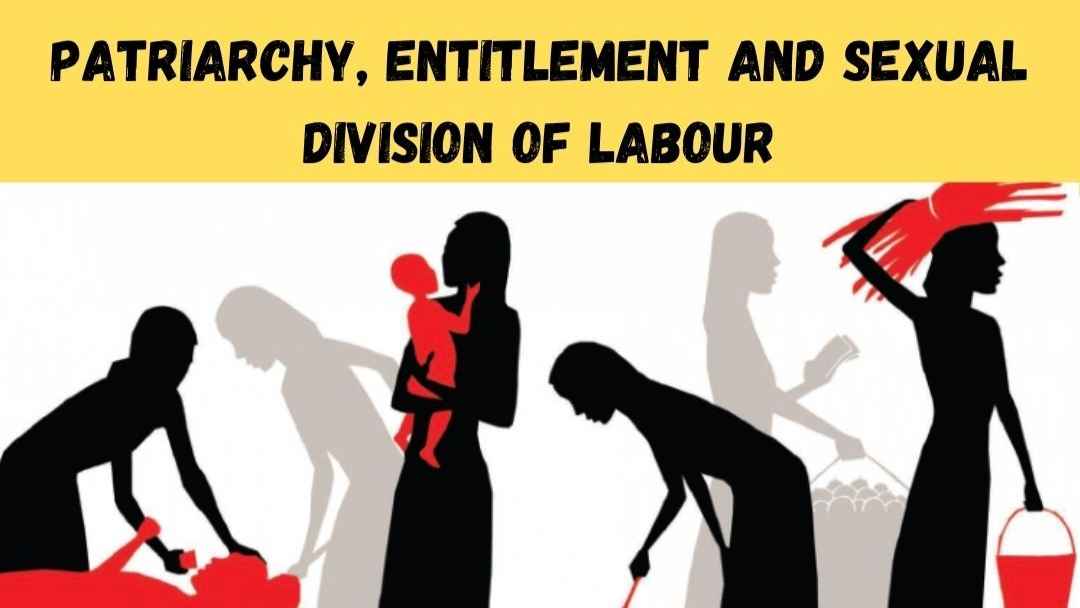
It was the analysis of the role of housework under capitalism that provided the first theoretical understanding of the political economy of capitalist patriarchy. This movement had started around 1980. It became clear that women’s unpaid caring and nurturing work in the household was subsidizing not only the male wage but also capital accumulation. Moreover, by defining women as housewives, a process which I then called ‘house-wifization’, not only did women’s unpaid work in the household become invisible, unrecorded in G D P (Waring 1988), and ‘naturalized’ - that is, treated as a ‘free good’ - but also her waged work was considered to be only supplementary to that of her husband, the so-called breadwinner, and thus devalued. The construction of woman as mother, wife and housewife was the trick by which 50 percent of human labour was defined as a free resource. It was female labour...
"In the measure that capital has subordinated the man to itself by making him a wage-labourer it has created a cleavage between him - the wage labourer - and all other proletarians who do not receive a wage. Those who are not considered capable of becoming a subject of social revolt because they do not participate directly in social production" (Dalla Costa, 1973: 33).
On the basis of this analysis, Dalla Costa also criticizes the notion held by many men and women of the left, that women are only ‘oppressed’, that their problem is 'male chauvinism’. As capital is able to command the unpaid labour of the housewife as well as the paid labour of the wage labourer, the domestic slavery of women is called exploitation. According to Dalla Costa, one cannot understand the exploitation of wage-labour unless one understands the exploitation of non-wage-labour...
Already in the early consciousness-raising groups the division between ‘private’, and ‘political’ or ‘public’ was rejected and the private sphere was discovered as the foundation, the base of public sexual politics. The slogan, ‘The personal is political’ had the effect that women began to change their self-perception as ‘non-political’ beings and that they began to act as political subjects around issues which were close to them. In the context of the struggles around ‘body politics’, a new concept of politics emerged which, in the last analysis, radically criticizes the concept of politics in parliamentary democracy. For feminists, ‘politics’ is no longer identical with going to the polls, electing one’s candidate to a parliament and hoping that he will change things in the name of the electorate. Feminists have tried to move from a concept of ‘politics by delegation’ or vicarious politics, to a concept of ‘politics in the first person’. Particularly the groups which called themselves ‘autonomous’ made it a point that they did not want to delegate the struggle for women’s liberation to some male-dominated party or other organization. History had taught them that even women in these organizations were powerless when it came to the crucial problems of patriarchal man-woman relations. Contrary to the old movement, the new feminists rather believe in direct political action, campaigns, initiatives, in starting women’s studies themselves, even before the political or academic establishments give their approval, in creating numerous women’s self-help and other projects with their own means and without waiting for support and acknowledgem ent from the administration or politicians. Feminists learned very fast that even small and powerless groups could achieve their goals faster if they created publicity through non-parliamentary means and methods than by following the bureaucratic procedures of party or trade union politics. ‘Politics in the first person’ was not only much more fun, more inspiring, but obviously also more effective than ‘politics by representation’.
MARIA MIES
Patriarchy & Accumulation
on a World Scale
WOMEN IN THE
INTERNATIONAL
DIVISION OF LABOUR
- Global